
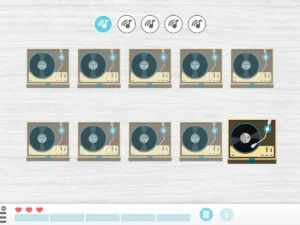
In this article, we show you how to integrate auditory activities into cognitive rehabilitation for children and adults and offer a selection of auditory activities to use with your patients.
Auditory activities are a key tool in cognitive rehabilitation, since they stimulate functions such as attention, memory, and language. Adapted for children and adults, these activities are effective for treating cognitive impairments caused by neurodevelopmental disorders, brain injury, or neurodegenerative diseases.
Integrating auditory activities into cognitive rehabilitation for children and adults
Auditory activities are a fundamental part of cognitive rehabilitation programs. Their main goal is to stimulate auditory perception and improve related cognitive processes, such as sustained attention, working memory, and language skills. These activities can also be customized to each user’s specific needs, making it possible to address a wide range of conditions, such as:
- Neurodevelopmental disorders: ASD, ADHD, dyslexia.
- Acquired brain injury: traumatic brain injury, stroke.
- Neurodegenerative diseases: Alzheimer’s, Parkinson’s, multiple sclerosis (MS).
Key benefits of integrating auditory activities into cognitive rehabilitation for children and adults
- Stimulating neuroplasticity: These activities help the brain reorganize and form new neural connections.
- Developing specific skills: Auditory activities strengthen cognitive areas related to perception and language.
- Versatility in treatment: Incorporating these activities into cognitive rehabilitation allows professionals to better adapt to the needs of different age groups and levels of cognitive impairment.

Subscribe
to our
Newsletter
Auditory activities for cognitive rehabilitation in children and adults
Below are some effective auditory activities for working on auditory episodic memory in cognitive rehabilitation for children and adults:
Learn the names (audio)
This auditory activity for children involves correctly matching the names of the people shown on screen, using only the names they hear as a guide.
Learn the names (audio) offers nine difficulty levels and lets professionals customize it with different parameters to adapt it to each child’s needs.
This auditory activity also has a text version called Learning Names (text).
Remember the Names (audio)
Along the same lines as the previous activity, this second auditory activity is designed for adults.
Remember the Names (audio) involves listening to, memorizing, and correctly matching the names of the people shown.
Like the previous one, it offers several difficulty levels and customization options.
Locate sounds
Finally, this auditory activity is also designed for adults and involves listening to sounds, memorizing their position, and indicating where they were.
Locate sounds has nine difficulty levels and different customization options so it can be adapted to each user’s characteristics.
Remember the Names (audio) involves listening to, memorizing, and correctly matching the names of the people shown.
Auditory activities are a key tool in cognitive rehabilitation, since they stimulate functions such as attention, memory, and language. Adapted for children and adults, these activities are effective for treating cognitive impairments caused by neurodevelopmental disorders, brain injury, or neurodegenerative diseases.
If you enjoyed this blog post on auditory activities in cognitive rehabilitation for children and adults, you may also be interested in these NeuronUP articles:



“This article has been translated. Link to the original article in Spanish:”
Actividades auditivas en rehabilitación cognitiva de niños y adultos

 Current Trends in the Treatment of Neurodevelopmental Disorders

Leave a Reply