
Doctoral student Marta Arbizu Gómez analyzes a recent study on the impact of sleep duration on brain biological clocks and its implications for clinical practice.
A study published in Nature demonstrates that sleep duration has a U-shaped relationship with biological aging in the brain and throughout the body. Sleeping less than 6 hours or more than 8 hours accelerates biological age as estimated by magnetic resonance imaging, proteomics, and metabolomics, increasing the risk of disease and mortality. The optimal rest window is between 6.4 and 7.8 hours per day.
For neurorehabilitation professionals, incorporating sleep hygiene alongside NeuronUP cognitive stimulation programs is essential for slowing cognitive decline and promoting healthy aging.
Impact of Rest on Biological Aging Clocks
Sleep is one of the most important biological functions for maintaining physical and mental health. However, in recent decades, both insufficient and excessive sleep have been associated with a higher risk of cardiovascular disease, cognitive impairment, depression, and diabetes.
Although these associations were already known, it was still unclear how sleep actually affects aging in the body. Is the impact limited to the brain? Or does it also affect other organs and body systems?
A recently published study in Nature addresses precisely this question by analyzing “biological clocks” based on neuroimaging, proteomics, and metabolomics, revealing that there is a U-shaped relationship between sleep duration and biological aging. In other words, both too little and too much sleep are associated with accelerated aging throughout the body.
Methodology: How Was the Research on Sleep and Brain Aging Conducted?
The study used data from hundreds of thousands of participants, primarily from the UK Biobank, one of the world’s largest biomedical databases. The researchers analyzed the relationship between sleep duration and 23 different biological clocks developed from:
- Magnetic resonance imaging (MRI);
- plasma proteomics;
- metabolomics;
- and multi-organ biomarkers.
In total, multiple body systems were evaluated, including:
- Brain;
- lungs;
- liver;
- immune system;
- adipose tissue;
- pancreas;
- and endocrine system.
To study these associations, the researchers used nonlinear statistical models, enabling them to detect complex patterns between sleep duration and biological aging.
What Do the Data Reveal About Biological Health?: The U-Shaped Sleep Curve
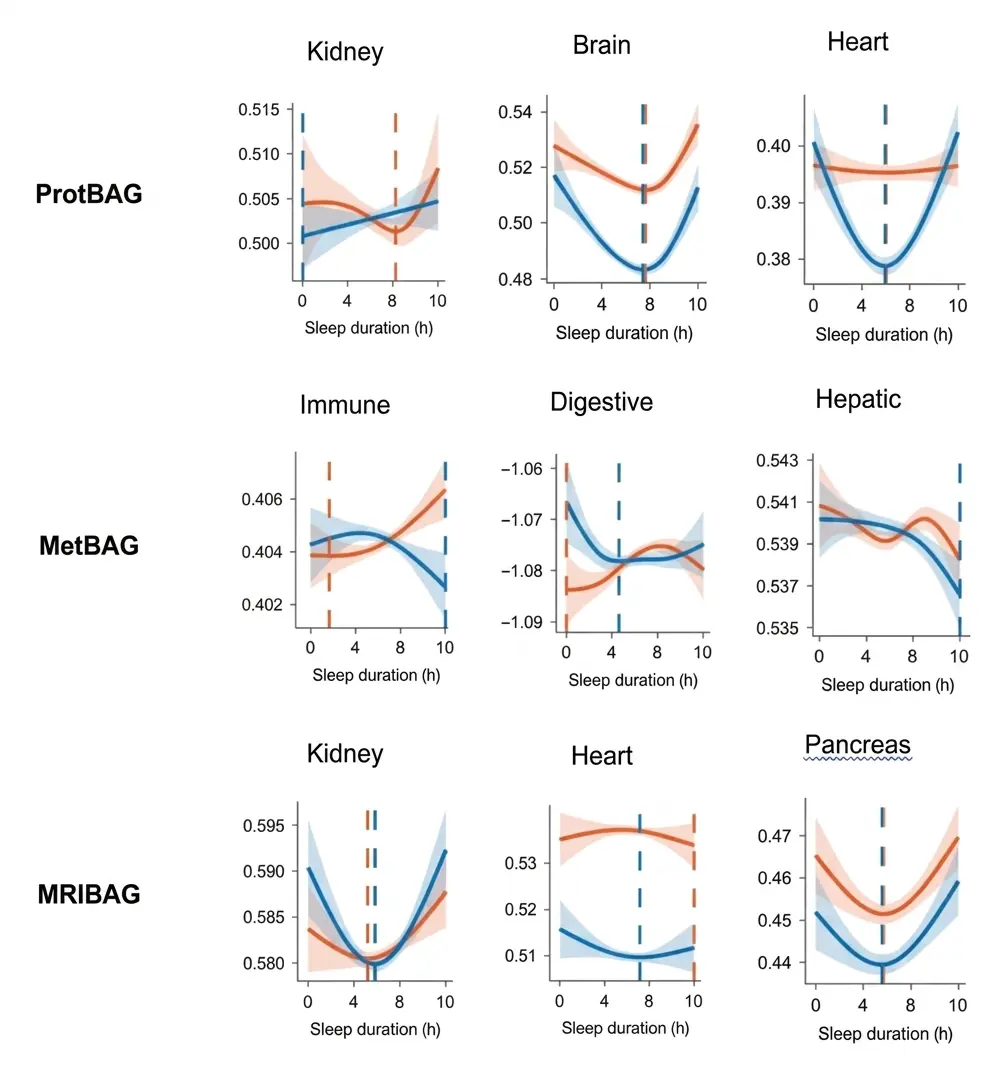
The findings show a highly consistent pattern: the lowest levels of biological aging are reached with approximately 6.4 to 7.8 hours of sleep, depending on the organ and sex.
By contrast:
- Sleeping less than 6 hours is associated with accelerated biological aging.
- Sleeping more than 8 hours is also associated with worse biological health.
This pattern appeared in biomarkers related to the brain, metabolism, the immune system, and peripheral organs, suggesting that sleep has a systemic influence on the body rather than affecting brain function alone.
In addition, the study found that short sleep was particularly associated with a higher risk of:
- Depression and anxiety;
- type 2 diabetes;
- hypertension and ischemic heart disease;
- musculoskeletal pain;
- chronic obstructive pulmonary disease (COPD);
- and digestive disorders.
Regarding mortality, both short and long sleep were associated with a significant increase in the risk of death from any cause:
| Sleep pattern | Mortality risk |
|---|---|
| Short sleep (<6 h) | HR ≈ 1.50 |
| Long sleep (>8 h) | HR ≈ 1.40 |

Subscribe
to our
Newsletter
Differential Mechanisms and Biological Processes
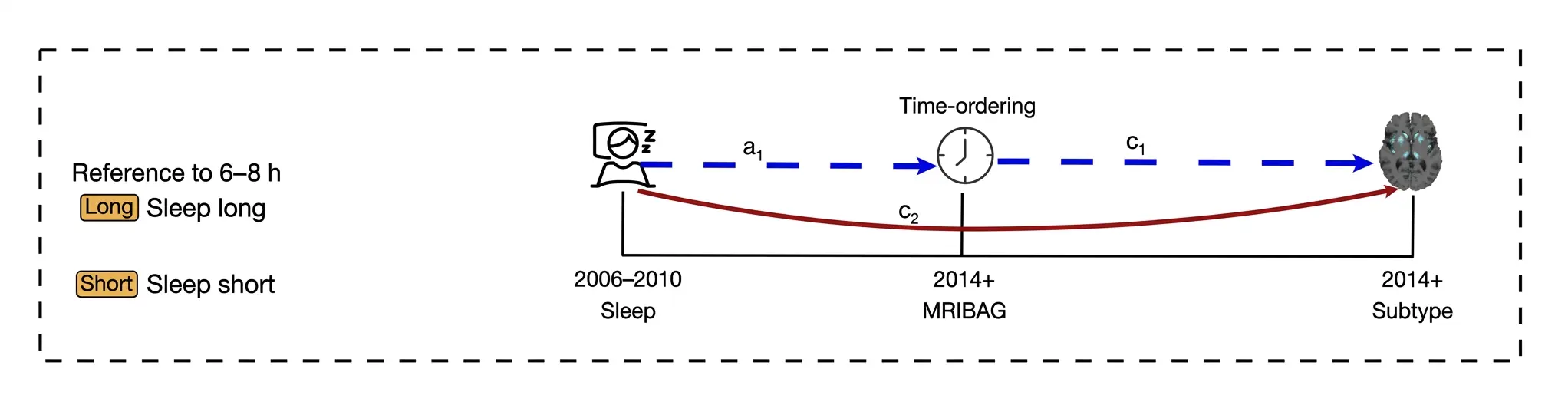
One of the study’s most interesting aspects is that short and long sleep do not appear to affect the body in the same way.
The authors observed that:
- Short sleep is more directly associated with depression and declining health.
- Long sleep appears to act indirectly through brain and systemic aging.
This suggests that sleeping too much could be, in some cases, a marker of underlying biological processes related to aging, inflammation, or disease.
What Are the Implications for Clinical Practice?
The results reinforce the importance of sleep as a key factor in healthy aging and disease prevention.
The main implications include:
Prevention and Healthy Aging
Maintaining healthy sleep habits could help slow biological aging processes in multiple organs.
Early Risk Identification
Persistent sleep disturbances could serve as early signs of biological vulnerability or future disease.
Multidisciplinary Approach
The study shows that sleep simultaneously affects the brain, metabolism, inflammation, and cardiovascular health, underscoring the need for a comprehensive approach to healthcare.
How Is This Advance Related to NeuronUP?
At NeuronUP, cognitive stimulation and rehabilitation are understood within a comprehensive brain-health approach. This study reinforces the idea that factors such as sleep play a fundamental role in maintaining cognitive function and quality of life.
Understanding how sleep influences brain aging can help:
- Design more personalized cognitive interventions.
- Identify modifiable factors associated with cognitive decline.
- Complement rehabilitation programs with sleep hygiene strategies.
- Promote a preventive approach to brain aging.
In addition, these findings support the growing integration of biological biomarkers and digital cognitive health tools.
Conclusions on Sleep Hygiene and Brain Health
This large study published in Nature demonstrates that the relationship between sleep and health follows a U-shaped curve: both insufficient and excessive sleep are associated with accelerated biological aging and a higher risk of disease and mortality.
The results suggest that maintaining an appropriate sleep duration could become a key strategy for promoting healthy aging and protecting brain health.
In the context of NeuronUP, these findings reinforce the importance of addressing cognitive decline from a comprehensive perspective, in which biological factors, lifestyle habits, and cognitive rehabilitation work together to improve people’s quality of life.
References
- The MULTI Consortium, O’Toole CK, Song Z, Anagnostakis F, Yang Z, Tian YE, Duggan MR, Zou C, Leng Y, Cai Y, Bai W, Fu CHY, Rafii MS, Aisen P, Wang G, De Jager PL, Zeng J, Oh HSH, Zhou X, Walker KA, Belsky DW, Zalesky A, Simonsick EM, Resnick SM, Ferrucci L, Davatzikos C, Wen J. Sleep chart of biological ageing clocks in middle and late life. Nature. 2026. doi:10.1038/s41586-026-10524-5.
Frequently Asked Questions About Sleep and Biological Brain Aging
1. How many hours should you sleep to avoid accelerating biological aging?
The optimal rest window is between 6.4 and 7.8 hours per day, depending on the organ evaluated and sex. Sleeping less than 6 hours or more than 8 hours is associated with accelerated estimated biological age.
2. Why do both short and long sleep negatively affect health?
The study shows a U-shaped relationship between sleep duration and biological clocks. Short sleep is directly associated with declining health and depression, whereas long sleep acts indirectly through brain and systemic aging processes.
3. Which organs and body systems are affected by sleep duration?
Sleep duration has a systemic influence on the body. The research evaluated neuroimaging, proteomic, and metabolomic biomarkers that showed alterations in the brain, lungs, liver, pancreas, adipose tissue, immune system, and endocrine system.
4. Which diseases and mortality risks are associated with inadequate sleep duration?
Sleeping less than 6 hours is associated with a higher risk of depression, anxiety, type 2 diabetes, hypertension, ischemic heart disease, COPD, musculoskeletal pain, and digestive disorders. Regarding all-cause mortality, short sleep presents an increased risk with an HR ≈ 1.50, whereas long sleep (> 8 h) presents an HR ≈ 1.40.
5. How do these findings on sleep hygiene influence cognitive neurorehabilitation?
Because rest influences brain aging, incorporating sleep hygiene as a modifiable factor within NeuronUP cognitive stimulation programs makes it possible to personalize interventions, support the prevention of cognitive decline, and enhance patients’ quality of life through a comprehensive approach.






 The Impact of Multitasking on Brain and Cognitive Functioning
Leave a Reply