

Paola González Lázaro, a speech-language pathologist specializing in neurolinguistic and neuropsychological rehabilitation, shares the diagnostic criteria for primary progressive aphasia (PPA), its clinical variants, neuropsychological assessment, and intervention strategies.
Primary progressive aphasia (PPA) is a neurodegenerative disease characterized by the slow, gradual decline of language abilities. This clinical guide is designed to support clinical decision-making by addressing the progression and symptoms of each PPA variant (nonfluent/agrammatic, semantic, and logopenic), the multidisciplinary diagnostic process, comprehensive intervention, and support for patients’ families and caregivers.
What is primary progressive aphasia? Diagnostic criteria and clinical course
Clinical definition and identifying the PPA profile
Primary progressive aphasia (PPA) is a neurodegenerative disease characterized by a slow, gradual decline in language abilities. The other cognitive abilities remain intact or show only mild impairment for at least two years after symptom onset; over time, they become affected and show marked decline in the advanced stages of the disease. Reading and writing also deteriorate progressively.
Exclusion criteria (Mesulam, 2003) include that the language impairment must not be vascular or tumor-related, or result from a psychiatric disorder, such as anxiety or depression. A PPA diagnosis is also ruled out if the prominent impairment at symptom onset is not linguistic, but instead involves behavior or another cognitive ability (e.g., memory).
Primary progressive aphasia results from the gradual atrophy of different language-related brain regions caused by an underlying neuropathology, such as Alzheimer’s disease or frontotemporal dementia. In these and other neurodegenerative diseases, patients may experience progressive language loss.
However, aphasia is just one component of the overall decline in these patients, emerging later and being less prominent than other cognitive impairments. These patients may be said to have progressive aphasia, but not PPA. The latter diagnosis is justified only when the language problem initially presents in isolation and remains the most significant impairment throughout the course of the disease.
Progression of primary progressive aphasia (PPA)
The course of PPA can be divided into four stages:
- Asymptomatic or preclinical.
- Onset of the first signs and symptoms. The most common is difficulty retrieving proper names, specific terms, or uncommon words. Errors in verb conjugation, articulation, and/or writing may also occur.
- Language impairments become evident. Nonverbal abilities are usually good or show only mild impairment. Patients can carry out daily activities, except those directly involving language use, such as telling an anecdote or writing a text.
- As the disease progresses, other cognitive, behavioral, and motor functions become clearly impaired, and language declines severely. This stage has been called aphasic dementia (González Victoriano y Rojas Herrera, 2019).
The initial symptoms of primary progressive aphasia generally appear between ages 50 and 60, and occur at a similar rate in men and women. Average survival after diagnosis is between 7 and 14 years.
Variants of primary progressive aphasia (PPA)
Language can be affected in different ways in people with PPA. Three variants are currently recognized—nonfluent/agrammatic PPA, semantic-variant PPA, and logopenic-variant PPA (Gorno-Tempini et al., 2011)—based on clinical presentation and neuropathological findings.
Approximately 70% of patients with PPA meet the criteria for one of the variants (Mesulam, 2016). In the remaining cases, language features do not clearly correspond to any one clinical syndrome, or features of more than one variant are present.
Nonfluent/agrammatic-variant PPA
Patients’ language is agrammatic, markedly slow, and effortful. Apraxia of speech is commonly observed, as are phoneme distortions, omissions, substitutions, and insertions during speech. Dysarthria may also occur. As symptoms progress, mutism may develop.
Comprehension is usually impaired at the morphosyntactic level. Patients have difficulty understanding grammatically complex sentences. In contrast, comprehension of single words is preserved.
Regarding naming, word-finding difficulty is more noticeable when naming actions than objects. Providing the patient with the first syllable of a word they cannot retrieve is often helpful.
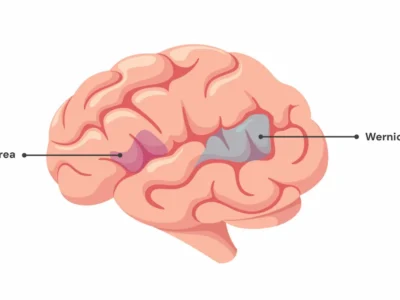
This variant results from atrophy in the region of Broca’s area. Because of the lesion’s location, dysphagia, motor impairments (e.g., stiffness while walking, slowness of movement, and poor balance), and executive function impairments are common. In addition, mild behavioral symptoms, such as depression and apathy, may occur.
In most cases, this variant is associated with pathological changes due to frontotemporal dementia.

Subscribe
to our
Newsletter
Semantic-variant PPA
The core impairments in this variant are anomia and difficulty understanding single words. Fluency, articulation, grammar, and repetition are preserved.
Although anomia occurs in all variants, in this case it is a severe impairment. Gradually, language becomes less informative, vague, and nonspecific. Lexical problems result from degradation of word meanings and the concepts they represent, so phonological cues or providing the patient with options to choose the correct word are generally not helpful.
Impaired lexical comprehension and anomia are considered manifestations of a semantic memory disorder, which also affects recognition of people and objects. As semantic knowledge progressively deteriorates, patients may develop visual agnosia (impaired visual recognition of objects).
This variant is associated with atrophy in the anterior temporal lobes, more pronounced in the left hemisphere.
Behavioral and social cognition impairments may occur in the early stages, including disinhibition, irritability, apathy, obsessive tendencies, lack of empathy, and poor personal hygiene (Tippett y Keser, 2022). It is important for people who live with the patient to receive support in managing these changes as effectively as possible.
In most cases, the underlying neuropathology is frontotemporal dementia. Occasionally, it is associated with Alzheimer’s disease.
Logopenic-variant PPA
This variant is characterized by impaired word retrieval and repetition, particularly of phrases and sentences. Spontaneous speech is slow, with frequent hesitations and pauses to search for words. Phonological paraphasias are commonly observed, that is, the substitution of one or more phonemes in a word. Providing the first letter or syllable can facilitate word retrieval. Articulation, morphosyntactic structure, and comprehension of words, phrases, and short sentences are preserved; over time, comprehension of long and complex sentences becomes impaired.
Difficulties with repetition and sentence comprehension, as well as phonological errors in naming, point to a core impairment in both verbal short-term auditory memory and phonological processing.
Imaging studies show atrophy in the left temporoparietal region. The left hippocampus may also be affected. Because of the location of the damage, acalculia, apraxias, and visuospatial impairments are also common, in addition to language impairments.
The most common underlying pathology is Alzheimer’s disease, so episodic memory impairments are also commonly observed in this variant.
| PPA variant | Language features | Comprehension | Location of atrophy | Underlying neuropathology |
|---|---|---|---|---|
| Nonfluent/agrammatic | Agrammatic, slow, effortful speech; apraxia of speech; greater difficulty naming actions. | Difficulty with grammatically complex sentences; comprehension of single words is preserved. | Region of Broca’s area. | Frontotemporal dementia. |
| Semantic | Severe anomia and loss of semantic knowledge; fluency, articulation, grammar, and repetition are preserved. | Clear difficulty understanding single words. | Anterior temporal lobes (more pronounced in the left hemisphere). | Frontotemporal dementia (occasionally Alzheimer’s disease). |
| Logopenic | Impaired repetition of phrases/sentences and word retrieval; speech with pauses and phonological paraphasias. | Preserved for words and short phrases; becomes impaired for long and complex sentences as the disease progresses. | Left temporoparietal region and left hippocampus. | Alzheimer’s disease. |
Diagnostic process for primary progressive aphasia variants
PPA is generally diagnosed through a neurological examination, a language assessment, and a neuropsychological evaluation. A comprehensive medical history is also necessary, including information from the patient and close family members about symptom onset and progression (Europa et al., 2020).
Neurological examination and cerebrospinal fluid biomarkers
As part of the neurological examination, different tests are performed to confirm that symptoms are not due to other causes, such as a tumor, vascular disease, vitamin deficiencies, or an infection.
The neurological examination may include a lumbar puncture to detect abnormal levels of certain biomarkers in the cerebrospinal fluid, which can help identify the underlying neuropathology. MRI may also be useful for describing the atrophy patterns associated with each PPA variant.
Speech-language and linguistic assessment
Language assessment should evaluate the main language abilities to determine which are relatively preserved and which are impaired. This is important because certain patterns are characteristic of each variant, and assessment is also needed to track the patient’s progression.
Neuropsychological assessment and cognitive screening
Finally, with regard to neuropsychological assessment, the process often begins with screening tests such as the MoCA (Montreal Cognitive Assessment). Based on the results, other tests may be administered, if needed, to assess the different cognitive abilities in greater depth.
Intervention and support for people with primary progressive aphasia
Speech-language therapy and augmentative and alternative communication systems
Although language in people with PPA declines gradually and irreversibly, support from a speech-language therapist is always recommended.
- In the early stages, therapy aims to keep language difficulties stable for as long as possible, or to slow their progression.
- In the middle and later stages, when communication problems become more severe, patients need to be taught compensatory strategies and nonlinguistic communication techniques that allow them to continue participating in daily activities and maintain a good quality of life. Compensatory strategies include augmentative and alternative communication (AAC), such as communication books and boards featuring words and phrases that are useful in the patient’s daily life and for communicating with people close to them.
Comprehensive cognitive stimulation
In addition to language stimulation, it is recommended that other cognitive abilities be stimulated, including memory, attention, calculation, and executive functions.
Psychoeducation and support networks for family members and/or caregivers
Finally, it is essential to consider that PPA also affects those who are close to the patients. Therefore, a central goal of treatment is to provide information and support to family members and caregivers (Briales Grzib et al., 2022). It is important to support them in addressing their questions, learning effective communication and caregiving approaches, and reinforcing the use of compensatory strategies in their everyday environment.
They should also be guided in building support networks and learning to take care of themselves (González Lázaro y González Ortuño, 2024).
Conclusions about clinical practice in PPA
PPA is an uncommon neurodegenerative disease characterized by the slow, gradual decline of language abilities. In the first years of the disease, impairments are exclusively linguistic. Later, other cognitive abilities, movement, and behavior are also affected. Three clinical variants are currently distinguished, each with characteristic language symptoms and distinct patterns of brain atrophy.
Assessment should consider neurological, linguistic, and neuropsychological aspects. Treatment aims to preserve the patient’s abilities for as long as possible through language and cognitive stimulation. Later, the goal is to compensate for impaired functions using augmentative and alternative communication to help the patient continue participating in everyday activities. Equally important throughout the different stages of the disease is providing guidance, support, and ongoing assistance to family members and caregivers.
References
- Briales Grzib, H., Matías-Guiu Antem, J., Peláez Parra, L., García García, N., y Sánchez Briales, J. (2022). Afasia progresiva primaria: La guía para el familiar. Asociación Ayuda Afasia.
- Europa, E., Iaccarino, L., Perry, D.C., Welch, A. E., Rabinovici, G. D., y Henry, M. L. (2020). Diagnostic assessment in primary progressive aphasia: An illustrative case example. American Journal of Speech-Language Pathology, 29(4), 1833–1849. https://doi.org/10.1044/2020_AJSLP-19-00128
- González Lázaro, P. y González Ortuño, B. (2024). Afasia: De la teoría a la práctica (2.ª ed.). Editorial Médica Panamericana.
- González Victoriano, R. y Rojas Herrera, M. (2019). Afasia progresiva primaria y apraxia del habla progresiva primaria: Revisión. Revista Neuropsicología, Neuropsiquiatría y Neurociencias, 19(2), 1–25.
- Gorno-Tempini, M. L., Hillis, A. E., Weintraub, S., Kertesz, A., Mendez, M., Cappa, S. F., Ogar, J. M., Rohrer, J. D., Black, S., Boeve, B. F., Manes, F., Dronkers, N. F., Vandenberghe, R., Rascovsky, K., Patterson, K., Miller, B. L., Knopman, D. S., Hodges, J. R., Mesulam, M. M., y Grossman, M. (2011). Classification of primary progressive aphasia and its variants. Neurology, 76(11), 1006–1014. https://doi.org/10.1212/WNL.0b013e31821103e6
- Mesulam, M.M. (2003). Primary progressive aphasia: A language-based dementia. The New England Journal of Medicine, 349(16), 1535–1542. https://doi.org/10.1056/NEJMra022435
- Mesulam, M.M. (2016). Primary progressive aphasia and the left hemisphere language network. Dementia & Neurocognitive Disorders, 15(4), 93–102. https://doi.org/10.12779/dnd.2016.15.4.93
- Tippett, D. C., y Keser, Z. (2022). Clinical and neuroimaging characteristics of primary progressive aphasia. Handbook of Clinical Neurology, 185, 81–97. https://doi.org/10.1016/B978-0-12-823384-9.00007-1
Frequently asked questions about primary progressive aphasia (PPA)
1. What is the difference between primary progressive aphasia (PPA) and aphasia in other dementias?
In PPA, language impairment emerges in isolation and is the most prominent symptom for at least the first two years after onset, while the other cognitive functions remain relatively preserved. In other neurodegenerative disorders, aphasia develops later as one component of a generalized cognitive decline.
2. What are the three main clinical variants of PPA?
Three clinical variants are recognized:
- Nonfluent/agrammatic variant: Characterized by slow, effortful speech, agrammatism, and apraxia of speech.
- Semantic variant: Notable for severe anomia and progressive loss of word meaning.
- Logopenic variant: Involves difficulty retrieving words and impaired sentence repetition.
3. What tests and tools are used to assess PPA?
The diagnostic process includes a comprehensive neurological examination with neuroimaging (MRI) and cerebrospinal fluid (CSF) biomarker testing; cognitive screening assessments such as the MoCA (Montreal Cognitive Assessment); and a comprehensive language battery to assess articulation, syntax, naming, and comprehension.
4. What role do augmentative and alternative communication (AAC) systems play in treatment?
In the middle and later stages, AAC systems (such as communication boards, communication books, or technological supports) are essential for compensating for irreversible language decline. They help patients remain functional in activities of daily living and maintain interactions with the people in their everyday environment.
5. At what age do the first symptoms typically appear, and what is the prognosis for PPA?
Initial symptoms typically appear between ages 50 and 60. Although the course is progressive and irreversible, average life expectancy after diagnosis is 7 to 14 years.






 Can Language Models Reason Like a Clinician? New Evidence on Their Limits in Medicine



Leave a Reply