
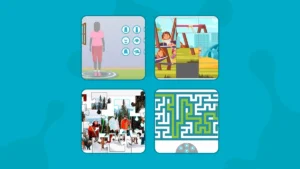
Today we suggest five exercises for working on praxis with your patients, both children and adults.
Definition and types of praxis
Praxis refers to learned motor skills, that is, the organized movements we make to carry out a plan or reach a goal.
There are several types of praxis.
- Ideomotor: the ability to perform a simple movement or gesture intentionally.
- Ideational: the ability to handle objects through a sequence of gestures. This involves knowing the object’s function, the action, and the sequential order of the steps that lead to that action.
- Facial: the ability to voluntarily make movements or gestures with different parts of the face, such as the lips, tongue, eyes, eyebrows, cheeks, etc.
- Visuoconstructive: the ability to plan and perform the movements needed to arrange a series of elements in space to form a final drawing or figure.
Any motor activity involves using this cognitive function. Activities as basic as speaking, smiling, walking, or getting dressed all involve this skill.
5 exercises for working on praxis with your patients
Here are five NeuronUP exercises for working on praxis:
1. Get dressed
We’ll start with an activity for working on ideational praxis.
What does it involve?
This exercise involves dressing the silhouette appropriately, taking into account both where and in what order each garment goes and the type of situation (whether it’s cold or hot, or whether they’re going to the beach or the mountains, etc.).
What does this activity do?
In addition to praxis, it also works on procedural memory, body schema, semantic memory, and planning.
2. Mixed Images
This exercise is designed exclusively for working on praxis with children.
What does it involve?
The goal is for children to move the pieces of the image until they complete it.
Do the children know where to move each piece?
What does this activity do?
It works on visuoconstructive praxis, planning, and spatial relations.
Adult version: Jigsaw Puzzle
This NeuronUP activity is also available for adults in a very similar format adapted to their age. The adult activity is called Jigsaw Puzzle.
What does it involve?
Adults have to put the pieces together to form an image.
Play by levels
As in all games on the platform, the therapist can choose from nine levels, depending on each patient’s needs.
3. The Labyrinth
What does it involve?
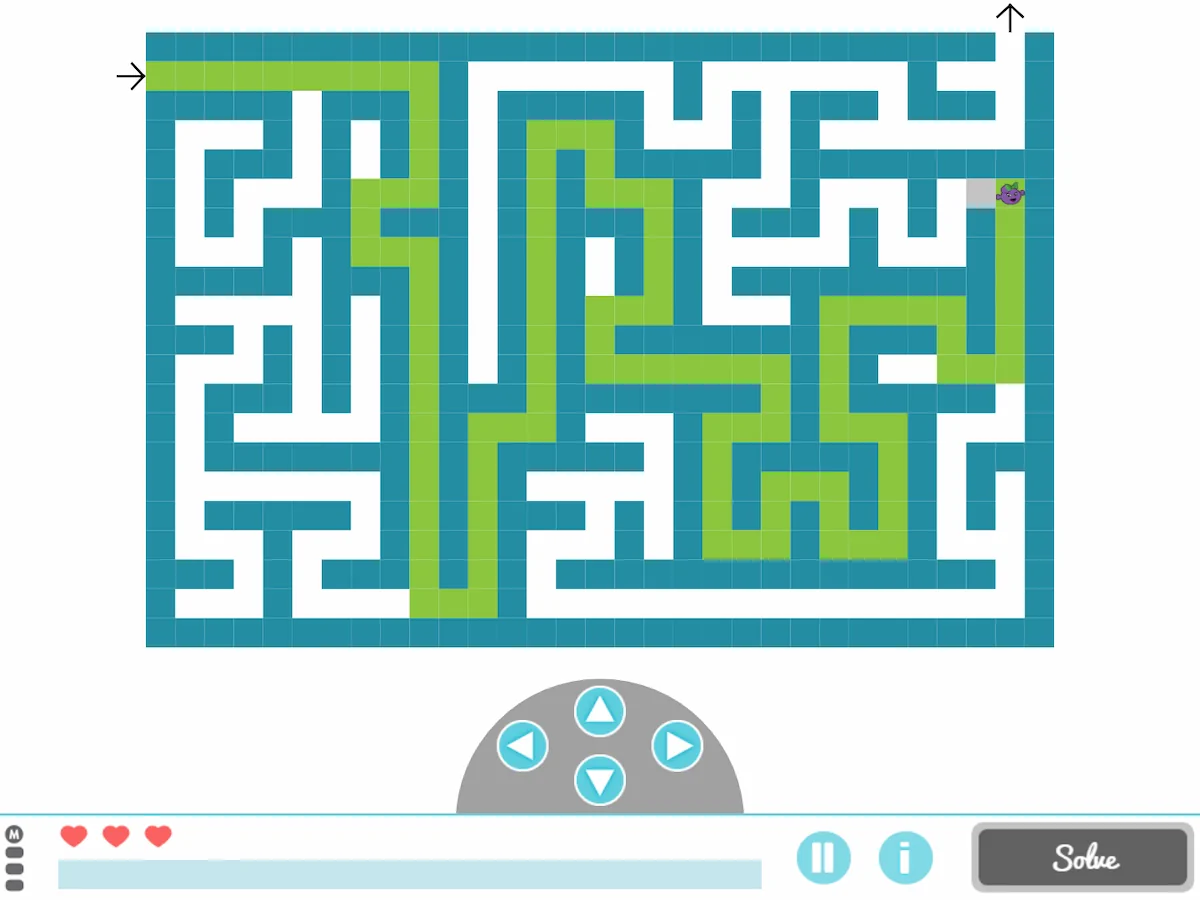
In the next activity, the user has to find the way out of the maze.
Personalization of the activity
As with all NeuronUP generators, the therapist can customize the activity. In this case, they can choose:
- Size: number of rows and number of columns,
- solution length: maximum and minimum number of steps,
- maximum length of the wrong paths.
What does this activity do?
This exercise works on visuoconstructive praxis, planning, sustained attention, and processing speed.
4. Finish the Drawings
What does it involve?
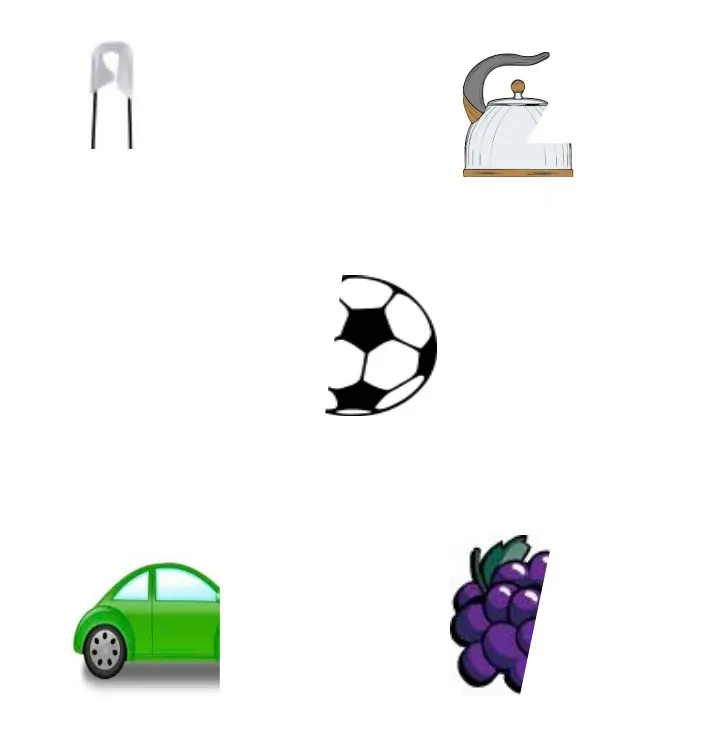
This paper-based exercise for working on visuoconstructive praxis and visual gnosis involves completing the lines of a series of shapes and objects.
5. Complete the Symmetrical Drawings
What does it involve?
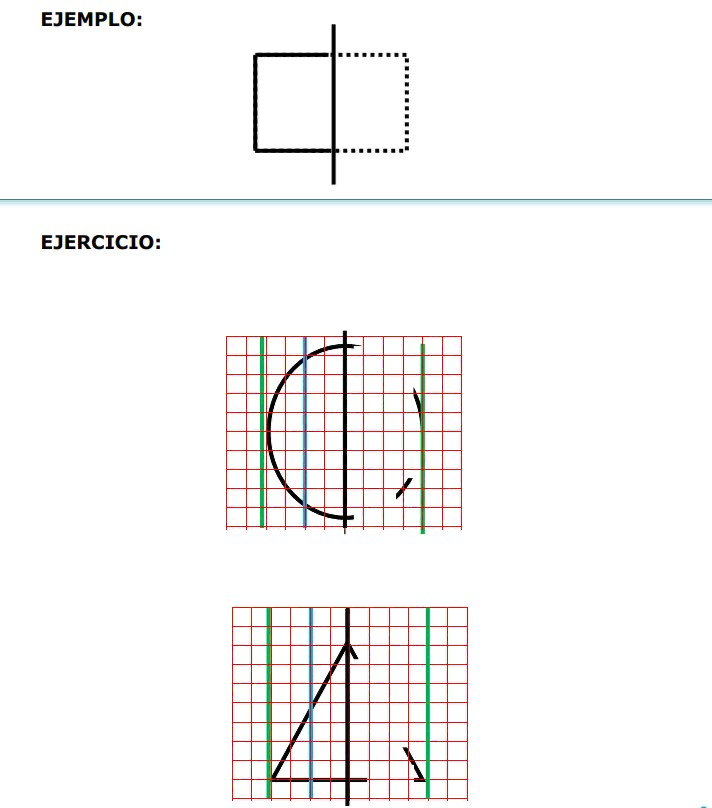
Finally, in this last paper-based activity for working on praxis, the patient has to complete the following drawings so that they are symmetrical.
What does this activity do?
It’s ideal for working on hemineglect and visuoconstructive praxis.
If you enjoyed this article on exercises for working on praxis with adults and children, you may also be interested in the following posts:

“This article has been translated. Link to the original article in Spanish:”
5 ejercicios para trabajar las praxias con adultos y niños

 Borderline personality disorder told in the first person

Leave a Reply