
Doctoral candidate Marta Arbizu Gómez addresses the relationship between sleep and neurodegeneration and how sleep protects the brain, based on scientific evidence concerning the role of dementia prevention and cognitive health.
Sleep and neurodegeneration maintain a critical bidirectional relationship. Sleep protects the brain by clearing proteins such as β-amyloid and regulating brain inflammation. Optimizing sleep is vital for preventing dementia and enhancing cognitive rehabilitation programs.
Why is sleep essential for brain health?
Getting good sleep is not only essential for rest: sleep plays a key role in multiple brain processes, including memory consolidation, metabolic and inflammatory regulation, and the maintenance of neural connections. However, there is growing scientific evidence that sleep may also play a crucial role in preventing neurodegenerative diseases.
Sleep disorders such as insomnia, sleep fragmentation, and reduced deep sleep are common in older adults and in patients with conditions such as Alzheimer’s disease, Parkinson’s disease, or frontotemporal dementia. For years, these changes were interpreted primarily as a consequence of the disease.
However, recent research suggests that the relationship may be bidirectional: neurodegeneration not only alters sleep, but sleep disturbances may also contribute to the development or progression of these conditions.
A review article published in 2025 in the journal Neuron specifically analyzes this complex interaction between sleep and neurodegeneration, exploring the biological mechanisms that may explain how sleep protects the brain.
Neurobiological mechanisms: why is sleep neuroprotective?
Sleep is controlled by a complex network of brain regions and neurotransmitter systems that coordinate wakefulness, non-rapid eye movement (NREM) sleep, and REM sleep.
During wakefulness, activating neural systems predominate—such as those using norepinephrine, serotonin, or histamine—which keep the brain alert. In contrast, during deep sleep, this activity decreases and inhibitory circuits are activated, promoting neural recovery.
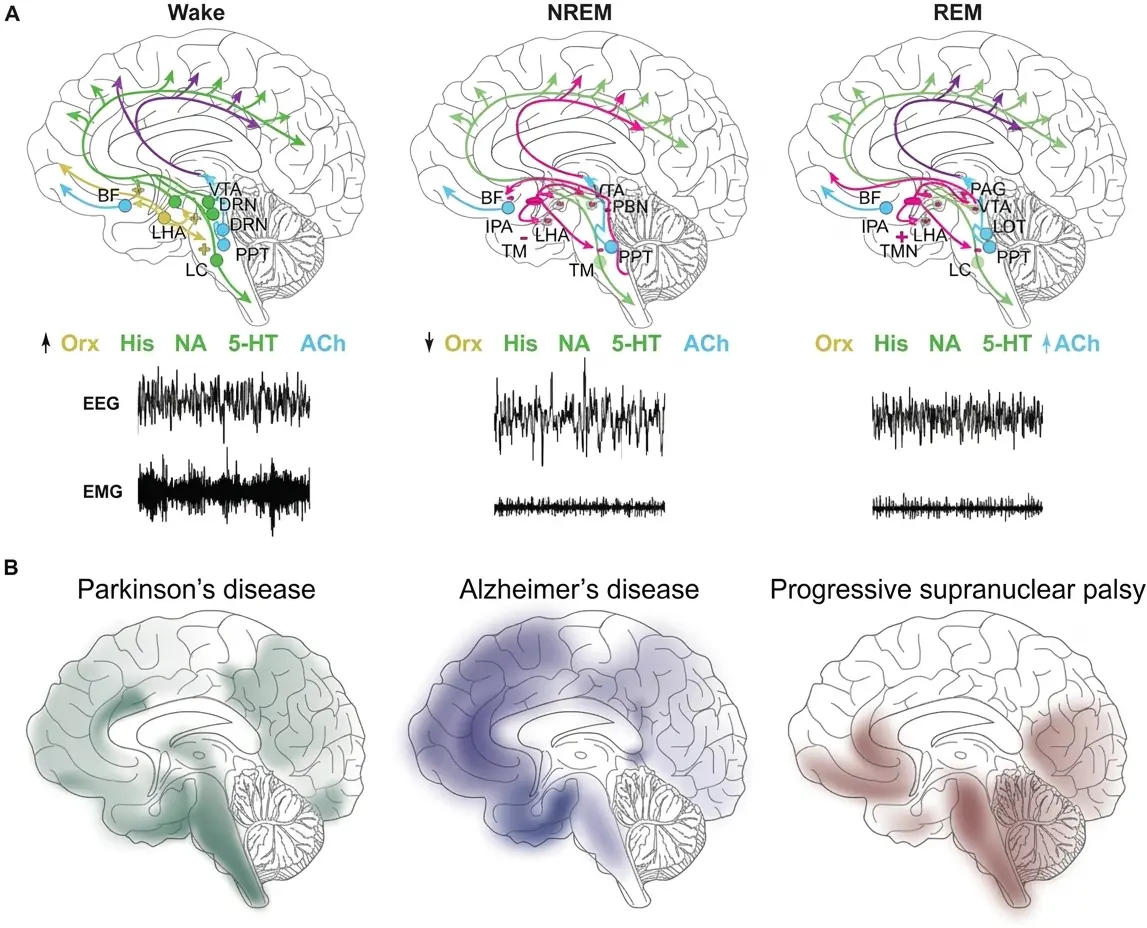
With aging, these systems become less efficient, leading to characteristic changes in sleep patterns:
- reduced deep sleep (slow-wave sleep),
- greater sleep fragmentation,
- and more frequent awakenings.
These changes could increase the brain’s vulnerability to neurodegenerative processes.
The relationship between sleep and neurodegenerative diseases
The article highlights that sleep disorders are extremely common across different neurodegenerative diseases, although their presentation varies depending on the condition.
For example:
- Alzheimer’s disease: sleep fragmentation and reduced deep sleep are observed.
- Parkinson’s disease and dementia with Lewy bodies: REM sleep behavior disorder is common.
- Frontotemporal dementia: changes in sleep duration and quality may occur.
In some cases, sleep problems may even appear years before cognitive or motor symptoms, suggesting that they could act as early markers of disease.

Subscribe
to our
Newsletter
How sleep protects the brain from neurodegeneration
One of the article’s most interesting contributions is its description of several mechanisms through which sleep may protect against neurodegeneration. During deep sleep, processes that are fundamental to maintaining brain health are regulated, ranging from neural activity to inflammation and genetic regulation.
| Process during sleep | Impact on the brain |
|---|---|
| Regulation of neural activity | Reduces the accumulation of pathological proteins such as β-amyloid and tau. |
| Microglial modulation | Reduces brain inflammation. |
| Synaptic regulation | Promotes learning and memory consolidation. |
| Epigenetic regulation | Influences gene expression and cellular repair. |
Below, some of the mechanisms through which sleep may exert a protective effect against neurodegeneration are described in greater detail.
Regulation of neural activity
During prolonged wakefulness, neural activity increases, which increases the release of proteins such as β-amyloid and tau. Sleep, especially deep sleep, helps reduce this excessive activity and restore neural balance, thereby promoting the stability of brain networks.
Control of brain inflammation
Glial cells—especially microglia—play an important role both in sleep regulation and in the brain’s immune response. Sleep deprivation can activate inflammatory responses and increase microglial reactivity, potentially promoting neurodegenerative processes.
Maintenance of synaptic plasticity
Sleep also helps reorganize the synaptic connections formed during the day, strengthening some and eliminating others. This process is essential for learning, memory consolidation, and the stability of neural networks.
The role of genetics and the molecular regulation of sleep
The study also highlights that sleep can influence molecular mechanisms that regulate gene expression.
For example, changes in the sleep-wake cycle can modify epigenetic processes such as:
- DNA methylation,
- histone modifications,
- regulation of gene expression.
These modifications can affect key processes for neuronal health, such as DNA repair, synaptic plasticity, and genomic stability.
Implications of sleep for dementia prevention
The authors conclude that improving sleep quality could become an important strategy for reducing the risk of neurodegenerative diseases.
Potential applications include:
- early detection, using sleep disturbances as potential biomarkers of risk;
- preventive interventions, aimed at improving sleep quality in vulnerable populations;
- integrated treatments that combine pharmacological therapies, lifestyle changes, and cognitive stimulation.
Although more studies are still needed to establish clear causal relationships, the accumulated evidence suggests that sleep plays a much more active role in brain health than previously thought.
How does this advance relate to NeuronUP?
NeuronUP develops digital tools based on scientific evidence for cognitive rehabilitation and stimulation.
Understanding how biological factors such as sleep influence neurodegeneration makes it possible to design more comprehensive therapeutic strategies that combine:
- early diagnosis,
- personalized cognitive intervention,
- ongoing monitoring of the patient’s status.
In this context, improving sleep quality could become an important complement to cognitive rehabilitation programs, helping optimize patients’ cognitive performance and quality of life.
Conclusion
Sleep plays a fundamental role in protecting the brain from neurodegenerative processes. More than simply a period of rest, sleep regulates neural activity, modulates brain inflammation, and participates in molecular mechanisms essential to nervous system health.
A better understanding of this relationship opens new opportunities for preventing and treating diseases such as Alzheimer’s disease and Parkinson’s disease. In the coming years, incorporating sleep research into clinical research could be key to developing more effective strategies for protecting brain health.
References
- Parhizkar S, Holtzman DM. The night’s watch: Exploring how sleep protects against neurodegeneration. Neuron. 2025;113:819–837. doi:10.1016/j.neuron.2025.02.004.
Frequently asked questions about sleep and neurodegeneration
1. Does sleeping too little increase the risk of Alzheimer’s disease?
Yes, scientific evidence suggests that chronic sleep deprivation may increase the risk of developing Alzheimer’s disease. Poor sleep promotes the accumulation of proteins such as β-amyloid and tau in the brain, which are directly involved in neurodegeneration. In addition, lack of sleep disrupts processes such as brain clearance and inflammatory regulation.
2. How does sleep protect the brain from neurodegeneration?
Sleep protects the brain through several key mechanisms: it reduces excessive neural activity, facilitates the removal of toxic substances, regulates brain inflammation, and promotes synaptic plasticity. These processes help maintain neuronal health and may help prevent cognitive decline.
3. Which sleep stage is most important for brain health?
Deep sleep, or slow-wave NREM sleep, is especially important for brain health. During this stage, metabolic waste is cleared more efficiently, memory is consolidated, and excessive neural activity is reduced, protecting against neurodegenerative processes.
4. Can sleep disorders be an early symptom of dementia?
Yes, in many cases sleep disorders may appear years before cognitive symptoms. Disturbances such as insomnia, sleep fragmentation, or REM sleep disorders may act as early biomarkers of neurodegenerative diseases.
5. Is there a relationship between sleep and cognitive decline?
Yes, the relationship between sleep and cognitive decline is bidirectional. On the one hand, neurodegenerative diseases disrupt sleep; on the other, poor sleep may accelerate cognitive decline and increase brain vulnerability.
6. Can improving sleep quality prevent dementia?
Although there is no absolute prevention, improving sleep quality is considered a promising strategy for reducing dementia risk. Interventions such as sleep hygiene, regular sleep schedules, and treatment of sleep disorders may have a positive impact on brain health.
7. What role does sleep play in cognitive rehabilitation?
Sleep directly influences the effectiveness of cognitive rehabilitation because it is involved in processes such as learning, memory consolidation, and neural plasticity. Getting good sleep may improve therapeutic performance and promote cognitive recovery in patients with neurological conditions.
8. How can sleep be assessed in patients with cognitive impairment?
Sleep can be assessed through clinical interviews, specific questionnaires, sleep diaries, and objective tools such as actigraphy or polysomnography. Integrating this assessment into clinical practice makes it possible to detect disturbances relevant to diagnosis and intervention.






 Digital Tools in Early Intervention: What International Evidence Tells Us
Leave a Reply