
At NeuronUP, we are sharing a roundup of the new cognitive stimulation activities for children that we have published during these months of 2026.
Why it is important to work on new cognitive stimulation activities for children
Maintaining young children’s motivation during rehabilitation and cognitive stimulation sessions is one of the greatest challenges we face as professionals. Turning therapeutic effort into real progress requires constant innovation and, above all, resources that connect directly with each child’s interests and reality.
During these months of 2026, at NeuronUP we have published new cognitive stimulation activities for children based on real-life scenarios and activities of daily living (ADLs), so that you, as a specialist, can enhance the ecological value of every session.
NeuronUP activities for children’s cognitive stimulation in 2026
- Switching hats
- Prepare for school
- Scramble of basic emotions
- Let’s go to school
- What would you say?
- Going on a Field Trip
- Is it right or wrong?
1. Switching hats
What does it involve?
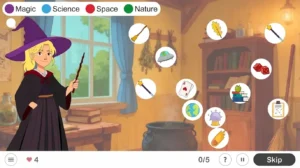
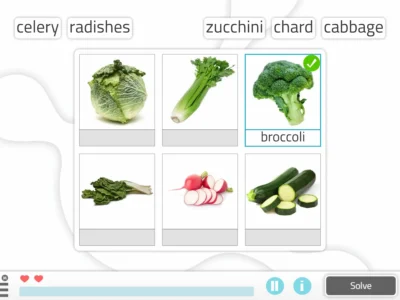
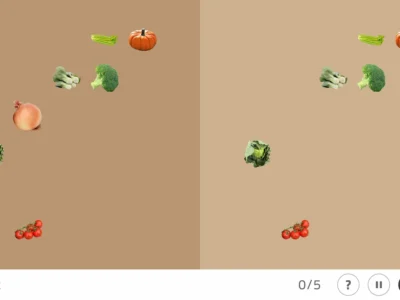
In this game, each child must locate and select on-screen elements belonging to a specific category or instruction. The key feature of the intervention is a character whose hat suddenly changes color; this visual signal tells the child that the search criterion has changed.
In this way, each young user must continuously readjust their response to comply with the new rules, maintaining their attentional focus throughout the session.
The game is specifically designed for intervention with children with autism, as well as other children who show mental rigidity, inflexible behavior patterns, or difficulty tolerating changes in routine.
Intervention areas
With Switching hats, the main therapeutic goal is cognitive flexibility and training for unpredictable situations. It also supports key areas of neurodevelopment, such as inhibition of automatic responses and selective attention.
Ecological value
The game’s design simulates everyday situations in which rules change without warning.
It is excellent training for helping children manage uncertainty and adapt to unexpected events in the real world, such as a change in the school schedule or changes in their circle of caregivers.
Available languages
Spanish, English, French, Portuguese (Brazil and Portugal), and Catalan.
2. Prepare for school
What does it involve?
At the beginning of the session, the child is shown a specific item to find, such as a notebook or pencils. The task is to search for and select only that target object throughout the exercise, ignoring the other visual elements that progressively appear on the screen as distractors.
Prepare for school is highly recommended for children with ADHD, who often have difficulty sustaining attention, make impulsivity-related errors, and are highly vulnerable to interference.
It is also excellent for children with autism who tend to focus on irrelevant visual details, helping them stay focused on the task’s main objective.
Intervention areas
The main intervention area is sustained attention, as the child must maintain concentration continuously for a period of time. It also trains impulse control and selective attention by requiring irrelevant stimuli to be filtered out.
Ecological value
Prepare for school has high ecological validity because it simulates a real activity of daily living (ADL) for children: identifying the objects needed to pack a school backpack. Training this skill in therapy leads to greater independence in morning routines at home, reducing lapses and forgetfulness before school.
Available languages
Spanish, English, French, Portuguese (Brazil and Portugal), and Catalan.

Subscribe
to our
Newsletter
3. Scramble of basic emotions
What does it involve?
This card-based activity challenges each child to identify and match everyday emotions presented through a rich variety of visual formats.
To prevent rote memorization, the platform alternates between real photographs, pictograms, illustrations, and emojis, requiring the child to process the emotional feature regardless of the format.
Scramble of basic emotions is designed to work with children with autism, as well as other neurodevelopmental profiles that require a clear, structured visual approach to interpreting the emotional spectrum, regardless of their functional support needs.
Intervention areas
With the Scramble of basic emotions cards, the central goals are social cognition and emotion recognition. The activity also builds semantic vocabulary, improves social perception, and supports the progressive discrimination of emotions, essential steps toward understanding social rules.
Ecological value
Its application to daily life is direct. By training recognition of facial emotions and gestures with highly realistic stimuli, such as photographs, young users gain tools for accurately reading their environment. This improves interactions with peers and adults at school or home and expands their ability to communicate how they feel, reducing frustration.
Available languages
Spanish, English, French, Portuguese (Brazil and Portugal), and Catalan.
What does it involve: This emotional intervention exercise challenges the patient to identify and match basic emotions presented through a rich variety of visual formats. To prevent rote memorization, the platform alternates between real photographs, pictograms, illustrations, and emojis, requiring the child to process the emotional feature regardless of the format.
What it works on: The central goals are social cognition and emotion recognition. The activity also builds semantic vocabulary, improves social perception, and supports the progressive discrimination of emotions, essential steps toward understanding social rules.
Ecological value: Its application to daily life is direct. By training recognition of facial expressions and gestures with highly realistic stimuli, such as photographs, children gain tools for accurately “reading” their environment. This improves their interactions with peers and adults at school or home and expands their ability to communicate how they feel, reducing frustration.
4. Let’s go to school (bus and train versions)
What does it involve?
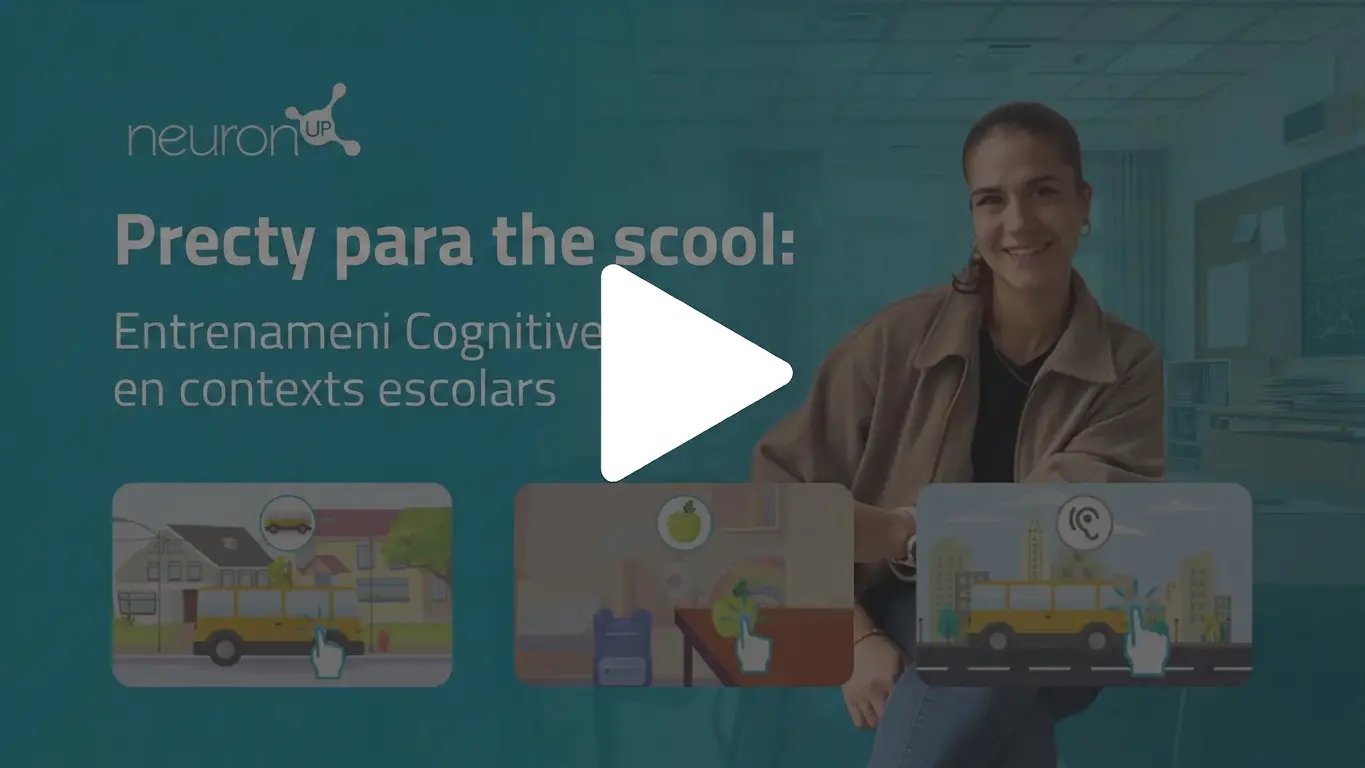
At the beginning of the activity, the child is told their target bus stop or train station. As the virtual journey progresses, they hear different public-address announcements about upcoming stops. Young users must interact (by pausing the game) only when they hear theirs, actively ignoring all other names and the typical environmental auditory distractors of these forms of transportation.
Let’s go to school is an excellent game for children who have difficulty understanding spoken sentences or focusing their attention. It is especially useful for working with children with developmental language disorder, ADHD, autism, and also young people with schizophrenia, since they often have difficulty inhibiting environmental distractors.
Intervention areas
Cognitively, it provides excellent selective attention training (filtering relevant stimuli from distractors) and sustained attention. Secondarily, it directly addresses the occupational areas of community mobility and education.
Ecological value
Let’s go to school (in its bus and train versions) simulates real situations in which children must process relevant auditory information amid background noise, as happens when traveling on public transportation. This training transfers an essential skill to other everyday contexts, helping children stay alert to specific announcements in complex places with public-address systems, such as stations, hospitals, and shopping centers.
Available languages
Spanish, English, French, Portuguese (Brazil and Portugal), and Catalan.
5. What would you say?
What does it involve?
In What would you say?, children observe a specific social scene or situation accompanied by dialogue. The challenge is to analyze the interaction’s context and select the most appropriate verbal response from the alternatives provided, deciding how best to continue or resolve the conversation.
It is highly recommended for children with autism, as well as any young user who shows difficulties interacting with peers, pragmatic communication, or assimilating basic conversational rules.
Intervention areas
The main therapeutic focus is social cognition and language pragmatics. It also deeply stimulates cognitive flexibility, accurate interpretation of context, and theory of mind (the ability to understand and infer what others think and feel during interactions).
Ecological value
The design of What would you say? faithfully reproduces real-life communication interactions, such as greeting someone, asking for help, apologizing for a mistake, or expressing emotions. By rehearsing these responses in a controlled clinical environment without pressure, children gain practical tools that they can transfer more confidently to their natural environment, improving their independence and social competence.
Available languages
Spanish, English, French, Portuguese (Brazil and Portugal), and Catalan.
6. Going on a Field Trip (sounds and voice versions)
What does it involve?
During Going on a Field Trip, each child must detect and respond simultaneously to two types of stimuli: one visual and one auditory. The goal is to interact, by pressing, each time the target visual stimulus appears or the indicated auditory stimulus is heard.
It is a highly versatile activity, recommended for children with ADHD, autism, mild intellectual disability, childhood acquired brain injury, or patients with specific difficulties in attentional control and impulse regulation. The Going on a Field Trip (sounds) version is ideal for younger children or those with greater language difficulties.
Intervention areas
The main intervention area is divided attention, as the child must manage visual and auditory information simultaneously. Selective and sustained attention are also trained, strengthening the ability to filter irrelevant information while staying alert. Functionally, it affects the areas of leisure and education.
Ecological value
Going on a Field Trip, in both versions, represents a familiar situation—preparing for a field trip—which greatly facilitates transfer of learning to the classroom. The game simulates real and demanding scenarios, such as listening to the teacher’s explanations (auditory) while looking at the board (visual), or attending to a verbal instruction while performing manual tasks at the desk.
Available languages
Spanish, English, French, Portuguese (Brazil and Portugal), and Catalan.
7. Is it right or wrong?
What does it involve?
Is it right or wrong? offers cards showing children different realistic scenes representing everyday social interactions. The goal is for them to analyze the situation, process information from the environment, and objectively determine whether the behavior shown by the characters is appropriate or inappropriate.
It is highly recommended for children with autism, as well as other neurocognitive profiles that need structured, visual support to learn to interpret others’ interactions and clearly distinguish appropriate from inappropriate behaviors.
Intervention areas
The therapeutic goal focuses on social perception and assimilating basic social rules. The activity also stimulates emotion recognition and promotes socioemotional regulation, foundations for developing socially adaptive responses.
Ecological value
All visual material in the What does it involve? cards is based on key environments for children’s development: school, family, and community settings (parks, stores, etc.). Since the rules addressed apply directly to everyday life, learning generalization is greatly supported and young users’ social independence is promoted outside therapy.
Available languages
Spanish, English, French, Portuguese (Brazil and Portugal), and Catalan.
Summary of NeuronUP’s new cognitive stimulation activities for children in 2026
| Activity name | Activity type | Main cognitive function | Highlighted ecological value | Recommended profile |
|---|---|---|---|---|
| Switching hats | Game | Cognitive flexibility | Adapting to unexpected events and new rules | Autism and profiles with cognitive rigidity |
| Prepare for school | Game | Sustained attention | Independence in morning routines (ADLs) | ADHD, autism |
| Scramble of basic emotions | Cards | Social cognition | Reading the environment and emotional management | Autism and profiles with integration difficulties |
| Let’s go to school | Game | Selective attention | Safety when traveling amid noise | DLD, ADHD, autism, schizophrenia |
| What would you say? | Cards | Social cognition | Assertiveness and social responses | Autism and profiles with communication difficulties |
| Going on a Field Trip | Game | Divided attention | Dual attention | ADHD, autism, childhood acquired brain injury, intellectual disability |
| Is it right or wrong? | Cards | Social cognition | Assimilation of rules and social judgment | Autism and profiles with socioemotional difficulties |
All activities are available in Spanish, English, French, Portuguese (Brazil and Portugal), and Catalan.

 Interview with Jesús M. Cortés: LATAM-FINGERS and the Opportunity to Prevent Cognitive Decline in Latin America
Leave a Reply