

Were you interested in our Press Conference with Yolanda Higueras on NeuronUP Talks? In this article, we share the bibliography recommended by this neuropsychologist for continuing to explore multiple sclerosis.
Executive summary of the key points in this article:
1. The importance of early neuropsychological assessment in multiple sclerosis (MS).
2. The implementation of combined programs of cognitive rehabilitation and psychoeducation based on scientific evidence.
3. Key scientific articles on MS.
Who is neuropsychologist Yolanda Higueras?
Yolanda Higueras is a clinical neuropsychologist and researcher specializing in multiple sclerosis (MS), with an extensive background in neuropsychological assessment and cognitive rehabilitation in demyelinating diseases.
She holds a PhD in Psychology from Bangor University (United Kingdom), where she researched false memories. She also holds a degree in Psychology and a master’s degree in Clinical Neuropsychology and Behavioral Neurology from the Complutense University of Madrid (UCM), as well as a master’s degree in Forensic Neuropsychology from the Autonomous University of Madrid.
Accredited as a Clinical Neuropsychologist by the General Council of Psychology of Spain and certified by EuroPsy, she combines clinical practice with teaching and research. Since 2013, she has been part of the Demyelinating Diseases Unit of the Neurology Department at Gregorio Marañón General University Hospital (Madrid), where she assesses and treats cognitive impairments associated with multiple sclerosis and other demyelinating diseases.
She is also an associate professor in the Psychology degree program at the Complutense University of Madrid (UCM) and a postgraduate instructor in Neuropsychology at universities such as UNIR, Loyola University, and Nebrija University, helping to provide training for new professionals in clinical neuropsychology and cognitive stimulation.
Her background makes her a leading figure for neurorehabilitation professionals and cognitive intervention in multiple sclerosis (MS), integrating evidence-based clinical practice, specialized research, and university teaching.
Press Conference with Yolanda Higueras on NeuronUP Talks
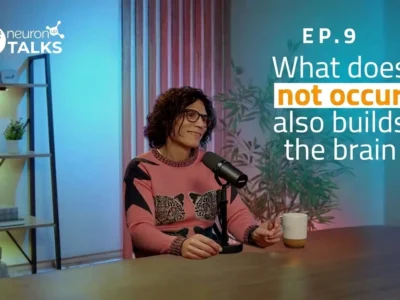
In this new episode of NeuronUP Talks, the NeuronUP podcast, Marcos Ríos sits down with neuropsychologist Yolanda Higueras to analyze how multiple sclerosis (MS) affects the mind, emotions, and quality of life.
They discuss the cognitive and emotional challenges of this chronic neuroimmune disease and the crucial role of the neuropsychologist in addressing it.
This episode of NeuronUP Talks about multiple sclerosis is for you if you are a professional involved in the assessment and cognitive rehabilitation of demyelinating diseases.
Join us to discover the invisible side of multiple sclerosis (MS) through the following key points:
- The importance of neuropsychological assessment from diagnosis.
- The invisible symptoms that affect the daily lives of people with MS.
- The need for multidisciplinary teams and combined cognitive rehabilitation programs.
- Psychoeducation as a preventive tool.
- Scientific advances that are transforming the prognosis and future of multiple sclerosis.

Subscribe
to our
Newsletter
Recommended Reading on Multiple Sclerosis
Recommended scientific articles on MS
- Benedict, R. H. B., DeLuca, J., Enzinger, C., Geurts, J. J. G., Krupp, L. B., & Rao, S. M. (2017). Neuropsychology of Multiple Sclerosis: Looking Back and Moving Forward. Journal of the International Neuropsychological Society, 23(9-10), 832–842. https://doi.org/10.1017/S1355617717000959
- Benedict, R. H. B., Amato, M. P., DeLuca, J., & Geurts, J. J. G. (2020). Cognitive impairment in multiple sclerosis: clinical management, MRI, and therapeutic avenues. The Lancet Neurology, 19(10), 860–871. https://doi.org/10.1016/S1474-4422(20)30277-5
- Chen, M. H., Goverover, Y., Genova, H. M., & DeLuca, J. (2020). Cognitive Efficacy of Pharmacologic Treatments in Multiple Sclerosis: A Systematic Review. CNS Drugs, 34(6), 599–628. https://doi.org/10.1007/s40263-020-00734-4
- Chen, M. H., Chiaravalloti, N. D., & DeLuca, J. (2021). Neurological update: cognitive rehabilitation in multiple sclerosis. Journal of Neurology, 268(12), 4908–4914. https://doi.org/10.1007/s00415-021-10618-2
- Costa, S. L., Genova, H. M., DeLuca, J., & Chiaravalloti, N. D. (2017). Information processing speed in multiple sclerosis: Past, present, and future. Multiple Sclerosis Journal, 23(6), 772–789. https://doi.org/10.1177/1352458516645869
- Cuello, J. P., Meldaña Rivera, A., Monreal, E., Gómez Lozano, A., García Cano, A. M., García Domínguez, J. M., Fernández Velasco, J. I., Costa-Frossard França, L., Goicochea, H., Higueras, Y., De León-Luis, J. A., Sainz De La Maza, S., Villarrubia, N., Arribas Gómez, I., Ruiz Perez, I., Martinez Ginés, M. L., & Villar, L. M. (2024). Emerging biomarkers for improving pregnancy planning in multiple sclerosis. Frontiers in Neurology, 15, 1292296. https://doi.org/10.3389/fneur.2024.1292296
- DeLuca, J., Chiaravalloti, N. D., & Sandroff, B. M. (2020). Treatment and management of cognitive dysfunction in patients with multiple sclerosis. Nature Reviews Neurology, 16(6), 319–332. https://doi.org/10.1038/s41582-020-0355-1
- DeLuca, J. (2024). Fatigue in multiple sclerosis: can we measure it and can we treat it? Journal of Neurology, 271(9), 6388–6392. https://doi.org/10.1007/s00415-024-12524-9
- Goverover, Y., Chiaravalloti, N. D., O’Brien, A. R., & DeLuca, J. (2018). Evidenced-Based Cognitive Rehabilitation for Persons With Multiple Sclerosis: An Updated Review of the Literature From 2007 to 2016. Archives of Physical Medicine and Rehabilitation, 99(2), 390–407. https://doi.org/10.1016/j.apmr.2017.07.021
- Gromisch, E. S., Imitola, J., Agresta, T., Turner, A. P., Foley, F. W., Gokhale, S. S., Raskin, S. A., Zemon, V., Neto, L. O., Bailey, M., & DeLuca, J. (2025). Mobile-based cognitive screening tools in multiple sclerosis: Scoping literature and app store review. Multiple Sclerosis and Related Disorders, 104, 106782. https://doi.org/10.1016/j.msard.2025.106782
- Higueras, Y., Borges, M., Jiménez-Martín, I., Conde, C., Aparicio-Mingueza, A., Sierra-Martínez, E., Gich-Fulla, J., Balaguer-Marmaña, M., Gil-Sánchez, A., Anglada, E., Jover, A., Pérez-Martín, M. Y., Arévalo, M. J., Arrabal-Gómez, C., Jiménez-Veiga, J., Lubrini, G., Molano, A., & García-Vaz, F. (2022). Cognitive assessment in patients with multiple sclerosis: A Spanish consensus. Frontiers in Rehabilitation Sciences, 3, 1006699. https://doi.org/10.3389/fresc.2022.1006699
- Meca-Lallana, V., Gascón-Giménez, F., Ginestal-López, R. C., Higueras, Y., Téllez-Lara, N., Carreres-Polo, J., Eichau-Madueño, S., Romero-Imbroda, J., Vidal-Jordana, Á., & Pérez-Miralles, F. (2021). Cognitive impairment in multiple sclerosis: diagnosis and monitoring. Neurological Sciences, 42(12), 5183–5193. https://doi.org/10.1007/s10072-021-05165-7
- Sumowski, J. F., Levy, S., Katz Sand, I., Brandstadter, R., Dvorak, E., Anderson, J., Fabian, M. T., Graney, R. A., Lublin, F. D., Miller, A. E., & Sandry, J. (2025). Cognition in multiple sclerosis within the modern diagnostic and treatment era. Brain, 148(X), awaf446. https://doi.org/10.1093/brain/awaf446
Frequently asked questions about the neuropsychological approach to multiple sclerosis (MS)
1. Which population is primarily affected by multiple sclerosis?
Multiple sclerosis (MS) is a neuroimmune and neurodegenerative disease that predominantly affects young adults, with diagnosis most commonly occurring between ages 25 and 45. Although it is more prevalent in women (a 3:1 ratio), men tend to have a poorer prognosis and accumulate disability more rapidly.
2. What is the most characteristic pattern of cognitive impairment in people with multiple sclerosis?
Unlike cortical dementias, the cognitive profile in MS is characterized by generalized slowing and a greater need for mental effort to process information. The most sensitive processes are:
- Information processing speed: This is the most prevalent and earliest deficit, serving as the central feature of cognitive dysfunction.
- Complex attention: Especially resistance to interference, the ability to switch between tasks, and sustained attention under time pressure.
- Working and episodic memory: Difficulties manipulating information in real time and consolidating new learning.
- Executive functions: Difficulties with planning and organizing daily tasks and, in more advanced stages, impairments in theory of mind.
3. How is primary fatigue differentiated from secondary fatigue in multiple sclerosis?
Primary fatigue is directly linked to the activity of functional neural networks and the hyperactivation of the immune system to compensate for damage. In contrast, secondary fatigue is associated with comorbidities such as sleep disorders, urinary problems, or mood changes resulting from the diagnosis.
4. What protocols are recommended for neuropsychological assessment in multiple sclerosis?
According to the Spanish consensus led by experts such as Dr. Higueras, a comprehensive baseline should be established at diagnosis, including measures of attention, processing speed, memory, and executive functions. It is also crucial to include self-report scales assessing quality of life, fatigue, and mood.
5. How often should cognitive follow-up be conducted in multiple sclerosis?
Although there is ongoing clinical debate, the current consensus suggests conducting follow-up assessments every two years, always subject to the clinician’s judgment if worsening is suspected or after new relapses occur.
6. Is there scientific evidence for the efficacy of cognitive rehabilitation in multiple sclerosis?
Yes, current scientific literature supports the efficacy of neurorehabilitation programs, especially combined programs integrating cognitive retraining with aerobic exercise, mindfulness, or psychoeducation. Specific validated procedures have demonstrated improvements even on post-intervention functional neuroimaging.
7. Why is psychoeducation considered a key preventive tool in multiple sclerosis?
Psychoeducation is the neuropsychologist’s first preventive task after an MS diagnosis. Its goal is for patients to understand what cognitive processes are, what difficulties may arise, and how to maintain functioning for as long as possible. This intervention helps:
- Reduce learned helplessness: By providing patients with concrete tools regarding what they can do for their health, it combats the loss of control generated by uncertainty about the disease.
- Manage clinical honesty”: According to Dr. Higueras, psychoeducation is the “art of administering the truth,” adjusting technical information to what the patient is able to process emotionally at each stage.
- Identify clinical warning signs: This is essential so patients can recognize when they are experiencing a relapse and know when to seek emergency hospital care.
- Involve the patient’s support network: It helps family members move from being caregivers to being companions, normalizing daily life and supporting the patient’s cognitive reserve.
NeuronUP Talks — the podcast where professionals in neuropsychology, neurorehabilitation, and cognitive health share knowledge, practice, and the future.





 Early Detection of Cognitive Decline in Intellectual Disability: A Guide for Neurorehabilitation Professionals
Leave a Reply