
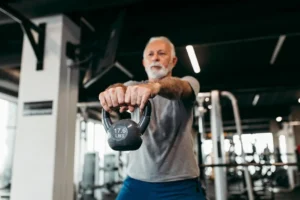
Educator and researcher Edward Calvo explores how physical exercise acts as a biological intervention to enhance neuroplasticity and executive functions in people with cognitive difficulties according to current scientific evidence.
Physical exercise is analyzed not only as a motor activity, but also as a biological intervention capable of modulating brain neuroplasticity, which is fundamental for recovery in people with cognitive difficulties. Processes such as neurogenesis and the release of neurotrophic factors (BDNF, myokines) are explored to enhance executive functions, memory, and functional independence.
Physical exercise as a tool for biological modulation
For a long time, physical exercise was understood primarily as a tool aimed at developing strength, controlling body weight, and improving cardiovascular health. However, current scientific evidence has significantly broadened this perspective by demonstrating that body movement also exerts profound effects on the brain, cognition, and behavior.
In this regard, physical exercise should be understood not only as a motor practice, but also as a biological intervention capable of modulating essential neurophysiological and molecular processes involved in human adaptation and functioning, particularly in people with cognitive difficulties, older adults, and other vulnerable populations (Calvo, 2025; Di Liegro et al., 2019).
Globally, the number of people with disabilities is close to one billion, representing approximately 15% of the world’s population. A significant proportion of this percentage consists of people with intellectual disabilities, whose prevalence has been estimated at approximately 1% to 3% of the population, depending on the context and diagnostic criteria used.
Both the World Health Organization, through the World report on disability, and the specialized epidemiological literature have highlighted the importance of considering not only the clinical condition, but also the person’s adaptive functioning, behavior, and environment (WHO, 2011; Maulik et al., 2011). From this perspective, physical exercise is a supportive strategy with the potential to improve physical health, cognitive processes, and everyday functioning.
How does exercise change the brain?: Neurogenesis, angiogenesis, and synaptogenesis
The changes induced by physical exercise in brain structure and function are explained, to a large extent, by neuroplasticity mechanisms such as neurogenesis, angiogenesis, and synaptogenesis (El-Sayes et al., 2019; Feter et al., 2019; Ferrer-Uris et al., 2022).
- Neurogenesis is the process through which new neurons are formed, particularly in regions such as the hippocampus, a structure closely associated with memory and learning.
- Angiogenesis involves the formation of new blood vessels, which promotes a greater supply of oxygen and nutrients to brain tissue and improves its metabolic functioning.
- Synaptogenesis refers to the creation and strengthening of connections between neurons, an essential process for optimizing neural communication and supporting functions such as attention, memory, and learning.
These phenomena are regulated by neurotrophic and growth factors, including brain-derived neurotrophic factor (BDNF), insulin-like growth factor 1 (IGF-1), and vascular endothelial growth factor (VEGF), molecules that actively participate in exercise-induced brain adaptation (Di Liegro et al., 2019; El-Sayes et al., 2019; Ferrer-Uris et al., 2022).
In this regard, skeletal muscle should not be understood solely as an organ responsible for movement, stability, or joint protection, but also as a secretory organ with endocrine capacity.
During muscle contraction, myokines and other signaling molecules are released, mediating communication between muscle and various organs, including the brain. These include irisin, as well as factors such as BDNF and IGF-1, which not only participate in muscular adaptation but also influence processes associated with neuroplasticity and cognitive function. This molecular exchange reinforces the idea that physical exercise acts as a highly relevant neuroendocrine and epigenetic modulator, capable of activating signaling pathways involved in tissue repair, growth, and adaptation (Pedersen y Febbraio, 2008; Vargas-Pacheco y Correa-López, 2022; Di Liegro et al., 2019).

Subscribe
to our
Newsletter
Impact of exercise on cognitive functions and adaptive behavior
Understanding brain mechanisms is important, but it is even more relevant to understand how these changes translate into daily life.
Physical exercise does not only modify biological structures and processes: it can also contribute to a person’s cognitive functioning. This includes processes such as attention, memory, learning, processing speed, and executive functions, including planning, response inhibition, cognitive flexibility, and decision-making (El-Sayes et al., 2019; Fernandes et al., 2017; Ferrer-Uris et al., 2022).
For example:
- Better executive function may support the organization of everyday tasks, following instructions, or adapting to changes in routine.
- Likewise, an improvement in attention and memory may facilitate participation in educational, social, or therapeutic activities.
Thus, the benefit of physical exercise should not be interpreted solely from a biological perspective, but also in terms of its potential impact on independence, participation, and everyday functioning by enhancing cognitive functions.
Types of exercise and their specific cognitive benefits
Scientific literature suggests that different exercise modalities can produce meaningful benefits for the central nervous system, although they do not always do so through the same pathways or with the same effects.
Benefits of cardiovascular exercise for cognition
Cardiovascular exercise has been one of the most extensively studied modalities in relation to brain health.
Acute sessions of moderate- or vigorous-intensity exercise can transiently increase BDNF levels, resulting in an immediate improvement in cognitive performance, especially on sustained-attention tasks.
When cardiovascular exercise is performed consistently, it can contribute to more stable adaptations, such as improved cerebral perfusion, greater metabolic efficiency, and favorable changes in regions associated with memory and learning (Di Liegro et al., 2019; El-Sayes et al., 2019; Ferrer-Uris et al., 2022; Feter et al., 2019). In this way, it facilitates the acquisition of new information and the consolidation of long-term memories.
Benefits of strength training for cognition
Strength training, in turn, is an equally relevant modality as a modulator of the muscle–brain axis.
The 2026 position stand from the American College of Sports Medicine (ACSM) highlights that this modality improves muscle strength, hypertrophy, power, muscular endurance, contraction speed, gait speed, balance, and various indicators of physical function in healthy adults.
It also notes that progressive strength training, performed at least twice per week and adjusted according to variables such as load, volume, and range of motion, consistently contributes to improving muscle function and physical performance (Currier et al., 2026).
Although this document focuses on muscular and functional outcomes, strength training is also part of the broader framework of physical exercise, which, in general, is associated with benefits for brain health and cognition, especially when integrated into structured programs adapted to each person’s characteristics (Di Liegro et al., 2019; Fernandes et al., 2017).
Strength training is closely linked to improvements in executive functions, such as planning, response inhibition, and decision-making.
Benefits of multicomponent exercise for cognition
In this context, it is important to introduce the concept of multicomponent exercise, that is, programs that combine two or more training modalities, such as cardiovascular exercise, strength, balance, coordination, and flexibility. This approach is particularly valuable in populations with greater support needs, as it enables a more comprehensive intervention targeting physical function, functional capacity, and potentially cognitive processes related to independence and everyday performance.
Evidence suggests that multicomponent programs may promote broader and more sustained adaptations, including better functional performance, improved motor control, greater participation in activities of daily living (ADLs) and favorable changes in brain structure and function (Di Liegro et al., 2019; El-Sayes et al., 2019; Ferrer-Uris et al., 2022).
This approach promotes sustained adaptations in independence and everyday performance. It facilitates processes such as divided attention and the ability to follow complex instructions, which are fundamental to social participation and daily life in people with cognitive difficulties.
| Type of exercise | Primary mechanism | Direct cognitive benefit |
Cardiovascular exercise | Increased BDNF and perfusion. | Memory, learning, and metabolic efficiency. |
Strength training | Muscle–brain axis (myokine/IGF-1). | Executive functions, attention, and processing speed. |
Multicomponent exercise | Sensorimotor integration. | Independence, following instructions, and behavioral regulation. |
Relevance of exercise for people with cognitive difficulties
For people with cognitive difficulties, physical exercise is particularly relevant because its benefits can extend beyond the physical dimension and affect the cognitive, emotional, and functional spheres. It is not only about improving cardiorespiratory fitness, strength, or balance, but also about supporting processes that influence quality of life and interaction with the environment.
When physical exercise is prescribed in a structured, progressive, and adapted manner, it can become a support tool to:
- Stimulate attention,
- reinforce memory,
- improve the ability to follow instructions,
- facilitate behavioral regulation,
- promote greater independence in everyday tasks.
It may also help improve self-esteem, social participation, and perceived personal competence, which are also part of overall well-being.
Therefore, physical exercise should not be viewed merely as a complementary activity, but as a strategy with biological and functional foundations that can be integrated into broader approaches to support, education, and rehabilitation. Its potential lies precisely in connecting body and brain, movement and cognition, physical health and human development.
Conclusion: Movement as a pathway to inclusion and improved everyday functioning
Current scientific evidence supports the conclusion that physical exercise is much more than a practice aimed at physical performance. Through mechanisms such as neurogenesis, angiogenesis, and synaptogenesis, exercise can modulate brain structure and function, supporting cognitive processes such as attention, memory, learning, and executive functions. These effects are especially important for people with cognitive difficulties, for whom movement may offer a concrete pathway to enhancing functioning, independence, and participation in daily life.
Consequently, promoting adapted, safe, and evidence-based physical exercise programs responds not only to a physical-health rationale, but also to a more comprehensive vision of human development. Understanding the relationship between exercise, the brain, and cognition opens new possibilities for intervention, inclusion, and improved quality of life in populations requiring specific supports.
References
- Calvo, E. (2025). Transformando el cerebro a través del movimiento: Beneficios del ejercicio físico para personas con dificultades cognitivas [Ponencia]. Primer Foro de Olimpiadas Especiales, San José, Costa Rica.
- Currier, B. S., D’Souza, A. C., Fiatarone Singh, M. A., Lowisz, C. V., Rawson, E. S., Schoenfeld, B. J., Smith-Ryan, A. E., Steen, J. P., Thomas, G. A., Triplett, N. T., Washington, T. A., Werner, T. J., y Phillips, S. M. (2026). American College of Sports Medicine position stand: Resistance training prescription for muscle function, hypertrophy, and physical performance in healthy adults: An overview of reviews. Medicine & Science in Sports & Exercise, 58(4), 851-872 .https://doi.org/10.1249/MSS.0000000000003897.
- Di Liegro, C. M., Schiera, G., Proia, P., y Di Liegro, I. (2019). Physical activity and brain health. Genes, 10(9), 720 .https://doi.org/10.3390/genes10090720.
- El-Sayes, J., Harasym, D., Turco, C. V., Locke, M. B., y Nelson, A. J. (2019). Exercise-induced neuroplasticity: A mechanistic model and prospects for promoting plasticity. The Neuroscientist, 25(1), 65-85 .https://doi.org/10.1177/1073858418771538.
- Fernandes, J., Arida, R. M., y Gomez-Pinilla, F. (2017). Physical exercise as an epigenetic modulator of brain plasticity and cognition. Neuroscience & Biobehavioral Reviews, 80, 443-456 .https://doi.org/10.1016/j.neubiorev.2017.06.012.
- Ferrer-Uris, B., Ramos, M. A., Busquets, A., y Angulo-Barroso, R. (2022). Can exercise shape your brain? A review of aerobic exercise effects on cognitive function and neuro-physiological underpinning mechanisms. AIMS Neuroscience, 9(2), 150-174 .https://doi.org/10.3934/Neuroscience.2022009.
- Feter, N., Alt, R., Dias, M. G., y Rombaldi, A. J. (2019). How do different physical exercise parameters modulate brain-derived neurotrophic factor in healthy and non-healthy adults? A systematic review, meta-analysis and meta-regression. Science & Sports, 34(5), 293–304.https://doi.org/10.1016/j.scispo.2019.02.001
- Maulik, P. K., Mascarenhas, M. N., Mathers, C. D., Dua, T., y Saxena, S. (2011). Prevalence of intellectual disability: A meta-analysis of population-based studies. Research in Developmental Disabilities, 32(2), 419-436 .https://doi.org/10.1016/j.ridd.2010.12.018.
- Pedersen, B. K., y Febbraio, M. A. (2008). Muscle as an endocrine organ: Focus on muscle-derived interleukin-6. Physiological Reviews, 88(4), 1379-1406 .https://doi.org/10.1152/physrev.90100.2007.
- Vargas-Pacheco, A., y Correa-López, L. E. (2022). El ejercicio como protagonista en la plasticidad muscular y en el músculo como un órgano endocrino: Implicaciones en las enfermedades crónicas. Revista de la Facultad de Medicina Humana, 22(1), 181-192 .https://doi.org/10.25176/RFMH.v22i1.4129.
- World Health Organization. (2011). World report on disability .https://www.who.int/publications/i/item/9789241564182.
Frequently asked questions about physical exercise and neuroplasticity
1. How does physical exercise induce structural changes in the brain?
Exercise acts as a biological intervention that activates three key processes: neurogenesis (the creation of neurons in the hippocampus), angiogenesis (improved oxygen supply), and synaptogenesis (the strengthening of neural connections). These mechanisms optimize synaptic communication and learning.
2. Which molecular factors mediate brain plasticity during movement?
Plasticity is regulated by neurotrophic factors such as BDNF, which is essential for tissue repair, and IGF-1/VEGF, which influence muscular adaptation and cognitive function. Muscle also secretes myokines, such as irisin, that enable direct communication between muscle and brain.
3. According to the 2026 ACSM guidelines, how often should people exercise?
The 2026 position stand from the American College of Sports Medicine (ACSM) emphasizes that progressive strength training should be performed at least twice per week. This modality not only improves hypertrophy and muscular power, but, in chronic multicomponent programs, also supports increases in gray- and white-matter volume, improving cerebral perfusion and synaptic efficiency.
4. Can physical exercise really improve long-term memory?
Yes. Exercise stimulates plasticity in the hippocampus, a structure closely associated with memory and learning. While acute cardiovascular exercise sessions may transiently increase BDNF levels and improve momentary performance, chronic exercise promotes more stable structural adaptations that benefit long-term cognitive function.
5. What benefits does exercise provide for people with intellectual disabilities?
Because nearly 15% of the world’s population lives with a disability, exercise is positioned as a biologically grounded strategy for improving quality of life. In people with intellectual disabilities, physical exercise supports adaptive functioning and behavioral functionality, reduces barriers to social participation, promotes independence, and activates signaling pathways for tissue repair in vulnerable populations.
6. Which type of exercise is most beneficial for the brain?
Both cardiovascular exercise and strength training have the potential to support cognitive function, but multicomponent programs produce deeper adaptations. They combine strength, balance, and coordination to improve divided attention and the ability to follow complex instructions.
Acute cardiovascular exercise raises BDNF temporarily, whereas strength training and multicomponent programs produce deeper and more stable structural adaptations in gray and white matter. Its prescription should be structured, progressive, and adapted to each person’s needs for it to become a genuine therapeutic tool.
7. Who is specialist Edward Calvo, and what is his impact in Latin America and Spain?
M.Sc. Edward Calvo Porras is a recognized educator and researcher trained at the University of Costa Rica, Universidad Hispanoamericana, and Universidad Iberoamericana de México. His work focuses on using physical exercise to promote health and neurological rehabilitation in special populations. Recently, his research has been presented at high-impact regional events such as the First Special Olympics Forum in San José, Costa Rica.





 High-Dose Flu Vaccine and Alzheimer’s Disease: Can It Reduce Risk in Older Adults?
Leave a Reply