
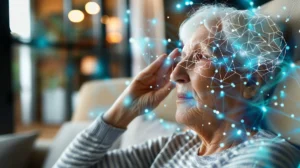
Martha Valeria Medina Rivera, a neuropsychologist at NeuronUP, analyzes from an evidence-based clinical perspective how neurotechnology, virtual reality, and intelligent neural interfaces are transforming the assessment and intervention of mild cognitive impairment (MCI).
What is neurotechnology applied to mild cognitive impairment?
It is the set of technological tools (EEG, neuromodulation, virtual reality, and artificial intelligence) that make it possible to assess, monitor, and modulate brain activity in order to design more precise and personalized cognitive interventions.
Demographic change and cognitive profile in later life
The sustained increase in life expectancy is one of the greatest achievements of modern medicine. More and more people are reaching advanced ages and, in many countries, the group of people aged 80 and 90 is growing the fastest. This phenomenon represents a healthcare and social success, but it also transforms the clinical landscape we face. Population aging entails an increase in the number of people with mild cognitive impairment and dementia.
Mild cognitive impairment affects approximately 15–20% of people over 65, and 10–15% progress to dementia each year, with Alzheimer’s disease being the most common cause (Mehrinejad Khotbehsara et al., 2025; Gkintoni et al., 2025). It is not a homogeneous condition. It may present in amnestic or nonamnestic form, affect one or several cognitive domains, and follow different trajectories, from prolonged stability to progression or, in some cases, partial reversal (Gkintoni et al., 2025). This diversity requires more detailed assessments and treatments tailored to each profile.
From a neurobiological perspective, aging brings changes in functional connectivity, synchronization between cortical regions, and the efficiency of neural networks involved in memory, attention, and executive functions (Bishop et al., 2010). In mild cognitive impairment, these changes are accompanied by more specific alterations, such as disruption of the default mode network, changes in brain rhythms with reduced alpha activity and increased theta activity, and decreased synaptic plasticity (Gkintoni et al., 2025).
However, these changes do not necessarily amount to generalized neuronal loss. Rather, they reflect modifications in functional integration, myelination, and synaptic physiology. In this context, functional biomarkers derived from electrophysiological techniques provide a complementary perspective by enabling direct assessment of the temporal dynamics of brain activity and the detection of subtle alterations before they become clinically apparent (Kropotov, 2018; Gkintoni et al., 2025).
The key point is that cognitive aging shows substantial interindividual variability. Some people maintain stable functioning into very advanced age, whereas others experience earlier or more pronounced decline. This heterogeneity suggests that the course of brain aging is not completely predetermined and that moderating factors may enhance or mitigate decline (Bishop et al., 2010; Zhang et al., 2025).
Decline and resilience trajectories in extreme longevity
Longitudinal research provides important nuances. Studies that have followed thousands of people until the end of life show that those who reach very advanced ages may follow different trajectories of decline. In particular, some people have been observed to maintain better cognitive function during the last decade of life and experience more concentrated decline in the final period. This phenomenon has been described as compression of cognitive decline (Zhang et al., 2025).
Beyond its epidemiological interest, these data reinforce the idea that decline is neither linear nor uniform. Even in the presence of neuropathological changes, some people show greater functional resilience. This pattern is consistent with processes of functional network reorganization and compensatory mechanisms described in connectivity studies (Bishop et al., 2010; Zhang et al., 2025), as well as with findings in mild cognitive impairment showing compensatory activation in prefrontal regions during memory tasks (Gkintoni et al., 2025).
Cognitive resilience cannot be explained solely by the absence of pathology. Neuromodulatory systems, which regulate processes such as attention, motivation, and reward processing, exert a broad influence on the functioning of cognitive networks (Avery & Krichmar, 2017). Their balance may make a difference both in the clinical expression of decline and in the response to interventions.
Key technologies applied to mild cognitive impairment (MCI)
1. Electroencephalography with biomarker analysis.
2. Noninvasive transcranial stimulation.
3. Closed-loop neural interfaces.
4. Multisensory virtual reality.
5. Digital platforms with adaptive AI.
Biological mechanisms and foundations for intervention in cognitive impairment
Understanding what happens in the brain as we age is essential for intervening with greater precision. Brain aging is associated with changes in energy production, cellular stress, inflammatory processes, and repair mechanisms (Bishop et al., 2010).
In this scenario, functional biomarkers become particularly relevant. Electroencephalography has shown characteristic patterns in mild cognitive impairment, such as decreased alpha power, increased theta activity, and changes in components associated with attentional and working memory processes (Gkintoni et al., 2025). These markers not only contribute to early diagnosis but also make it possible to track clinical progression and assess responses to interventions.
Integrating this knowledge opens a new stage in the clinical approach. The goal is no longer merely to describe impairment or measure its progression, but to identify which circuits are involved in each case and how they can be modulated.
Intelligent neural interfaces and real-time adaptation
In recent years, neural interfaces have evolved from systems focused on signal recording into devices capable of processing information, identifying biomarkers, and applying artificial intelligence algorithms directly within the system itself (Shoaran et al., 2024).
Closed-loop systems can record brain activity and adjust stimulation according to the detected patterns. This dynamic approach is particularly relevant in mild cognitive impairment, where daily and longitudinal variability is common. Integrating machine learning improves the identification of clinically relevant patterns and facilitates more personalized interventions (Ramisetty et al., 2024; Gao et al., 2025).
Furthermore, the combination of noninvasive neuromodulation, such as transcranial stimulation, with cognitive training has shown promising effects on memory and executive functions in people with mild cognitive impairment (Gkintoni et al., 2025). Evidence suggests that multimodal approaches, which activate different mechanisms of brain plasticity in a coordinated manner, may offer more consistent benefits than isolated interventions.
Multisensory virtual reality and cognitive rehabilitation
While implantable interfaces advance in the invasive domain, virtual reality is becoming established as a noninvasive alternative with growing evidence in people with mild cognitive impairment. Immersive environments make it possible to recreate everyday situations and provide a more ecologically valid assessment of cognitive functioning (Mehrinejad Khotbehsara et al., 2025; Gkintoni et al., 2025).
Virtual reality not only facilitates assessment but also intervention. Evidence indicates improvements in global cognition and executive functions, particularly when programs are sufficiently intensive and cover multiple cognitive domains (Gómez Cáceres et al., 2023; Gkintoni et al., 2025). Its multisensory nature and the ability to adjust difficulty according to performance support motivation and adherence.
In addition, integrating artificial intelligence into digital platforms makes it possible to adapt training to individual progress, identify patterns of improvement or stagnation, and personalize tasks according to the cognitive profile (Gkintoni et al., 2025).
Toward more precise interventions in an aging society
Increasing life expectancy means a greater number of people at risk of cognitive vulnerability. However, evidence indicates that decline is neither uniform nor inevitable. Diverse trajectories and resilience mechanisms exist even in the presence of neuropathological changes (Zhang et al., 2025; Bishop et al., 2010).
In this context, the convergence of functional biomarkers, neuromodulation, cognitive training, physical exercise, and artificial intelligence opens new possibilities. Multimodal interventions combining brain stimulation, adaptive training, and physical activity show particularly promising results in mild cognitive impairment by acting on different neurobiological mechanisms simultaneously (Gkintoni et al., 2025).
In an increasingly long-lived society, the challenge is not only to live longer, but to maintain cognitive independence for as long as possible. Integrating biology, neuropsychology, and technology does not replace the traditional clinical approach; rather, it expands it and makes it more precise. Having tools that can detect early changes, monitor progression, and adapt intervention according to the individual trajectory represents one of the strongest ways to address the challenge of cognitive impairment in the coming decades.
Conclusion
Increasing life expectancy is one of the great achievements of our time, but it also entails a growing number of people who may develop cognitive impairment. We are living longer, and with this, the challenge of preserving independence and quality of life is becoming increasingly important. Research shows that brain aging does not follow a single trajectory and that resilience mechanisms exist even in the presence of neuropathological changes.
At the same time, new technologies are expanding our possibilities for cognitive assessment and intervention. From functional biomarkers to intelligent interfaces and virtual reality, we have tools that enable us to better understand brain function and tailor treatments more personally.
Integrating them does not mean replacing our role as professionals. Technology does not replace clinical judgment or the therapeutic relationship. On the contrary, it can help us intervene more precisely, provided that its use is ethical, informed, and person-centered. Therefore, the challenge is not whether to integrate them, but to learn how to combine them to offer better opportunities for well-being and quality of life in an increasingly long-lived society.
If you work with people with mild cognitive impairment, integrating tools based on biomarkers and adaptive technology can make a difference in diagnostic precision and intervention effectiveness.
Access the Report on the Latest Trends in Cognitive Assessment and Intervention 2025 now
References
- Avery, M. C., & Krichmar, J. L. (2017). Neuromodulatory systems and their interactions: A review of models, theories, and experiments. Frontiers in Neural Circuits, 11, 108. https://doi.org/10.3389/fncir.2017.00108
- Bishop, N. A., Lu, T., & Yankner, B. A. (2010). Neural mechanisms of ageing and cognitive decline. Nature, 464(7288), 529–535. https://doi.org/10.1038/nature08983
- Gao, W., Yan, Z., Zhou, H., Xie, Y., Wang, H., Yang, J., Yu, J., Ni, C., Liu, P., Xie, M., Huang, L., & Ye, Z. (2025). Revolutionizing brain–computer interfaces: Overcoming biocompatibility challenges in implantable neural interfaces. Journal of Nanobiotechnology, 23, 498. https://doi.org/10.1186/s12951-025-03573-x
- Gkintoni, E., Vassilopoulos, S. P., Nikolaou, G., & Vantarakis, A. (2025). Neurotechnological approaches to cognitive rehabilitation in mild cognitive impairment: A systematic review of neuromodulation, EEG, virtual reality, and emerging AI applications. Brain Sciences, 15(6), 582. https://doi.org/10.3390/brainsci15060582
- Gómez-Cáceres, B., Cano-López, I., Aliño, M., & Puig-Perez, S. (2023). Effectiveness of virtual reality-based neuropsychological interventions in improving cognitive functioning in patients with mild cognitive impairment: A systematic review and meta-analysis. The Clinical Neuropsychologist, 37(7), 1337–1370. https://doi.org/10.1080/13854046.2022.2148283
- Kropotov, J. (2018). Functional neuromarkers for neuropsychology. Acta Neuropsychologica, 16(1), 1–7. https://doi.org/10.5604/01.3001.0011.6504
- Mehrinejad Khotbehsara, M., Soar, J., Lokuge, S., Mehrinejad Khotbehsara, E., & Ip, W. K. (2025). The potential of virtual reality-based multisensory interventions in enhancing cognitive function in mild cognitive impairment: A systematic review. Journal of Clinical Medicine, 14, 5475. https://doi.org/10.3390/jcm14155475
- Ramisetty, S., Chandrasekaran, T., Eruvaram, V. K., & Pulicharla, M. R. (2024). AI-powered neuroprosthetics for brain-computer interfaces (BCIs). World Journal of Advanced Engineering Technology and Sciences, 12(1), 109–115. https://doi.org/10.30574/wjaets.2024.12.1.0201
- Shoaran, M., Shin, U., & Shaeri, M. (2024). Intelligent neural interfaces: An emerging era in neurotechnology. En Proceedings of the 2024 IEEE Custom Integrated Circuits Conference (CICC) (pp. 1–7). IEEE. https://doi.org/10.1109/CICC60959.2024.10529099
- Zhang, W., Cai, W., Zhang, Y., Hofman, A., Viswanathan, A., van Veluw, S. J., Blacker, D., Das, S., & Ma, Y. (2025). Compression of cognitive decline and cognitive resilience in extreme longevity. Alzheimer’s & Dementia. Advance online publication. https://doi.org/10.1002/alz.70683
Frequently asked questions about neurotechnology in mild cognitive impairment
1. What is neurotechnology applied to mild cognitive impairment?
Neurotechnology in mild cognitive impairment (MCI) involves using tools such as electroencephalography (EEG), noninvasive neuromodulation, virtual reality, and artificial intelligence to improve cognitive assessment and intervention. In neurorehabilitation, these technologies make it possible to identify functional biomarkers, analyze brain connectivity, and adapt training according to individual performance. Their purpose is not to replace neuropsychological assessment, but to increase diagnostic precision and facilitate personalized, data-driven intervention.
2. What technologies are currently used in the neurorehabilitation of mild cognitive impairment?
The main technologies used in the neurorehabilitation of mild cognitive impairment are:
- Electroencephalography (EEG) to detect functional biomarkers.
Noninvasive brain stimulation (tDCS, TMS). - Virtual reality with ecological training.
- Digital platforms with adaptive artificial intelligence.
- Closed-loop systems integrating recording and stimulation.
These tools make it possible to target memory, attention, and executive functions through a multimodal approach, especially in the early stages of mild cognitive impairment.
3. Does neurotechnology replace traditional clinical intervention?
No. Neurotechnology in mild cognitive impairment is a complementary tool, not a substitute for clinical judgment. Neuropsychological assessment remains the cornerstone of diagnosis and treatment planning. Technologies such as EEG, virtual reality, and neuromodulation expand the capacity to analyze and personalize intervention, but they must be integrated into a person-centered, evidence-based model.
4. Which biomarkers are associated with mild cognitive impairment (MCI)?
Electrophysiological alterations observed in mild cognitive impairment include decreased alpha power, increased theta activity, and changes in functional connectivity, particularly in the default mode network. These biomarkers, detectable through EEG, can identify dysfunction in networks involved in memory and executive functions before progression to dementia. In neurorehabilitation, their value lies in supporting early diagnosis and monitoring responses to cognitive or neuromodulatory interventions.
5. Is virtual reality effective in the intervention of mild cognitive impairment?
Yes. Scientific evidence indicates that virtual reality can improve memory, executive functions, and global cognition in people with mild cognitive impairment, especially when training is intensive and multidomain. Its main advantage is ecological validity, as it allows activities of daily living to be trained in controlled immersive environments. In neurorehabilitation, it supports motivation, adherence, and treatment personalization by dynamically adjusting difficulty.
6. Is combining neuromodulation and cognitive training effective in mild cognitive impairment?
Combining noninvasive neuromodulation and cognitive training shows promising results in mild cognitive impairment. Brain stimulation may promote neural plasticity, while structured training reinforces networks involved in memory and executive control. Multimodal approaches appear to produce more consistent effects than isolated interventions, provided they are based on individualized neuropsychological assessment.
7. What benefits does artificial intelligence provide in the neurorehabilitation of mild cognitive impairment?
Artificial intelligence can analyze performance patterns and automatically adapt intervention tasks according to the cognitive profile of a patient with mild cognitive impairment. It facilitates the detection of improvement, stagnation, or decline and enables real-time adjustments. In advanced systems, it can integrate neurophysiological data to optimize stimulation. For professionals, this translates into greater therapeutic precision and objective outcome monitoring.
8. For which patient profiles with mild cognitive impairment is technological intervention most indicated?
Technological intervention in mild cognitive impairment is particularly indicated for amnestic profiles at risk of progression to dementia, patients with significant executive deficits, or situations requiring objective monitoring of progress. Its implementation should be based on a comprehensive neuropsychological assessment, clearly defined functional goals, and specific professional training in neurorehabilitation tools.’

 Recommended Reading on Brain Development
Leave a Reply