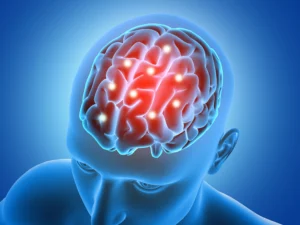
Martha Valeria Medina Rivera, NeuronUP neuropsychologist, presents a clinical guide to assessing and rehabilitating cognitive difficulties after traumatic brain injury (TBI) when diaschisis is present.
Relationship between motor vehicle accident-related TBI and diaschisis
When we talk about traumatic brain injury (TBI) resulting from a motor vehicle accident, we tend to think about the direct impact: the contusion, hemorrhage, or hematoma. However, evidence from recent decades reminds us that the brain does not function as a sum of “isolated parts,” but rather as an interconnected network. This is precisely where the concept of diaschisis emerges: a functional disconnection that explains why TBI symptoms do not always directly correspond to the anatomical location of the injury (Carrera & Tononi, 2014).
In the first part, we examined in detail how diaschisis can cause difficulties with memory, attention, processing speed, or executive functions, even in regions that did not sustain direct damage. As a reminder, slowing, fatigue, and difficulties with daily tasks are common after TBI because of impaired cognitive functions. These are compounded by difficulties in social cognition, such as emotion perception and theory of mind, which affect social and family reintegration (Halalmeh et al., 2024; Torregrossa et al., 2023).
In other words, traumatic brain injury (TBI) does not merely “damage” one specific area: it also disorganizes the brain connections that allow information to pass, producing alterations that can exacerbate the severity of the injury and increase cognitive, behavioral, and emotional difficulties.
Today, we have various tools that help us better understand what happened and how the brain is functioning after TBI. For example, neuroimaging techniques allow us to observe structural and functional lesions, while neuropsychological assessment provides a much more precise picture of the cognitive functions and behaviors that may have been affected. The combination of both provides a solid foundation for planning a rehabilitation treatment tailored to each person. These tools are described in the following sections.
Neuroimaging and neurophysiological evidence in TBI and diaschisis: evidence and clinical application
Our knowledge that these brain disconnections exist is possible thanks to the combination of neuroimaging and neurophysiological techniques, which have allowed us to determine how the brain functions after TBI.
Functional magnetic resonance imaging (fMRI) and diffusion tensor imaging (DTI) have shown that white matter disruptions occur after TBI, affecting communication between hemispheres and among frontoparietal, temporal, and subcortical regions (Le Prieult et al., 2017). In turn, positron emission tomography (PET) studies have demonstrated patterns of hypometabolism in areas distant from the lesion, exactly what would be expected in a brain with networks partially “turned off” by diaschisis (Boggs et al., 2024).
From a neurophysiological perspective, recordings such as electroencephalography (EEG) and transcranial magnetic stimulation (TMS) have shown both hypoexcitability and episodes of transient contralateral hyperactivity in the early stages, representing the brain’s spontaneous attempt to compensate for the damage (Sarmati, 2022).
Interestingly, these techniques not only describe the damage but also monitor recovery; in other words, neuroimaging and neurophysiology provide clues about how to direct rehabilitation.
Neuropsychological assessment in TBI with diaschisis: tests, domains, and assessment phases
Neuropsychological assessment is key to understanding the impact of TBI, as it makes it possible to identify which functions are impaired and design a rehabilitation plan tailored to each person (Sherer & Novack, 2003; Halalmeh et al., 2024).
Observational scales for neuropsychological assessment in TBI with diaschisis
During the acute phase, when the patient is still recovering consciousness, observational scales are used, such as:
- The Glasgow Coma Scale to classify severity,
- the Coma Recovery Scale–Revised to differentiate between unresponsive wakefulness syndrome and minimally conscious state,
- and the Disability Rating Scale to estimate the overall degree of disability.
When the patient can perform cognitive tasks, screening tools such as the Mini Mental State Examination (MMSE) and Montreal Cognitive Assessment (MoCA) provide a general overview of cognitive functioning (Torregrossa et al., 2023).

Subscribe
to our
Newsletter
Specific tests for neuropsychological assessment in TBI with diaschisis by domain
When moving on to specific assessment, more targeted tests are administered for each domain:
- Assessment of memory:
- The Rey Auditory Verbal Learning Test (RAVLT) examines the ability to learn, retain, and retrieve word lists in the auditory-verbal modality; it is useful for detecting slow learning or accelerated forgetting.
- The Wechsler Memory Scale (WMS-IV) provides a comprehensive profile of verbal, visual, and working memory.
- The Rey-Osterrieth Complex Figure Test (ROCF) makes it possible to observe both visual memory and planning during the copying of complex figures.
- Assessment of attention and processing speed:
- The Continuous Performance Test (CPT-3) assesses the ability to sustain attention and rapidly detect target stimuli.
- The Test of Variables of Attention (TOVA) complements this measurement by providing precise information about inhibitory responding. The Trail Making Test (TMT A/B), in turn, assesses sustained attention and processing speed, as well as cognitive flexibility in Part B.
- Finally, the Symbol Digit Modalities Test (SDMT) is especially useful for examining speed and accuracy in visuomotor association, showing high sensitivity for identifying difficulties in processing speed and attention (Halalmeh et al., 2024).
- Assessment of executive functions:
- The Wisconsin Card Sorting Test (WCST) is the standard test for assessing cognitive flexibility and the ability to modify strategies when rules change.
- The Tower of Hanoi allows clinicians to examine planning and problem-solving.
- The Stroop Test focuses on the inhibition of automatic responses.
- The Backward Digit Span is particularly useful for detecting difficulties in working memory.
- Finally, instruments such as the Dysexecutive Questionnaire (DEX-Sp) offer greater ecological validity by identifying executive-function impairments in daily life (Torregrossa et al., 2023).
- Assessment of language and communication:
- The Integrated Neuropsychological Exploration Program (PIEN) – Barcelona Test assesses naming, verbal comprehension of simple and complex commands, repetition of words and sentences, and verbal fluency (semantic and phonological). It also includes reading and writing tests, making it possible to identify anomia, lexical access difficulties, and different aphasic profiles. Thus, it provides a precise picture of language impairments and guides rehabilitation.
- Assessment of social cognition:
- The Faux Pas Test provides an ecological measure of social competence and theory of mind; it is useful for assessing the understanding of social situations in which someone behaves inappropriately for the context.
- Likewise, Theory of Mind Stories, as an assessment instrument, are particularly useful for detecting subtle difficulties in social understanding that may go unnoticed on more structured tests. They therefore complement the assessment of executive and attentional functions by showing how cognitive difficulties affect everyday social and family life.
| Domain | Tests |
|---|---|
| Memory | 1. Rey Auditory Verbal Learning Test (RAVLT) 2. Wechsler Memory Scale (WMS-IV) 3. Rey-Osterrieth Complex Figure Test (ROCF) |
| Attention and processing speed | 1. Continuous Performance Test (CPT-3) 2. Test of Variables of Attention (TOVA) 3. Trail Making Test (TMT A/B) 4. Symbol Digit Modalities Test (SDMT) |
| Executive functions | 1. Wisconsin Card Sorting Test (WCST) 2. Tower of Hanoi 3. Stroop Test 4. Backward Digit Span 5. Dysexecutive Questionnaire (DEX-Sp) |
| Language and communication | 1. Integrated Neuropsychological Exploration Program (PIEN) – Barcelona Test |
| Social cognition | 1. Faux Pas Test 2. Theory of Mind Stories |
Flexible neuropsychological assessment in TBI with diaschisis
In clinical practice, complete standardized batteries are often combined with the selection of specific tests or subtests, tailored to the patient’s individual needs and the clinician’s goals.
Creating protocols using subtests is useful in moderate-to-severe TBI because it adapts the length and demands of the assessment to the patient’s fatigue and limitations. By integrating the results, neuropsychological assessment not only identifies difficulties but also provides a comprehensive picture of strengths and areas for improvement. This profile makes it possible to guide rehabilitation more precisely, prioritizing what truly affects the person’s daily life.
Once the cognitive profile is understood, the next step is neuropsychological intervention, but it is important to keep in mind that prognosis after TBI is always multifactorial. Age, accident severity, how quickly intervention begins, and family support are determining variables (Halalmeh et al., 2024).
Cognitive rehabilitation in TBI with diaschisis: intervention and follow-up strategies
In TBI, neuropsychological rehabilitation has become a cornerstone of treatment, and we now know that it should be based on several key principles: comprehensiveness, early initiation, personalization, and teamwork (Chantsoulis et al., 2015).
The article by Ramos-Galarza and Obregón (2025) describes different rehabilitation strategies, depending on the goal:
- Restoration: when the aim is to directly recover the affected function through repetitive, specific exercises.
- Compensation: training alternative mechanisms or strengthening unaffected functions to compensate for those that were impaired.
- Substitution: using external aids such as planners, alarms, or digital devices to address persistent difficulties.
One particularly interesting aspect is intervening not only on the directly damaged function, but also on networks depressed by diaschisis. Targeted stimulation of these areas may promote functional reorganization and accelerate recovery. For example, memory programs that include semantic cues improve encoding by taking advantage of alternative routes for accessing information (Halalmeh et al., 2024).
It is also important to emphasize the significant role played by brain plasticity, since it can often partially restore affected connectivity. However, we must not forget that recovery does not always mean “returning to the way things were,” but rather learning to reorganize resources, use supports, and restructure routines to achieve the greatest possible autonomy (Torregrossa et al., 2023).
In this regard, neuropsychological intervention seeks not only to improve scores on cognitive-function tests, but also to facilitate vocational, social, and family reintegration. Ultimately, what matters most is not a test score, but helping the person adapt and resume activities with quality of life.
There are different intervention tools, from traditional pencil-and-paper methods to newer options such as digital tools. Current evidence shows that computerized programs, virtual reality, and digital platforms are gaining ground because they make it possible to design graded, personalized tasks with immediate feedback (Ramos-Galarza & Obregón, 2025).
In recent years, the incorporation of digital platforms has transformed neuropsychological rehabilitation by offering interactive, flexible environments that allow the difficulty and type of task to be adjusted to each patient’s profile.
One of the most widely used is NeuronUP, which provides an extensive library of activities designed to stimulate attention, memory, executive functions, and social cognition. For people who have experienced TBI, these tools offer benefits such as:
- Increasing motivation through gamified activities.
- Training skills in contexts that simulate everyday life.
- Facilitating progress tracking through objective records.
- Providing continuity of intervention for people with functional diversity after TBI, since rehabilitation can take place both in clinical settings and at home. This reinforces the transfer of learning and makes it easier for family members to participate actively in the recovery process.
Of course, rehabilitation is not limited to cognitive abilities. It also includes the emotional, social, and family dimensions, which are often the most affected. Holistic models, such as the one proposed by Ben-Yishay and Diller, emphasize creating a therapeutic environment that includes the family and promotes a coherent patient identity (Ramos-Galarza & Obregón, 2025).
Conclusion
TBI is not limited to a single symptom; it often affects multiple areas, from cognition to emotional and behavioral functioning. This is why neuropsychological assessment is so important: it helps us understand the main difficulties and how they relate to other secondary effects. In this way, it becomes the guide for planning interventions that are more personalized and truly useful in each person’s daily life.
The need for professionals trained in the assessment and intervention of brain injury after TBI is essential. With advances in medical technology and increased survival after severe injuries, more people are living with chronic sequelae, increasing the demand for specialized neuropsychologists.
However, structural limitations must also be considered. Unequal access to neuropsychology services, associated costs, and a lack of tools for people who have difficulty traveling can hinder rehabilitation. In this regard, the challenge is twofold:
- On the one hand, ensuring that neuropsychological assessment and rehabilitation programs are fully integrated into healthcare systems, guaranteeing timely access and adequate coverage.
- On the other, continuing to promote the development of new diagnostic and intervention tools that strengthen ecological validity and facilitate access, such as NeuronUP.
Intervention in TBI is a clinical and social challenge; understanding it from the perspective of diaschisis reminds us that the brain functions as an interdependent network and that, after injury, recovery involves much more than healing one specific area. Neuropsychology, with its ability to assess and support brain reorganization processes, stands as a central discipline for improving functional outcomes, preventing symptoms from becoming chronic, and promoting genuine personal, family, and vocational reintegration.
The future of TBI care will depend largely on our ability to establish neuropsychology as an essential pillar in the comprehensive management of these injuries.
References
- Boggs, J., et al. (2024). Metabolic diaschisis after TBI. Neuroscience Letters.
- Carrera, E., & Tononi, G. (2014). Diaschisis: past, present, future. Brain, 137(9), 2408–2422.
- Chantsoulis, M., et al. (2015). Neuropsychological rehabilitation for traumatic brain injury patients. Annals of Agricultural and Environmental Medicine, 22(2), 368–379.
- Halalmeh, D. R., et al. (2024). The role of neuropsychology in traumatic brain injury: Comprehensive literature review. World Neurosurgery, 183, 128–143.
- Le Prieult, H., et al. (2017). Transhemispheric diaschisis in TBI models. Journal of Neurotrauma.
- Ramos-Galarza, C., & Obregón, J. (2025). Neuropsychological Rehabilitation for Traumatic Brain Injury: A Systematic Review. Journal of Clinical Medicine, 14(4), 1287.
- Sarmati, A. (2022). Diaschisis revisited: clinical implications. Neuropsychologia.
- Sherer, M., & Novack, T. A. (2003). Neuropsychological assessment after traumatic brain injury in adults. Psychology Press.
- Torregrossa, W., et al. (2023). Neuropsychological Assessment in Patients with Traumatic Brain Injury. Biomedicines, 11(7), 1991.
Frequently asked questions about TBI assessment and intervention with diaschisis
1. What is diaschisis after traumatic brain injury?
Diaschisis is a functional disconnection of brain networks after TBI that reduces activity in regions distant from the direct lesion. Consequently, symptoms may not correspond to the anatomical location and may affect memory, attention, processing speed, executive functions, and social cognition.
2. What does neuroimaging contribute to detecting diaschisis in TBI?
Functional magnetic resonance imaging (fMRI) and diffusion tensor imaging can show white matter disruptions and connectivity between regions. Positron emission tomography (PET) can reveal remote hypometabolism compatible with diaschisis. These techniques help characterize damage and monitor changes, guiding rehabilitation goals.
3. How is neuropsychological assessment structured in TBI with diaschisis?
During the acute phase, observational scales are used (Glasgow, Coma Recovery Scale–Revised, Disability Rating Scale). When the patient can perform tasks, screening tools (MMSE, MoCA) are administered, followed by domain-specific tests. A complete battery is often combined with subtests, with the duration adjusted for fatigue.
4. Which tests assess memory and attention after TBI?
RAVLT, WMS-IV, and the Rey-Osterrieth Complex Figure are used to assess memory. Attention and processing speed are assessed with CPT-3, TOVA, Trail Making Test A/B, and SDMT. Selection depends on the phase, level of consciousness, and clinical goals.
5. How are executive functions and social cognition rehabilitated?
Rehabilitation is based on comprehensiveness, early initiation, personalization, and teamwork. It may target restoration, compensation, or substitution using external aids. It may also stimulate networks depressed by diaschisis to promote reorganization. The goal is to improve autonomy and social, family, and vocational reintegration, not just scores.
6. What limitations and risks should be considered in post-TBI rehabilitation?
Prognosis is multifactorial (age, severity, speed of intervention, and family support). Fatigue, emotional limitations, and access barriers (cost, transportation, and service availability) must be considered. Digital tools and home-based intervention can support follow-up, but coordination with a clinical team is advisable.


 Physical activity and preclinical Alzheimer’s disease: scientific evidence on how many steps protect the brain
Leave a Reply