

On the occasion of International Asperger’s Day, in this article we explain what Asperger syndrome is from a neuropsychological point of view, its characteristics and areas.
What is Asperger syndrome?
Asperger syndrome is a neurological disorder, considered an Autism Spectrum Disorder (ASD) that affects the way the brain processes information.
Boys are more likely than girls to have autism. For every four boys with Asperger’s there is only one girl diagnosed.
In what areas do people with Asperger’s have difficulties?
People with this condition show problems in the following areas:
- Communication,
- social relationships,
- Mental and behavioral inflexibility.
Characteristics
Asperger syndrome affects each individual differently, although there are common characteristics:
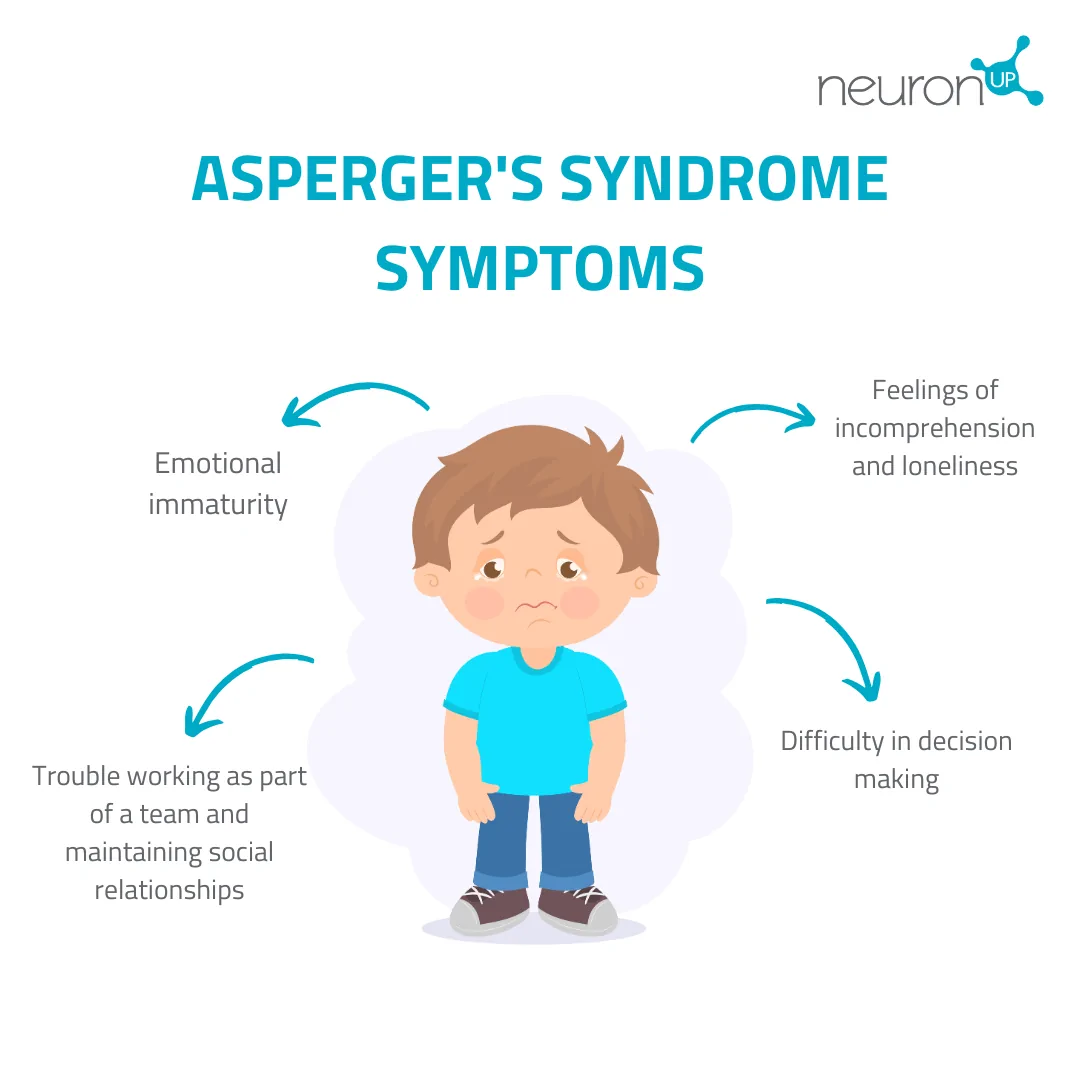
- They are often people with difficulty managing their social relationships, although this does not affect their intellectual capacity. They tend to have a average to high intelligence;
- they are naive and gullible. On the other hand, they are honest, sincere and loyal,
- they have difficulties understanding what another person is thinking or feeling, that is, putting themselves in someone else’s place;
- they find it hard to keep the normal pace of a conversation. On the other hand, they pay unusual attention to its details;
- they are easily upset by changes in routines and transitions,
- literal in language and comprehension. At the same time, they have a broad, technical and specialized vocabulary;
- very sensitive to loud sounds, colors, lights, smells or tastes,
- fixation on a subject or object. They can become experts on the topic,
- physically clumsy in sports,
- difficulty making decisions.
Neuropsychology and Asperger
Below, we offer an approach to Asperger syndrome from a neuropsychological point of view.
Deficit in Theory of Mind
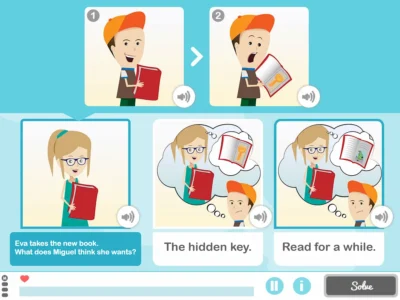
When earlier we mentioned the inability of people with Asperger’s to put themselves in someone else’s place, we were precisely referring to Theory of Mind.
A term that refers to the human ability to form an internal representation of other people’s mental states. Therefore, people with Asperger’s have to learn these social patterns because by simple observation they do not have this ability.
Theory of Executive Function Deficit
“Executive functions are high-order skills involved in the generation, regulation, effective execution, and readjustment of goal-directed behaviors”. (Verdejo-García and Bechara, 2010).
Executive functions encompass processes such as:
- Working memory,
- planning,
- reasoning,
- flexibility,
- inhibition,
- decision making.
If there are difficulties in these processes, activities of daily living cannot be carried out properly. However, appropriate neuropsychological intervention will be key to improving these skills.
Theory of Right Hemisphere Dysfunction
This theory is linked to the deficient ability to express and interpret emotional information. The right hemisphere is key in processing visuospatial information. Additionally, it is directly related to the ability to recognize and understand gestures and facial expressions and to the regulation of intonation and prosody.
Frequently asked questions about Asperger syndrome
1. What is Asperger syndrome?
Asperger syndrome is an autism spectrum disorder that affects how information is processed. It is characterized by social and communication difficulties without intellectual disability, restricted interests and repetitive behaviours.
2. What are the main characteristics of Asperger syndrome?
Frequent characteristics include: normal or high intelligence, literal language with technical vocabulary, attention to detail, sensitivity to sounds, lights or smells, motor clumsiness, fixation on specific topics and difficulty keeping up the rhythm of a conversation.
3. In which areas does a person with Asperger syndrome have difficulties?
The main areas affected are social communication, interpersonal relationships and mental and behavioural flexibility, with distress when routines change and problems with decision-making.
4. How is Asperger syndrome related to Theory of Mind?
Theory of Mind is usually compromised: understanding other people’s mental states and putting oneself in their place is difficult. These social patterns have to be learned explicitly.
5. How does Asperger syndrome affect executive functions?
There may be alterations in executive functions: working memory, planning, reasoning, flexibility, inhibition and decision-making, which has an impact on activities of daily living.
6. Which neuropsychological intervention helps in Asperger syndrome?
Personalized neuropsychological intervention improves social skills, pragmatic communication and executive functions through psychoeducation, skills training, structured routines and sensory supports. Early detection and support foster autonomy.
If you liked this post on Asperger syndrome, we recommend you take a look at these NeuronUP publications:




“This article has been translated. Link to the original article in Spanish:”
El síndrome de Asperger: qué es, áreas, características y neuropsicología

 Social cognition: structure and evaluation of a superconstruct
Leave a Reply