

Neuropsychologist David Ochoa Maxi explains how to apply reminiscence therapy in people with Alzheimer’s disease to support memory, identity, and emotional well-being.
Reminiscence in Alzheimer’s disease involves evoking meaningful memories through photographs, music, objects, or immersive environments. This technique facilitates the activation of autobiographical memory, enhances temporal orientation, and improves the patient’s emotional state. Clinical guidelines and recent trials confirm its usefulness in mild, moderate, and advanced stages of the disease.
1. Introduction
Can a memory improve the life of a person with Alzheimer’s disease?
This is one of the questions we face when we seek to understand which intervention pathways improve the quality of life of people with this disease. And yes, a memory is not only a path through time toward a specific moment in our lives; it also represents the key that allows us to recognize ourselves within our own story and anchor ourselves in the present through the path we have traveled.
For this reason, several lines of intervention have been proposed, one of them being reminiscence therapy (the structured evocation of personal memories through conversations and stimuli such as photographs, music, or objects).
This therapy has become one of the most studied psychosocial interventions for dementia, particularly when we understand the limitations inherent to the disease, from diagnosis through its stages of progression. Its practicality and simplicity make it not only an accessible pathway to memory recall, but also one that promotes psychological well-being, even in older adults without evident cognitive impairment, suggesting preventive and therapeutic potential.
Therefore, in this article we will discuss the use of reminiscence therapy and its application in patients with Alzheimer’s disease, considering each stage of the disease. We will also examine the use of new technologies and how this therapy contributes to the cognitive and emotional improvement of each participant.
2. How does reminiscence therapy work for people with Alzheimer’s disease?
According to the State Reference Center for Care of People with Alzheimer’s Disease (2011), reminiscence therapy (RT) consists of discussing past activities, events, and experiences, generally with the help of tangible memories that serve as prompts.
It is one of the most widely used nonpharmacological therapies in centers that care for people with dementia, as it seems particularly suited to their memory problems, which are characterized by severe difficulty recalling recent events but relatively good recall of past life, especially childhood and early adulthood. Focusing on preserved abilities and memories promotes communication and allows the person to connect with their past and recover their sense of personal identity.
Reminiscence therapy can be considered an intervention at the boundary between therapies aimed at cognitive stimulation and those aimed at the emotional domain, with potential interactive effects on autobiographical memory and psychological well-being.
Reminiscence therapy is based on two principles:
- Reactivate autobiographical memory through sensory cues, and
- promote social interaction and personal identity.
Clinically, it can be delivered individually or in groups, showing benefits for episodic/autobiographical memory (Kirk et al., 2019). In addition, a reduction in depressive symptoms and an increase in life satisfaction have been observed, improving behavioral aspects such as apathy and communication (Cammisuli et al., 2022).
Scientific evidence shows moderate effects on psychosocial parameters and mixed results for global cognition. Studies report improvements in autobiographical memory and quality of life. According to Woods et al. (2018), this magnitude varies with the format, duration, and context of the intervention, so common limitations must be considered: methodological heterogeneity, small sample sizes, and limited long-term follow-up.
Reminiscence differs from other cognitive therapies because of its autobiographical and psychosocial focus, with greater emphasis on identity (which is particularly important in patients with dementia), as opposed to purely cognitive stimulation interventions.
3. How to apply reminiscence in Alzheimer’s disease
In any stimulation activity, session structure is essential for maintaining the user’s optimal performance and engagement with the tasks. Proper planning helps address the limitations associated with each cognitive profile, particularly in people with dementia.
Clinical guidelines recommend weekly or biweekly sessions lasting 30 to 60 minutes over periods of six to twelve weeks. The American Occupational Therapy Association (AOTA, 2024) suggests carrying out these interventions in calm, familiar settings, using personal materials such as photographs, music, or scents as memory triggers. Family members and the representatives of the person receiving the intervention should always be consulted to avoid using materials that may evoke unpleasant memories.
It is important to emphasize the importance of structuring questions such as who, when, and where, to encourage specific details and record the topics that elicit positive responses. This can help us maintain a positive path for memory recall while avoiding the evocation of potentially painful memories.
3.1. How to adapt reminiscence to each stage of Alzheimer’s disease
The stage of Alzheimer’s disease can be a useful basis for planning and selecting stimuli in reminiscence therapy.
Reminiscence therapy in the mild stages of Alzheimer’s disease
In the mild stages of Alzheimer’s disease, it is possible to take advantage of the fact that impairments in biographical and episodic memory are not yet particularly pronounced and use this information as an anchor for developing other activities. For example, Kirk et al. (2019) recommend focusing on detailed autobiographical memories, using written materials and open-ended questions.
Reminiscence therapy in the moderate stages of Alzheimer’s disease
In moderate stages, when memory impairments are accompanied by difficulties with orientation, attention, and language, as well as anxiety or depressive symptoms, Kudlicka et al. (2019) recommend prioritizing sensory stimuli: music, familiar objects, and repetitive routines that reduce anxiety and reinforce the patient’s identity.
Reminiscence therapy in the advanced stages of Alzheimer’s disease
In the advanced stage, interventions should be brief and highly sensory, with the goal of maintaining emotional comfort rather than declarative memory. According to the State Reference Center for Care of People with Alzheimer’s Disease (2011), even in severe stages, the evocation of familiar stimuli can generate well-being and emotional connection.

Subscribe
to our
Newsletter
4. The use of technology and virtual reality in reminiscence therapy for Alzheimer’s disease
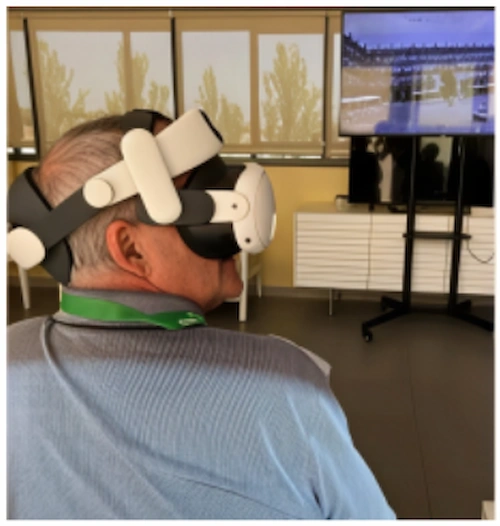
The use of immersive environments has opened new possibilities for reminiscence work in Alzheimer’s disease. In a multicenter study, Saredakis et al. (2021) observed that reminiscence therapy with virtual reality reduced apathy and increased emotional engagement among residents of aged-care facilities.
In addition, Mao et al. (2024) found in a systematic review that personalized virtual experiences may strengthen connections with past memories, although larger randomized clinical trials are still needed to confirm these findings.
4.1. Virtual reality and augmented reality for reminiscence work in Alzheimer’s disease: the CRE Alzheimer pilot study
The State Reference Center for Care of People with Alzheimer’s Disease (CRE Alzheimer) has proposed a pilot study to examine how this type of intervention may be useful when delivered through virtual reality (VR).
The study, led by Figueiredo (2025) with the support of the center’s technical staff, analyzed these interactions over four sessions. Each intervention lasted approximately 90 minutes, during which each patient’s episodic memory was stimulated through different visual media: analog photographs, tablets, and virtual reality. The visual stimuli were presented in a black-and-white aesthetic, strengthening the emotional connection and facilitating the evocation of past memories.
After the pilot study was completed, a clear positive trend in well-being after the sessions was observed. Although the t test did not show statistical significance at the 95% level (due to the study design), the large effect size (d ≈ 1.05) indicates that the change is substantial and practically meaningful, reflecting a notable improvement in perceived well-being (measured before and after the intervention using a Likert-type “Happy Faces” scale).
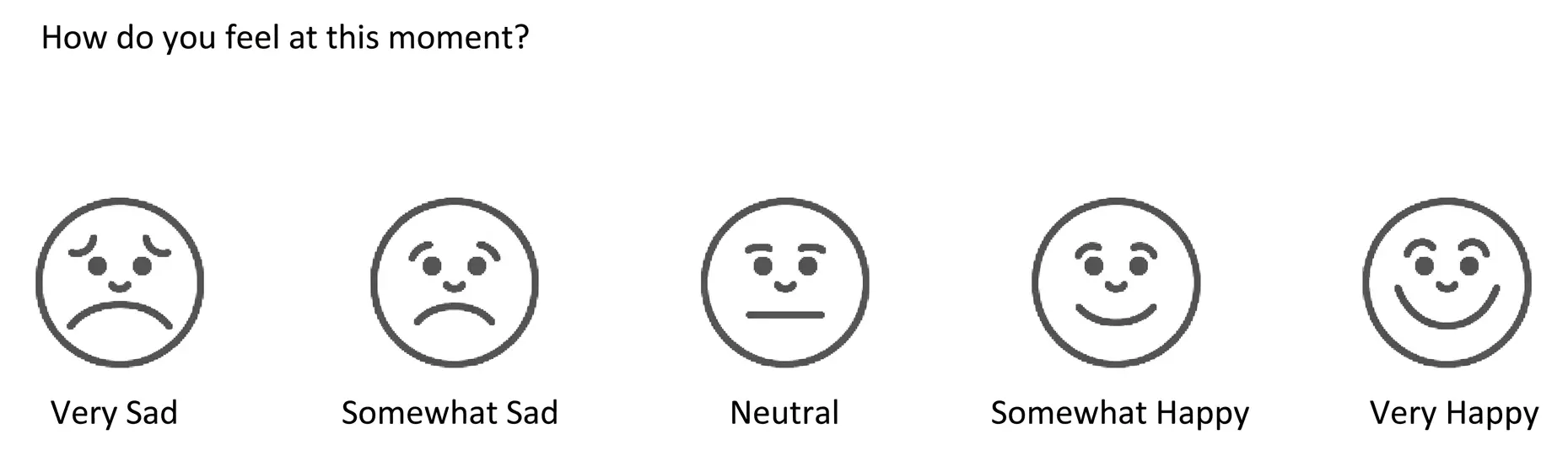
To further illustrate these cases, we can add some comments from participants after the intervention, including: “it seemed like I could touch it”; “the nice thing is that you can explore everything as if you were there”; “with the goggles you can see all around you and move, enter the café, or walk around the square”.
The case of the user identified as J.S. could be another example of interest, since during the activity he was able to recall his childhood and early working life upon seeing the ‘Casa de las conchas’, a positive memory that remained active in the following days after the intervention, despite forgetting that he had participated in the activity with the virtual reality goggles.
4.2. Recommendations for integrating technology without replacing the human element
It is important to recognize the limitations of these tools. Sorrentino et al. (2024) warn that technology should be understood as a means of amplifying memory recall, not replacing human interaction. The presence of the therapist or caregiver remains essential for interpreting emotional responses and providing support.
In the pilot study’s post-intervention interviews, most users mentioned the importance of sharing their impressions with the professionals responsible for the activity. They reported improved mood, gratitude, and greater adherence to new technologies when professionals actively accompanied the sessions. This reinforces the statement by Saredakis et al. (2021) that the combination of digital tools and human support produces the best clinical outcomes.
5. How reminiscence is improving the lives of people with Alzheimer’s disease
Studies highlight the transformative impact of this therapy on daily life. Kirk et al. (2019) documented the case of a patient who, after participating in a five-week immersive reminiscence program, showed a notable recovery in the ability to recount autobiographical episodes and increased emotional expressiveness.
Similarly, Saredakis et al. (2021) reported significant improvements in mood and motivation among institutionalized people with Alzheimer’s disease after participating in virtual reality reminiscence sessions. These findings show how combining meaningful memories, sensory stimulation, and empathic support can improve quality of life even in moderate stages of the disease.
6. Conclusion
The evidence confirms that reminiscence is an effective nonpharmacological intervention for promoting psychosocial well-being and reinforcing identity in people with Alzheimer’s disease, particularly when it is planned within a framework of weekly sessions and therapeutic support that both strengthens treatment adherence and promotes emotional improvement beyond the intervention setting.
In addition to depending on appropriate structure, stage-based adaptation, and human presence as the cornerstone of the process, it should also be viewed as one additional intervention pathway. Future studies should examine the effectiveness of interventions using new technologies compared with traditional interventions, with particular emphasis on immersive therapies, which may be useful in advanced stages when the sensory threshold is the focus of interest.
As the State Reference Center for Care of People with Alzheimer’s Disease (2011) concludes, rather than recovering the past, reminiscence in Alzheimer’s disease allows it to be given new meaning, helping the person continue to feel part of their own story.
7. References
- American Occupational Therapy Association. (2024). Occupational therapy practice guidelines for adults living with dementia. American Occupational Therapy Association. https://doi.org/10.5014/ajot.2024.078101
- Cammisuli, D. M., Danti, S., Bosinelli, F., & Cipriani, G. (2022). Effects of reminiscence therapy on cognition, depression and quality of life in older adults with mild-to-moderate dementia: A systematic overview. Journal of Clinical Medicine, 11(19), 5752. https://doi.org/10.3390/jcm11195752
- Centro de Referencia Estatal de Atención a Personas con Alzheimer. (2011). Reminiscence therapy. Instituto de Mayores y Servicios Sociales (IMSERSO).
https://crealzheimer.imserso.es/documents/20123/1021826/monogr_reminiscencia.pdf - Figueiredo, M., Pérez González, C., Josan Lalgi, T., & Pérez-Sáez, E. (2025, September 9). Remember and share: Reminiscence therapy with virtual reality. Blog del Centro de Referencia Estatal de Atención a Personas con Alzheimer y otras Demencias (CRE Alzheimer). https://blogcrea.imserso.es/-/recuerda-y-comparte-terapia-de-reminiscencia-con realidad-virtual
- Kirk, M., Rasmussen, K. W., Overgaard, S. B., & Berntsen, D. (2019). Five weeks of immersive reminiscence therapy improves autobiographical memory in Alzheimer’s disease. Memory, 27(4), 441–454. https://doi.org/10.1080/09658211.2018.1515960
- Kudlicka, A., Martyr, A., Bahar-Fuchs, A., Sabates, J., Woods, B., & Clare, L. (2023). Cognitive rehabilitation for people with mild to moderate dementia. The Cochrane database of systematic reviews, 6(6), CD013388. https://doi.org/10.1002/14651858.CD013388.pub2
- Mao, Q., Zhao, Z., Yu, L., Zhao, Y., & Wang, H. (2024). The effects of virtual reality–based reminiscence therapy on older adults with cognitive impairment: Systematic review. Frontiers in Psychology, 15, 1392145. https://doi.org/10.2196/53348
- Saredakis, D., Keage, H. A. D., Corlis, M., Ghezzi, E. S., & Loetscher, T. (2021). The effect of reminiscence therapy using virtual reality on apathy in residential aged care: Multisite nonrandomized controlled trial. Journal of Medical Internet Research, 23(9), e29210. https://doi.org/10.2196/29210
- Sorrentino, M., Fiorilla, C., Mercogliano, M., Esposito, F., Stilo, I., Affinito, G., Moccia, M., Lavorgna, L., Salvatore, E., Maida, E., Barbi, E., Triassi, M., & Palladino, R. (2024). Technological interventions in European dementia care: A systematic review of acceptance and attitudes among people living with dementia, caregivers, and healthcare workers. Frontiers in Neurology, 15, 1474336. https://doi.org/10.3389/fneur.2024.1474336
- Woods, B., O’Philbin, L., Farrell, E. M., Spector, A. E., & Orrell, M. (2018). Reminiscence therapy for dementia. Cochrane Database of Systematic Reviews, 2018(3), CD001120. https://doi.org/10.1002/14651858.CD001120.pub3
Frequently asked questions about reminiscence therapy in Alzheimer’s disease
1. What is reminiscence therapy?
Reminiscence therapy is a nonpharmacological intervention that uses personal memories and sensory stimuli (photographs, objects, music, or digital environments) to activate autobiographical memory in people with Alzheimer’s disease. Its main benefits include improved communication, reduced apathy and depressive symptoms, better temporal orientation, and significant reinforcement of personal identity. Scientific evidence shows improvements in autobiographical memory, mood, and quality of life, especially in mild and moderate stages, with moderate but consistent effects according to systematic reviews and clinical studies. It works by reactivating preserved memory networks through sensory cues and promoting meaningful social interaction.
2. How can reminiscence improve the quality of life of people with Alzheimer’s disease?
Reminiscence in Alzheimer’s disease promotes autobiographical memory activation, supports temporal orientation, and reinforces personal identity. In therapeutic settings, it is associated with reduced apathy and depressive symptoms, improving the patient’s emotional engagement in cognitive stimulation sessions.
3. What is the difference between reminiscence and cognitive stimulation?
Cognitive stimulation focuses on training general cognitive functions such as attention, memory, or language through structured tasks. In contrast, reminiscence therapy uses autobiographical memories and personal stimuli to reinforce identity, promote positive emotions, and improve communication. While cognitive stimulation seeks to improve functional performance, reminiscence works on the emotional connection with one’s own history, integrating cognitive and affective aspects. For this reason, reminiscence is particularly effective in dementia for promoting psychological well-being and personal identity, even in advanced stages.
4. How can reminiscence be adapted according to the degree of cognitive impairment in Alzheimer’s disease?
In mild stages, detailed memories and open-ended questions are used; in moderate stages, sensory stimuli are prioritized; and in advanced stages, brief, highly sensory interventions focused on emotional comfort are recommended.
5. How long does a reminiscence program last, and how many sessions are recommended?
Clinical guidelines recommend weekly or biweekly sessions lasting 30 to 60 minutes over six to twelve weeks, in calm, familiar settings, with personalized materials and ongoing professional support.
6. How can virtual or augmented reality be integrated into reminiscence for Alzheimer’s disease?
Immersive technologies make it possible to recreate familiar environments and personal memories. Studies using virtual reality show reduced apathy, increased emotional engagement, and a more immersive therapeutic experience.
7. What role do nonpharmacological therapies for dementia play in cognitive intervention?
Nonpharmacological therapies for dementia are the foundation of comprehensive intervention. They support functioning, autonomy, and well-being without relying exclusively on medication.
Immersive environments amplify the impact of reminiscence by recreating meaningful scenes from the past. Virtual reality facilitates emotional recall and active engagement, while maintaining the therapist’s presence as an essential mediator for interpreting and modulating affective responses.
8. What precautions should be taken before conducting a reminiscence session with people with advanced dementia?
Stimuli that evoke painful memories should be avoided. Calm, familiar environments should be prioritized, with therapist support to interpret emotional reactions and ensure the patient’s well-being.
9. Why does combining memories and sensory stimulation improve autobiographical memory?
Visual, auditory, and olfactory stimuli act as cues that reactivate neural networks associated with episodic memory. This sensory integration promotes reconnection with life experiences and strengthens identity, producing a more lasting therapeutic effect than purely cognitive tasks.


 Brain connectivity in Alzheimer’s disease: a new therapeutic target beyond amyloid?
Leave a Reply