
If you work with people with dyslexia, here is a selection of activities to help you improve cognitive stimulation interventions for people with dyslexia.
In this article you will find a selection of five exercises to work on dyslexia, a learning disorder that affects between 5% and 15% of the world’s population.
Take a look and discover new activities to work on dyslexia!
Activities to work on dyslexia
1. Which one exists?
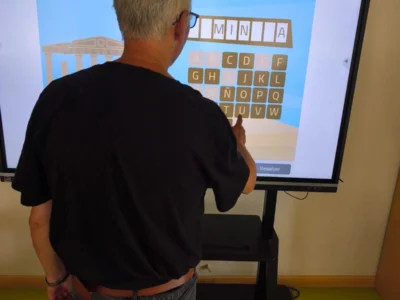
Which one exists? is an activity for children focused on working on their discrimination skills.
What it consists of
By working with this worksheet, young users must be able to discriminate, within a group of words, which one of them exists.
What the activity works on
This activity trains discrimination, requiring children to carry out a detailed reading and reflection on each letter and its position.
Activity levels
This NeuronUP worksheet includes five different difficulty levels that progressively increase in difficulty: basic, easy, medium, hard and advanced.
Format and language
This activity for children is available in both digital and paper format for professionals and users who use NeuronUP in Spanish.
Other versions of the activity
Which one exists? also has an adult version called Visual discrimination of a real word.
Example
In this video you can find an example of Which one exists?:
2. Letter detective
This second activity for children, called Letter detective, focuses on working on vocabulary and discrimination.
What it consists of
This worksheet for children is a very complete proposal that consists of associating phoneme with grapheme by indicating the position of the specified letter.
What the activity works on
This activity helps to work on language—specifically, young users’ vocabulary and discrimination.
It is a fundamental exercise to train the written representation of words, as it requires naming elements, knowing their correct spelling, and indicating the correct position of the grapheme.
Activity levels
The 77 available worksheets are organized into five difficulty levels that increase in complexity as you progress: basic, easy, medium, hard and advanced.
Format and language
This activity for children can be used in Spanish in both digital and paper format.
Example
In this video you can find an example of Letter detective:
3. What Number Do You Hear?
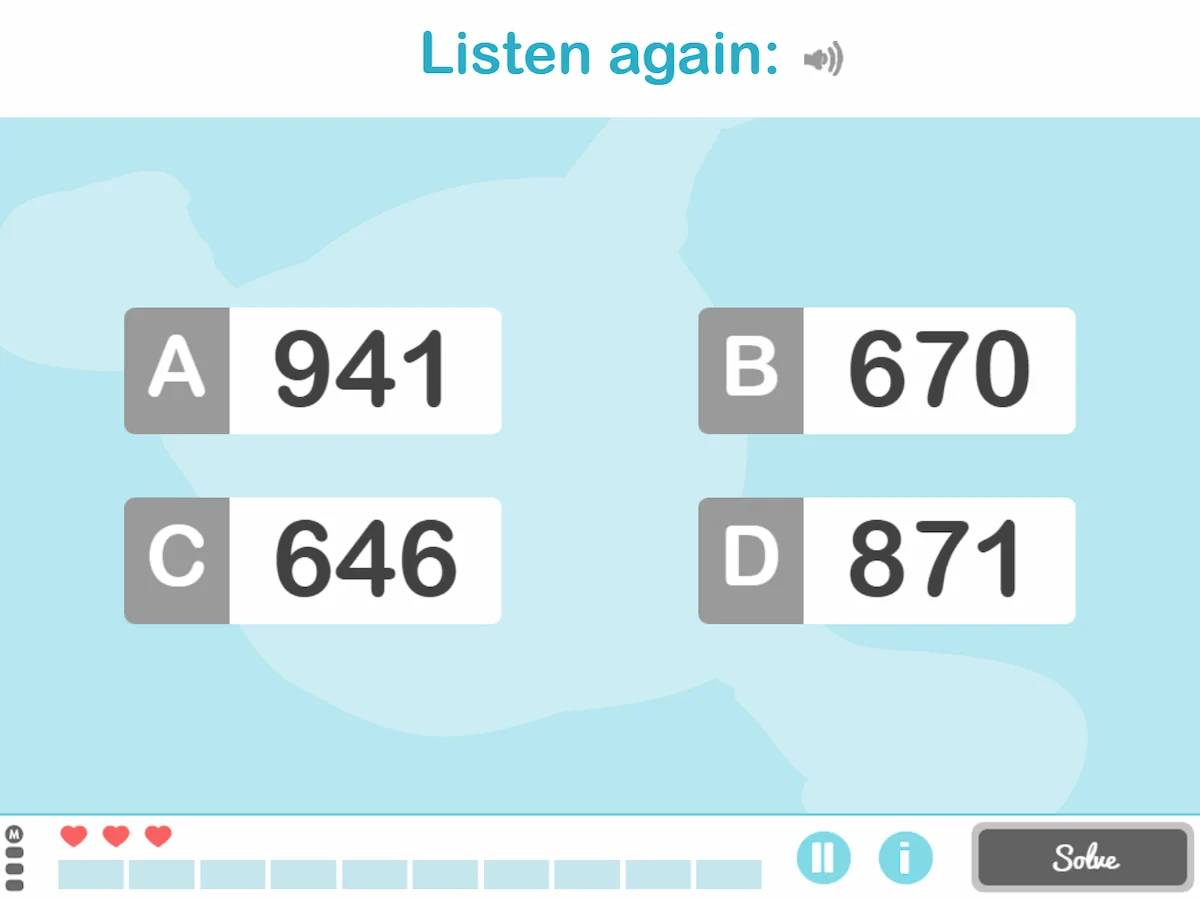
What number do you hear?, the third activity in this selection for working on dyslexia, focuses on working on young users’ discrimination.
What it consists of
With this NeuronUP worksheet, children have to choose the quoted number from several options.
What the activity works on
With this exercise, young users train their auditory discrimination of numbers, which is essential for everyday life given that much of the information is used in this format. This is the case for clock times or prices.
Activity levels
What number do you hear? is organized into five difficulty levels: basic, easy, medium, hard and advanced. As you progress through the levels, the difficulty increases.
Format and language
This activity is available in digital format for users who work with NeuronUP in Spanish, English, French, Portuguese and Catalan; and in paper format for users who work with the platform in Spanish and English.
Other versions of the activity
What number do you hear? also has an adult version called Number discrimination.
4. Lightning categories
This game called Lightning categories focuses on improving children’s inhibition, processing speed and sustained attention.
What it consists of
By working with this game, young users must select which elements belong to the indicated category as quickly as possible, avoiding selecting categories that do not correspond.
What the activity works on
With this exercise, children can train their inhibition, processing speed and sustained attention.
As the level increases, the decision time becomes shorter and greater speed of thought is needed (processing speed), impulses must be controlled (inhibition), and attention must not be lost so as not to miss any of the proposed words (sustained attention).
Activity levels
This activity is organized into nine different difficulty levels, with the first ones being simpler than the last ones.
Customization options
Lightning categories allows customization of some parameters and general aspects to adapt it to the characteristics and needs of each child.
Other versions of the activity
Lightning categories also has an adult version called Categories against the clock.
Example
In this video you can find an example of Lightning categories:
5. Rotated Letters
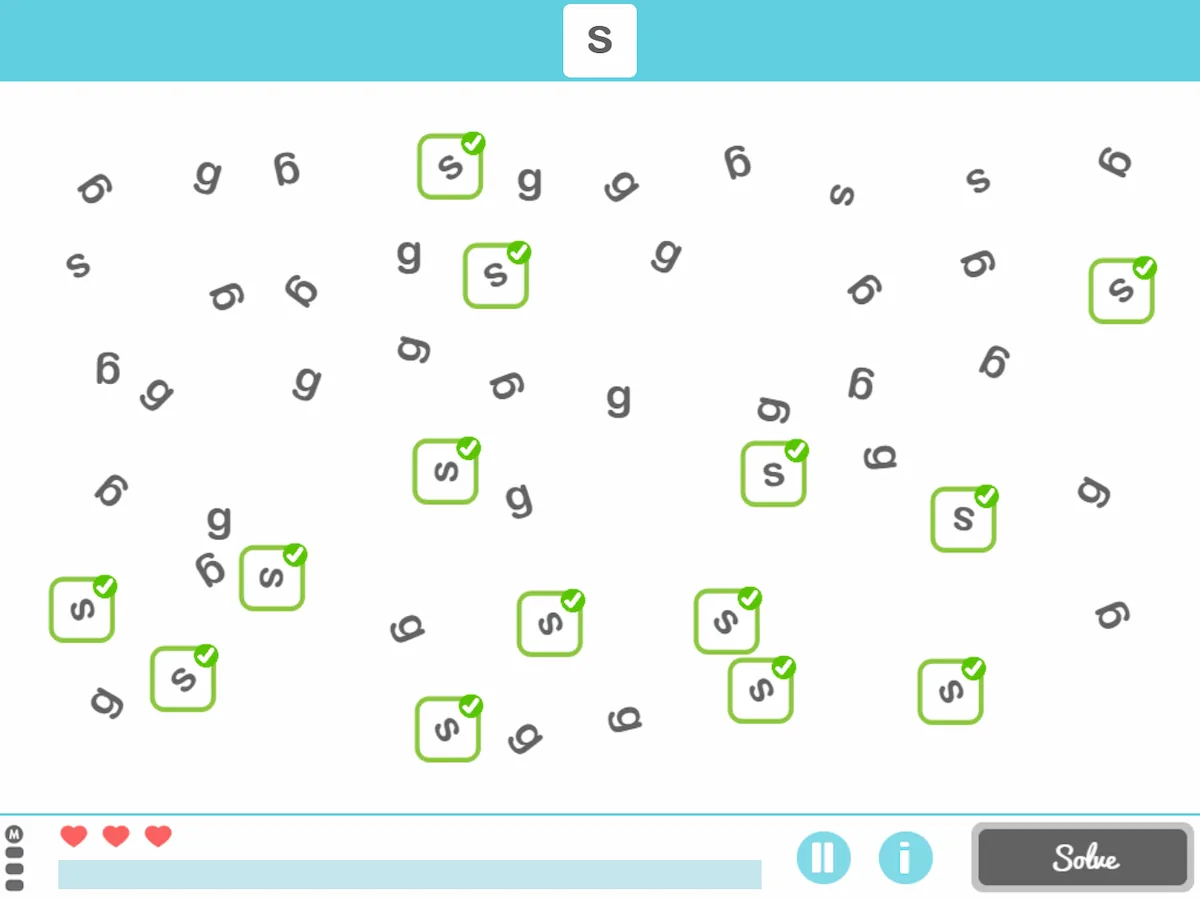
The generator called Rotated letters, focused on working on pre-reading skills, is the last proposal in this selection for working on dyslexia.
What it consists of
With this activity, children have to search within a group of rotated words for the indicated letter, regardless of the position in which it appears.
What the activity works on
With this exercise, young users work on their visuospatial skills, as they have to analyze each letter, rotate it in their minds and identify whether it matches the model, and their attention, as they have to be able to correctly recognize the letters that are the same as the one provided and omit the rest.
Customization options
Rotated letters allows you to customize some parameters and general aspects to work individually with each child.
Format and language
This game can be found in both digital and paper format by users who work with NeuronUP in Spanish, English, French, Portuguese and Catalan.
Example
In this video you can find an example of Rotated letters:
If you enjoyed this blog post about activities for people with dyslexia, you’ll probably be interested in these NeuronUP articles:


“This article has been translated. Link to the original article in Spanish:”
Actividades para personas con dislexia

 Hearing and the Brain: The Relationship Between Hearing Loss and Cognitive Functions



Leave a Reply