
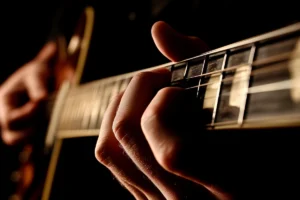
The teacher and musician Ruben Montaldo D’Albora explores in this article the scientific evidence underpinning how music stimulates neuroplasticity and improves memory, attention, and executive functions.
Music and the Brain: The Master Key to Learning and Cognition
From the lullabies that soothed us in the cradle to the anthems that unite us in crowds, music is one of the most ubiquitous and powerful forces of human experience.
For centuries, we have considered it an art, a form of entertainment, or an emotional catalyst. However, a growing convergence of the neuroscience, psychology and pedagogy is revealing a much deeper truth: music is not just a balm for the soul, but a precision tool for sculpting the brain.
This approach allows us to conceive a system like Neuroclave, a method that uses the inherent structure of music as a master key to unlock and enhance our fundamental cognitive abilities.
Far from being a metaphor, the idea that musical practice activates and improves attention, memory and executive functions is a fact supported by decades of rigorous research.
For this reason, music is an effective tool for rehabilitation and cognitive stimulation.
Music and Neuroplasticity: How the Brain Changes and Strengthens
The brain’s ability to change and adapt in response to experience, known as neuroplasticity, is the foundation of all learning. Few activities stimulate this brain plasticity as completely and robustly as musical training.
Neuroimaging studies have consistently shown that musicians’ brains are structurally and functionally different from non-musicians’. For example, it has been found that professional musicians have greater gray matter volume in auditory, motor, and visuospatial cortical areas (Gaser & Schlaug, 2003).
One of the most notable differences is the size and activity of the corpus callosum, the bundle of nerve fibers that connects the two cerebral hemispheres. In musicians who began training at an early age, this structure is significantly larger, suggesting improved and faster interhemispheric communication (Schlaug et al., 1995).
This integration is crucial, as playing an instrument requires almost perfect coordination between the fine motor skills of both hands (controlled by opposite hemispheres), sight-reading (visual processing) and attentive listening (auditory processing). This comprehensive training not only benefits musical skills but its effects transfer to other areas of cognition, a phenomenon known as “transfer of learning”.
Research by Nina Kraus and her team at the Auditory Neuroscience Laboratory at Northwestern University has shown that musical training improves the way the nervous system processes sounds, which in turn has a positive impact on language skills such as reading and phoneme discrimination in noisy environments (Kraus & Chandrasekaran, 2010).

Subscribe
to our
Newsletter
Cognitive Stimulation with Music: Attention, Memory, and Executive Functions
The Neuroclave concept is based on the idea that we can design specific musical activities for the cognitive stimulation of specific cognitive functions such as memory, attention and executive functions. Science supports this specialization.
How Music and Rhythm Improve Attention and Concentration
Attention is the currency of cognition. Without it, there is no learning. Music is, in its essence, a system structured in time, and rhythm is its skeleton. Interacting with rhythm, whether by following a pulse, synchronizing movements or detecting complex rhythmic patterns, is a high-level exercise for the brain’s attentional systems.
Keeping a steady beat demands sustained attention, while playing in an ensemble requires selective attention to focus on one’s own part without ceasing to listen to others, as well as divided attention to read the score and control the instrument simultaneously.
Research suggests that rhythmic training improves the brain’s ability to predict events in time (neural synchronization), a skill that is not only crucial for music, but also for language processing and concentration in everyday tasks (Tierney & Kraus, 2013).
Music and Memory: How Songs Strengthen Recall
Music is a powerful activator of the memory systems. Learning to play a musical piece involves multiple types of memory:
- Working memory: Keep a musical phrase in mind while reading the next one or planning the next finger movement.
- Long-term memory:
- Episodic memory: Remember a specific music lesson or the emotion of a concert.
- Semantic memory: Knowing the meaning of musical terms (e.g. crescendo, staccato) and music theory.
- Procedural memory: The “muscle memory” of how to move the fingers over the keys of a piano or the strings of a guitar, which becomes automatic with practice.
A seminal study showed that music can be an exceptionally effective mnemonic tool. Participants remembered a list of information much better when it was presented as a song rather than spoken text (Wallace, 1994).
More recently, research in patients with Alzheimer’s has revealed that familiar music can evoke autobiographical memories that seemed lost, activating a network of brain regions that remain relatively intact during the progression of the disease (Jacobsen et al., 2015). This reinforces the value of music in the cognitive stimulation of people with neurodegenerative dementias.
Music and Executive Functions: Planning, Creativity and Cognitive Control
Executive functions are a set of high-level cognitive skills managed by the frontal lobe, which include planning, problem solving, cognitive flexibility and inhibitory control. Musical practice, especially improvisation, is intensive training to enhance executive functions, or in other words, this “Orchestra Conductor” of the brain.
Improvising requires the musician to generate new and coherent musical ideas in real time, while adhering to an underlying harmonic and rhythmic structure. This demands immense cognitive flexibility to change melodic or rhythmic strategy, creativity to generate new material and inhibitory control to avoid dissonant notes or repetitive patterns.
Using fMRI, researchers have observed that during jazz improvisation, there is a deactivation of the dorsolateral prefrontal cortex (associated with self-evaluation and conscious control) along with an activation of the medial prefrontal cortex (associated with spontaneous generation and personal narrative), a unique neural pattern that enables a state of creative “flow” (Limb & Braun, 2008). This reinforces the potential of music as a tool to train executive functions in therapeutic programs.
Music, Emotion and Learning: Dopamine as a Cognitive Engine
One cannot speak about music’s cognitive impact without considering its profound emotional power. Music is one of the most powerful stimuli for the brain’s reward system, capable of inducing the release of dopamine, the neurotransmitter of pleasure and motivation (Salimpoor et al., 2011).
From a neurodidactic perspective, this is crucial. Emotions are not enemies of learning; they are its glue. A positively emotional learning experience strengthens synaptic connections and improves memory consolidation.
A system like Neuroclave would leverage this principle, using musical activities that are not only cognitively challenging but also emotionally rewarding. The feeling of accomplishment when mastering a piece, the joy of creating a melody or the satisfaction of rhythmically synchronizing with an accompaniment track generate a positive retroNutrition cycle driven by dopamine that keeps the user motivated and engaged with the training.
This emotional component explains the success of using music in neuropsychological therapies for cognitive stimulation.
Cognitive Rehabilitation with Music: The Model of the Musical Accessibility Program Uruguay
The overwhelming scientific evidence raises a crucial question: how can we translate these findings into structured, accessible, and replicable cognitive stimulation programs through music?
The answer does not lie in the future, but in models that are already in operation and demonstrating their effectiveness. A pioneering and consolidated example in this field is the Musical Accessibility Program Uruguay, created in 1993 and sponsored by UNESCO and UNICEF since 2013. This program represents an exceptional methodological bridge between inclusive music pedagogy and its neurodidactic foundations.
The importance of its approach does not lie in the mere general application of neurodidactic findings, but in a rigorous process of “reverse engineering” of neuro-pedagogical analysis of real musical activities.
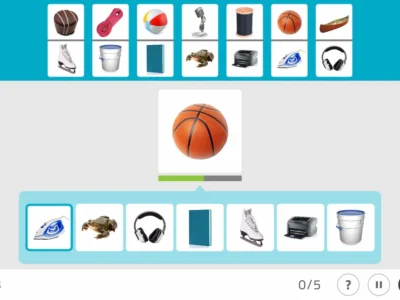
The program analyzes cognitive training activities validated by reference neuropsychological tools such as NeuronUP —designed to precisely stimulate functions such as selective attention, working memory or cognitive flexibility— and, from there, designs and systematizes specific musical interventions that pursue the same neurofunctional objectives.
For example, if an activity in NeuronUP requires a user to inhibit an automatic response to train inhibitory control, the program might translate that into a rhythmic exercise where the musician must omit a beat in a predictable and automated rhythmic pattern. This direct correspondence between the cognitive function to be trained and the musical activity designed for it is what gives the model unprecedented robustness and educational intentionality.
This model, therefore, not only validates the theoretical feasibility of a system like Neuroclave, but demonstrates that its practical application has already been generating a tangible impact for decades. It acts as proof that it is possible to build a framework where music becomes a precise intervention language for development in cognitive rehabilitation.
Reverse Engineering in Musical Neurodidactics: How Activities Are Designed
The concept of ‘reverse engineering’ comes to life in practical and documented examples. A recent video [Music, Synchronized Brains and Autonomy] titled ‘Brain Synchronization and Musical Neurodidactics in Action’ is compelling proof of the methodology. In it, an inclusive musical ensemble—formed by professionals and students with conditions such as ASD, Down syndrome and ADHD—not only performs a piece, but demonstrates the principles of brain synchronization.
As explained in the video’s description, this Latin Jazz rehearsal illustrates how musicians, autonomously, coordinate their improvisation and attention skills without the need for constant verbal guidance.
For example, the video shows participants anticipating changes in harmonic structure and generating individual creative statements within the group’s coherence, which evidences the development of executive functions and cognitive flexibility. It is, in essence, a window into how the brain learns and integrates through music.
Conclusion: Music and Neuroscience to Unlock Cognitive Potential
The evidence is overwhelming: music is not a luxury, but a pillar of cognitive development. The principles behind a system like Neuroclave are not speculative, but based on a solid understanding of musical neuroscience.
By deconstructing the complex skills of real musical practice interpreted and created by professional musicians into specific and adaptive exercises, we can create a tool that, systematically and measurably, strengthens the neural networks underlying attention, memory and problem solving, as well as emotions, motor capacity and social cognitive skills.
We have moved from seeing the brain as a fixed hardware machine to understanding it as a living instrument, that is tuned and refined with each experience. In this new era, music is one of the most sophisticated tuning tools we possess.
The next step is to stop treating it only as an art to be admired and begin to use it as what it really is: a proven and accessible key to unlock the full potential of the human mind.
Bibliography
- Gaser, C., & Schlaug, G. (2003). Brain Structures Differ between Musicians and Non-Musicians. The Journal of Neuroscience, 23(27), 9240–9245. Available at: https://www.jneurosci.org/content/23/27/9240.full
- Jacobsen, J. H., Stelzer, J., Fritz, T. H., Chételat, G., La Joie, R., & Turner, R. (2015). Why musical memory can be preserved in advanced Alzheimer’s disease. Brain, 138(8), 2438–2450. https://doi.org/10.1093/brain/awv135
- Kraus, N., & Chandrasekaran, B. (2010). Music training for the development of auditory skills. Nature Reviews Neuroscience, 11(8), 599–605. https://doi.org/10.1038/nrn2882
- Limb, C. J., & Braun, A. R. (2008). Neural Substrates of Spontaneous Musical Performance: An fMRI Study of Jazz Improvisation. PLoS ONE, 3(2), e1679. https://doi.org/10.1371/journal.pone.0001679
- Montaldo, R. [Musical Accessibility]. (2023, August 1). Brain synchronization in inclusive Latin Jazz [Video].YouTube. https://www.youtube.com/watch?v=czN9AAIGKik&list=PLruMwHFIgm-O3rz1cOZl79vYzhjCPmasl
- Salimpoor, V. N., Benovoy, M., Larcher, K., Dagher, A., & Zatorre, R. J. (2011). Anatomically distinct dopamine release during anticipation and experience of peak emotion to music. Nature Neuroscience, 14(2), 257–262. https://doi.org/10.1038/nn.2726
- Schlaug, G., Jäncke, L., Huang, Y., Staiger, J. F., & Steinmetz, H. (1995). Increased corpus callosum size in musicians. Neuropsychologia, 33(8), 1047–1055. https://doi.org/10.1016/0028-3932(95)00045-5
- Tierney, A., & Kraus, N. (2013). The ability to tap to a beat relates to cognitive, linguistic, and perceptual skills. Brain and Language, 124(3), 225–231. https://doi.org/10.1016/j.bandl.2012.12.014
- Wallace, W. T. (1994). Memory for music: Effect of melody on recall of text. Journal of Experimental Psychology: Learning, Memory, and Cognition, 20(6), 1471–1485. https://doi.org/10.1037/0278-7393.20.6.1471
Frequently Asked Questions about Music and the Brain
1. What is Neuroclave and what is its scientific basis?
Neuroclave is a method that uses the structure of music as a tool to stimulate key cognitive functions such as attention, memory and executive functions. It is based on neuroscientific evidence that demonstrates that musical practice activates brain neuroplasticity, modifying the structure and function of the brain and enhancing its capacities.
2. What is the difference between a musician’s brain and that of a non-musician?
Neuroimaging studies show that musicians have greater gray matter volume in auditory, motor and visuospatial areas, and a more developed corpus callosum that improves communication between cerebral hemispheres. These adaptations allow for more efficient motor, attentional and perceptual coordination.
3. How does music help improve attention and concentration?
Musical rhythm demands sustained, selective and divided attention. By synchronizing with a pulse, detecting patterns or playing together, the brain trains its ability to anticipate temporal events and maintain focus, skills that are also fundamental for language and learning.
4. What types of memory are activated when learning music?
Learning music involves working memory (keeping musical phrases in mind), episodic memory (remembering musical experiences), semantic memory (knowing theory and vocabulary) and procedural memory (automating movements when playing an instrument), which strengthens the memory system in an integral way.
5. How does musical practice enhance executive functions?
Playing and improvising music trains planning, cognitive flexibility, problem solving and inhibitory control. These executive functions, managed by the frontal lobe, are especially activated during improvisation, fostering creativity and strategic thinking.
6. How can Neuroclave be applied in cognitive rehabilitation programs?
Neuroclave translates activities validated by neuropsychological tools such as NeuronUP into musical exercises designed to train specific functions. For example, a rhythmic exercise that requires omitting a predictable beat can train inhibitory control in a playful and effective way.
7. What benefits have been observed in people with ASD, Down syndrome or ADHD when participating in inclusive musical ensembles?
These ensembles promote brain synchronization, shared attention, autonomy and cognitive flexibility. Participants learn to anticipate changes, improvise and coordinate without constant verbal guidance, which enhances both their cognitive and socioemotional skills.
If you liked this article about the music and the brain: how Neuroclave enhances memory, attention and cognitive functions, you will surely be interested in these NeuronUP articles:



“This article has been translated. Link to the original article in Spanish:”
Música y cerebro: cómo Neuroclave potencia la memoria, atención y funciones cognitivas

 Twice-exceptional and autism: how to cognitively stimulate children with dual exceptionalities



Leave a Reply