
Olalla Sáiz Vázquez, an occupational therapist and professor at the University of Burgos, presents—together with her students Alba Moro Martín, Leyre Muniain Chocarro, Teresa Muñoz Millán, Olga Ortega Cifuentes, and Claudia Piedrafita Pascual—a cognitive workshop with NeuronUP for the cognitive stimulation of older adults with Alzheimer’s disease (AD).
Introduction
The design of the cognitive stimulation session will be intended for older adults with Alzheimer’s disease in the mild stage, a group that, despite limitations, retains abilities that can be encouraged and maintained through personalized interventions.
Cognitive stimulation is essential at this stage, since our purpose as occupational therapists is to slow the person’s decline, supporting autonomy and emotional well-being. In this case, it will be carried out using the NeuronUP tool.
The work proposal will be to use the theoretical foundations with a practical approach in order to work on the areas of cognitive functioning that are often affected. These will be:
- orientation,
- memory,
- executive functions
- and social cognition.
Each of these areas will be addressed through activities designed to reinforce these cognitive processes.
In addition, we include the areas of occupation that are relevant for this group, such as instrumental activities of daily living (IADLs), leisure, and social participation, recognizing their importance in maintaining quality of life and an active role within the family and community setting.
Cognitive stimulation intervention for older adults with Alzheimer’s disease
Goals of the cognitive stimulation intervention for older adults with Alzheimer’s disease
Overall goal of the intervention
Enhance cognitive, functional, and emotional abilities to promote the autonomy and independence of an adult with Alzheimer’s disease.
Specific goals of the intervention
- Support episodic and working memory.
- Improve temporal orientation.
- Strengthen executive functions.
- Enhance social and emotional skills.
Intervention plan for cognitive stimulation for older adults with Alzheimer’s disease
The session will have a duration of 60 minutes, during which cognitive stimulation will be carried out through several activities on the NeuronUP platform.
Four activities will be carried out on the computer, split into two and two, with a 10-minute break between them and at the end. This will leave 20 minutes of activities, 10 minutes of rest with a reminiscence question, another 20 minutes of activities, and, to finish, 10 more minutes of rest with another question about their life.
NeuronUP activities for the intervention with older adults with Alzheimer’s disease
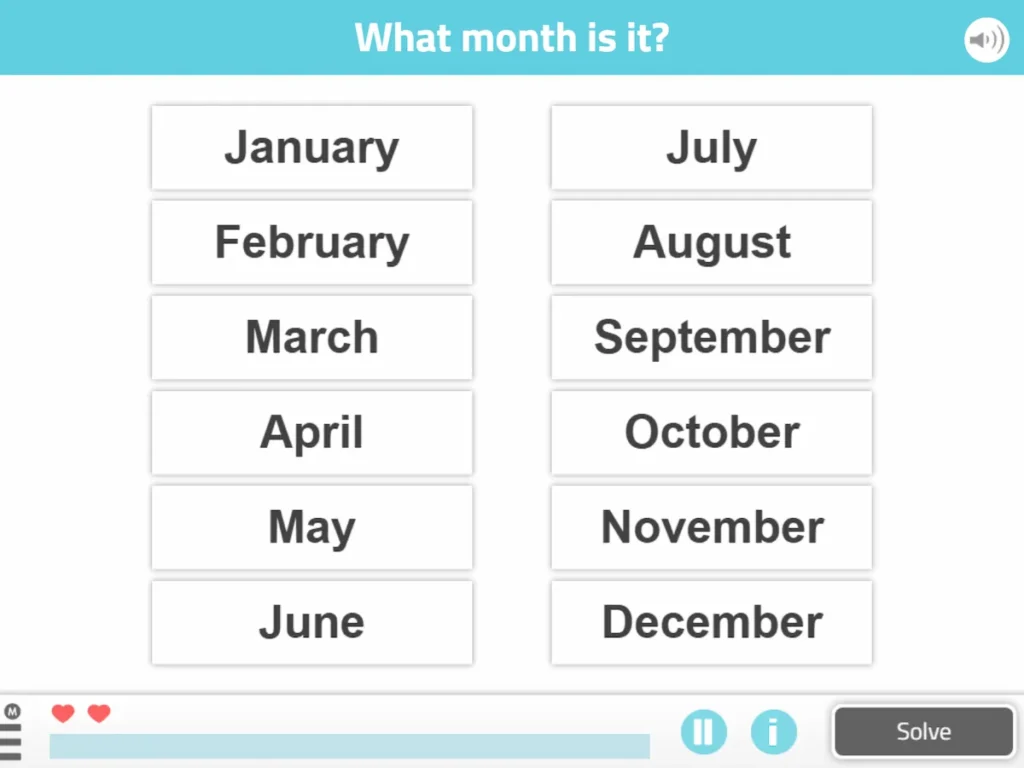
1. Location in Time
The first activity to be carried out is called Location in Time.
Its main objective is to work on temporal orientation to help users have more information about their environment—season, date, time…
2. Sticky Notes in Order
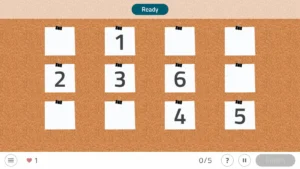
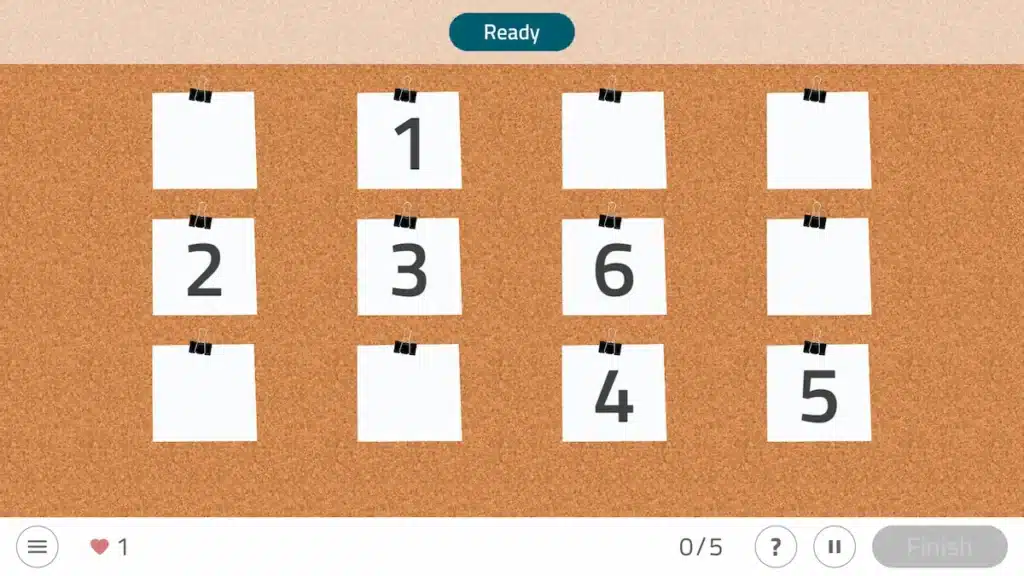
The second activity is called Sticky Notes in Order. It aims to work on episodic memory and working memory, which can be very beneficial for the user’s daily life.
In this activity, several Post-its with different numbers are shown; then they are turned over, and the user has to tap them in order from highest to lowest. There are 12 stages, of which 4 can be done (medium level), depending on how the person performs.
3. Ordering activity steps
The third activity, called Ordering activity steps, will follow. With it, planning, reasoning, and comprehension will be trained. It consists of different actions that must be put in order to carry them out properly.
In this activity, examples of basic/instrumental daily living activities appear, along with the different steps that must be followed to complete them correctly. The user has to indicate the sequence of steps they would follow when performing that activity of daily living (ADL).
4. Word-Emotion Association
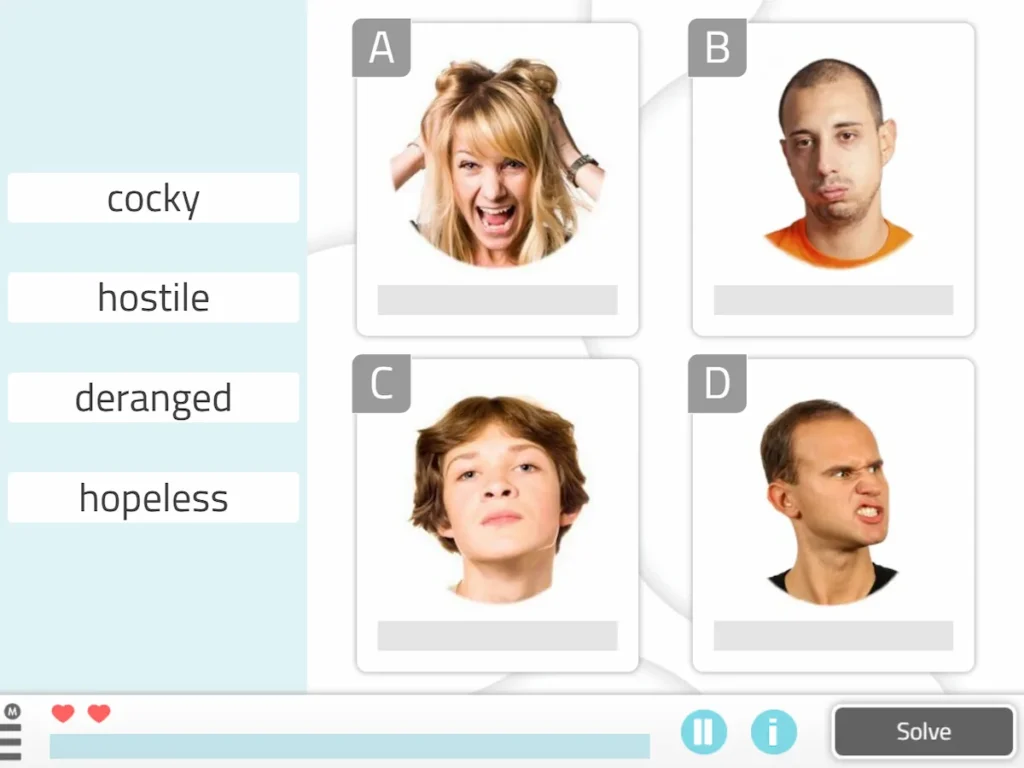
Finally, the session ends with the Word-Emotion Association activity, which is very useful for training social cognition and vocabulary.
Here, photos of people showing an emotion appear, and the platform provides several options for the emotion the person might be feeling; the user has to indicate the emotion they identify.
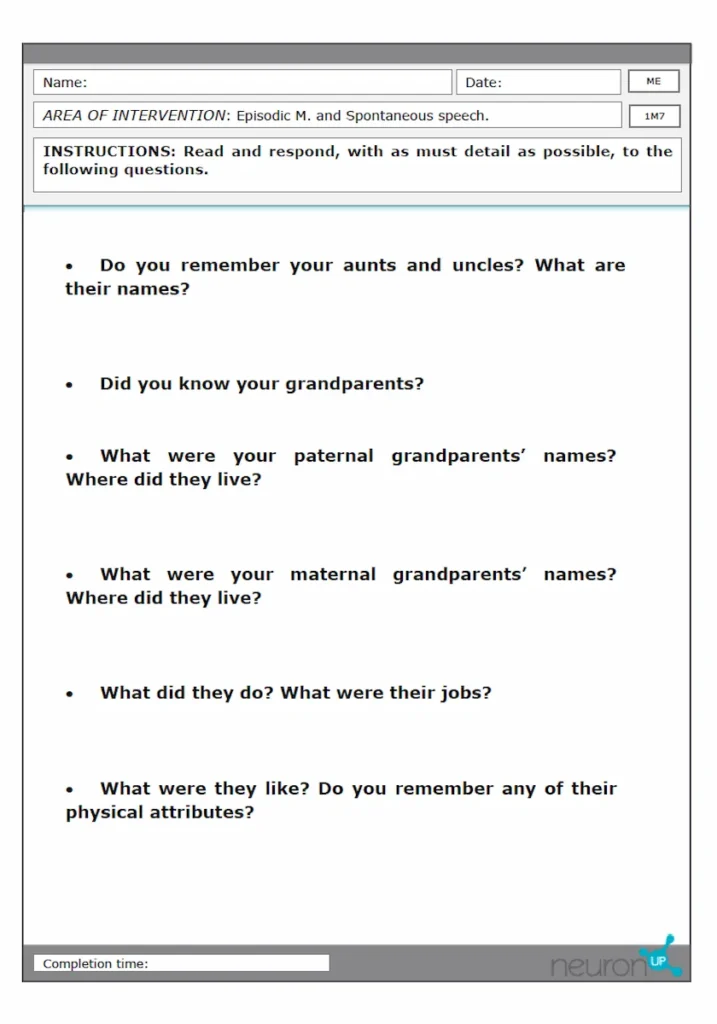
5. Autobiograhical Memory
During the two separate 10-minute rest periods (20 minutes total), reminiscence questions will be asked, as explained in the introductory paragraph to the session.
To do this, the printable worksheet called Autobiograhical Memory available in NeuronUP will be used.
Recommendations for the intervention with older adults with Alzheimer’s disease
To ensure the session is effective, it is important to keep in mind:
- Adjust the difficulty of the activities according to the user’s abilities and pace
- Be alert to signs of frustration.
- Hold the session in a quiet space free of distractions, so the person feels safe and comfortable.
- The therapist must use clear, simple language to explain the activities. In addition, provide positive reinforcement after each task.
- Integrate meaningful elements for the person, such as reminiscence questions related to important aspects of their life.
- Vary the activities so the person maintains their focus of attention.
- During breaks, the therapist can use that time to ask open-ended questions about the person’s life, encouraging dialogue and emotional connection.
- Provide the person with relaxing stimuli, such as relaxing music.
- During the session, observe the person’s performance in order to assess their progress and adjust it for future interventions.
- For caregivers, it would be important to provide strategies so that at home they can actively continue the person’s cognitive stimulation.
- At the end of the session, ask how the person felt and listen to their feedback.
Conclusion
This intervention has been designed for older adults with Alzheimer’s disease in the mild stage. This session combines cognitive stimulation with social interaction, with the intention of responding to the need to maintain and strengthen participants’ cognitive abilities, while also aiming to foster their social well-being.
The combination of structured activities and reminiscence-based dynamics allows us to strengthen the connection between the participant and their environment, fostering feelings of belonging and encouraging moments of enjoyment.
The active breaks proposed within the session not only facilitate physical and mental recovery, but are also intended to provide the opportunity to explore memories, adding a human and emotional component that supports a better intervention.
Likewise, the last proposed activity is focused on social cognition, thereby reinforcing the importance of working on emotional dimensions.
It is very important to use and make tools like NeuronUP known, since they allow us to create interventions tailored to each person’s level, thus ensuring accessibility and an appropriate level of challenge in order to promote users’ motivation and engagement.
In conclusion, we want to show how a well-planned intervention can help slow cognitive decline, promoting autonomy and quality of life for people with Alzheimer’s disease. It is recommended to continue with this type of activities or strategies, integrating the participation of family members or caregivers to enhance their effects and ensure comprehensive care that addresses all meaningful areas of the person’s life.
If you liked this blog post about a cognitive workshop with NeuronUP for older adults with Alzheimer’s disease, you’ll probably be interested in these NeuronUP articles:




“This article has been translated. Link to the original article in Spanish:”
Taller cognitivo con NeuronUP para personas mayores con alzheimer

 Can ChatGPT-style language models help diagnose autism?



Leave a Reply