

Neuropsychologist Ana Utrilla Lack explores how social camouflaging influences the detection of autism in women and which cognitive strategies support more personalized intervention.
Introduction
“I always knew that something in me worked differently. I can spend hours analyzing conversations, trying to understand if I said the right thing or if someone was upset. I strive to appear natural, to fit in, but when I succeed I end up exhausted, as if the battery is completely drained. Since I was a child they told me I had to adapt, that everyone feels different, so I learned to hide it.”
This account is fictional, but it reflects the experience of many women with autism who live for years without a diagnosis. Receiving a diagnosis can transform their lives, helping them understand themselves and find strategies that allow them to feel better. Understanding why so many women receive a late autism diagnosis is key to identify their signs, break down stereotypes, and design more humane and effective interventions.
Late diagnosis of autism in women
The autism spectrum disorder (ASD) is a neurodevelopmental condition characterized by difficulties in communication and social interaction, along with repetitive and restricted behavior patterns, specific interests, and particular responses to sensory stimuli (Arango Lasprilla, 2025).
According to the World Health Organization (WHO, 2017), currently one in 160 children is on the autism spectrum. However, ASD continues to be diagnosed much more frequently in males. According to Montagut and collaborators (2018), the estimated ratio is four boys for every girl, which suggests a clear underdetection in the female population. This difference increases even more in cases of high-functioning autism, formerly known as Asperger syndrome, where up to nine boys are diagnosed for every girl.
Why are many women diagnosed late?
There are various explanations that help understand the marked difference in diagnosis between males and females.
Neurobiological factors
One of the best-known attempts to explain the male prevalence of autism was the extreme male brain (EMB) theory, proposed by Baron-Cohen (2002). This theory suggested that autism reflected an exaggeration of cognitive traits considered typically masculine, linked to greater prenatal exposure to testosterone.
Although it had great influence at the time, the EMB is now considered a partial and outdated theory, useful only as a historical reference to understand the beginnings of autism research, but not as the main explanatory model. More recent reviews have shown that the evidence relating fetal testosterone to the development of autism is inconsistent and inconclusive (Xiong, Peterson and Scott, 2020).
Gender stereotypes in childhood
Stereotypes and social expectations also play an important role in diagnostic delay. From early ages, girls are often encouraged to behave in a sociable, empathetic, and collaborative manner, qualities culturally associated with femininity.
This social learning makes it easier for many girls with autism to rehearse and reproduce social behaviors, which can hide their real difficulties. Some learn to copy facial expressions, gestures or phrases to appear more integrated into groups. As a result, their behavior is often interpreted as shyness, introversion, or perfectionism, rather than being recognized as part of the autism spectrum.
These differences in the expression of autism between males and females have contributed to the mistaken idea that they “adapt better” or “have milder symptoms,” when in reality many develop strategies to mask their difficulties. This phenomenon, known as camouflaging or masking, is one of the main reasons why diagnosis in women often occurs later.

Subscribe
to our
Newsletter
Masks and camouflaging strategies in women with autism
Masking or camouflaging is a strategy that, while not present in all people with autism, is commonly used. It is not considered a defining characteristic of the spectrum, but rather an adaptation aimed at improving functionality and social integration. Its main goal is to hide or disguise behaviors that could hinder interaction with others, thereby compensating for social difficulties.
This strategy can be used consciously or unconsciously, and is usually understood as a coping mechanism in response to environmental demands. Among the most frequent motivations for developing camouflaging are the desire to be accepted, access social spaces, or avoid exclusion.
According to Ruggieri (2024), a person with autism can analyze and interpret the behavior of those around them to copy observed social rules and thus build a “social mask.” Although this social adjustment process occurs in many people, in the case of autism it requires a much greater cognitive and emotional effort, which often generates exhaustion, frustration, and the need for periods of isolation to recover. This oscillation between social participation and temporary withdrawal is common among women who use camouflaging on a sustained basis.
Types of camouflaging
Researchers such as Cook and collaborators (2022) have identified four main categories of camouflaging, observed especially in women with autism based on analysis of their behavior in different social contexts.
1. Compensatory camouflaging
It consists of the conscious use of strategies to compensate for social and communicative difficulties. Women observe, analyze, and practice social behaviors in order to mimic what is expected of them. For example, they may rehearse conversations before speaking or observe how others gesture to then reproduce it. This type of camouflaging involves considerable cognitive effort and often leads to exhaustion.
2. Behavioral camouflaging
It refers to the modification or inhibition of behavioral manifestations of autism visible with the intention of avoiding judgment or social rejection. Common examples include suppressing repetitive movements, maintaining eye contact even when uncomfortable, or adopting learned postures and expressions to appear interested in the conversation. This type of camouflaging is more frequent in work, academic, or social contexts, where the aim is to “go unnoticed.”
3. Assimilation or superficial camouflaging
In this case, the person adopts interests, tastes, or styles similar to those of their environment with the intention of integrating and being accepted. They may feign interest in popular topics, use colloquialisms, or dress according to prevailing social norms. Its purpose is to fit in socially, even if it means suppressing authentic aspects of their identity.
4. Emotional camouflaging
It refers to the suppression or concealment of real emotions to maintain an appearance of normality. A woman may feel frustrated, confused, or overwhelmed and still not show it in public, or disguise anxiety with a smile and a friendly tone. She may also avoid asking for help or showing vulnerability. The constant use of this type of camouflaging contributes to emotional exhaustion and the so-called autistic burnout, a phenomenon especially common in women diagnosed in adulthood.
Consequences of masking
As mentioned above, masking may seem like a useful strategy, since it allows the person with autism to integrate and adapt to their social environment. However, it also entails important consequences.
One of these is the delay in diagnosis, since by hiding or disguising their difficulties, the person does not show obvious signs that would raise clinical suspicion or motivate them to seek a specialized evaluation.
In many cases, women seek consultation for symptoms of anxiety or depression, which may be associated with emotional exhaustion resulting from prolonged use of masking. During clinical assessment it is often observed that, in addition to emotional distress, there are characteristic traits of autism spectrum disorder that had gone unnoticed.
Among the main consequences of masking are mental and physical fatigue, impact on emotional health, and a persistent sense of lack of authenticity or disconnection from one’s identity. People may feel that they live behind a mask, which hinders self-acceptance and generates deep insecurity.
Various authors have also noted a association between sustained use of camouflaging and the presence of generalized anxiety, social anxiety, and depression (Ruggieri, 2024). These effects reveal that, although masking can temporarily facilitate social adaptation, in the long term it carries a high cost for the psychological and emotional well-being of women with autism.
Characteristic signs of autism in women
ASD manifests differently in women than in men. In males more overt behaviors are often observed, such as avoiding eye contact, having a literal understanding of language, or showing restricted interests. In women, however, the signs are subtler and more socially accepted. This is due, in part, to the demands and social expectations they face, since from a young age they are taught and even required to behave in a sociable, empathetic, and communicative manner. As a result, many manage to maintain good verbal skills and even show apparent empathy, which contributes to their difficulties going unnoticed.
1. Communication and social skills
- Many women on the spectrum display a varied and fluent language, appearing to have adequate social communication. However, they may have difficulties maintaining conversational reciprocity, catching irony or emotional nuances, and tend to keep topics within their own interests.
- In friendships, although they long for deep bonds, they do not always manage to sustain them and often feel excluded or confused by social dynamics.
- There may also be significant sensitivity to rejection, accompanied by perfectionism and rigidity in relationships.
2. Interests, routines and hyperfocus
Restricted interests or hyperfocus often revolve around topics considered socially “feminine,” such as animals, literature, psychology, fashion, art, or interpersonal relationships, which contributes to them going unnoticed. They may also present a marked need for control and structure, with rigidity in organizing and planning daily life, which is sometimes confused with a mild obsessive-compulsive disorder. They also tend to Create mental routines or personal rules, less visible than in males.
3. Sensory and emotional processing
They present high sensory sensitivity and respond intensely to lights, sounds, textures, or crowds, but often hide it or endure it in silence. They can experience abrupt mood changes and frustration in the face of overload or changes in routine. After social interaction, they often report exhaustion and a need for isolation to recover. Sustained stress can also manifest in physical symptoms such as migraines, fatigue, or gastrointestinal problems.
4. Identity, self-esteem and comorbidities
Many women feel confused about their identity and do not know who they are without the “social mask” they have built. This effort to fit in affects their self-esteem and generates a constant self-demand, with a sense of failure at not being able to adapt naturally. Among the most frequent comorbidities are anxiety, depression and, in some cases, misdiagnoses such as borderline personality disorder, generalized anxiety, or eating disorders.
For all these reasons, it is essential that health and education professionals recognize the specific signs of autism in women and understand the influence of camouflaging on their clinical presentation.
Integration of diagnosis and treatment in women with autism
Understanding the particular manifestations of autism in women allows not only timely detection, but also designing interventions that match their real needs. When diagnosis arrives at later stages, the first step is to validate their experience and reconstruct a more compassionate understanding of their history, frequently marked by overexertion, anxiety, and exhaustion.
The therapeutic process begins with a comprehensive neuropsychological assessment, which considers both emotional and cognitive aspects, taking into account the possibility of camouflaging strategies used. During this assessment, it is essential to detect possible difficulties in different cognitive functions, such as attention, memory, language, or visuospatial functions, since their early identification allows designing intervention strategies tailored to each person’s real needs. Likewise, recognizing the cognitive style and the altered executive functions —such as planning, cognitive flexibility, inhibition, or emotional regulation— helps to guide the work plan toward the strengthening of preserved capacities and the development of new compensatory tools.
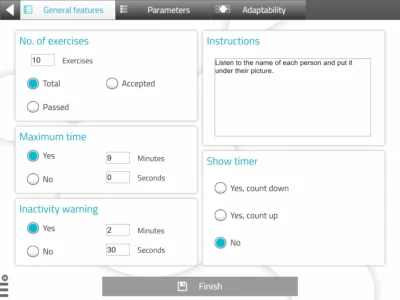
As part of the intervention, NeuronUP’s cognitive stimulation programs can be used, incorporating activities that:
- Promote emotional self-regulation and management of social stress.
- Favor cognitive flexibility, reducing mental rigidity and the tendency toward perfectionism, since this ability allows easier adaptation to changes, decreases frustration, and improves problem solving in daily life.
- Train planning and time organization, a common difficulty that impacts academic and work performance.
- Reinforce sustained attention and working memory, fundamental to maintain concentration on prolonged tasks, organize daily activities, follow instructions, manage time, and support learning in academic or work contexts.
- Encourage self-knowledge and acceptance of one’s cognitive style, integrating personal reflection exercises.
In addition, treatment should include psychoeducation, both for the patient and for their environment. This helps understand the impact of camouflaging, recognize sensory and emotional needs, and create more empathetic environments where constant masking is not necessary.
On the other hand, the intervention is enriched by interdisciplinary work, in collaboration among neuropsychology, psychology, and psychiatry, which allows addressing cognitive, emotional, and social aspects in an integrated way.
Finally, recognizing the diagnosis not only facilitates clinical treatment, but opens the door to a process of self-discovery and acceptance. For many women, understanding how they process the world represents a turning point: they stop seeing themselves as “too sensitive” or “unsociable” and begin to recognize themselves from neurodiversity and authenticity.
Conclusion
Recognizing autism in women means broadening the perspective and leaving behind traditional models that describe it solely from the male experience. Understanding the role of camouflaging and the particularities of the female phenotype allows for more accurate diagnoses and support adjusted to their true needs.
Although late diagnosis often comes after years of effort, anxiety, or misunderstanding, it also represents an opportunity: the possibility of understanding oneself, validating one’s own history, and building strategies that promote well-being and authenticity. Professional support, psychoeducation, and cognitive stimulation can reduce the wear associated with masking and strengthen executive functions, emotional regulation, and self-esteem.
Moving toward a more inclusive view of female autism not only transforms clinical practice, but also the way society understands human diversity. The goal is not for autistic women to learn to hide to fit in, but to find spaces where they can be themselves, without masks, and feel understood.
Bibliography
- Arango-Lasprilla, J. C., Álvarez Alcántara, J. E., Oliveras Rentas, R. E., & Degano, M. (2025). Life stories of relatives of people with autism: first-person accounts. Ediciones Psara.
- Cook, J., Crane, L., Hull, L., Bourne, L., & Mandy, W. (2022). Self-reported camouflaging behaviours used by autistic adults during everyday social interactions. Autism, 26(2), 406–421. https://doi.org/10.1177/13623613211026754
- Montagut Asunción, Maite, Mas Romero, Rosa María, Fernández Andrés, María Inmaculada, & Pastor Cerezuela, Gemma. (2018). Influence of gender bias on the diagnosis of autism spectrum disorder: a review. Escritos de Psicología (Internet), 11(1), 42-54. https://dx.doi.org/10.5231/psy.writ.2018.2804
- Ruggieri, V. (2024). Autism and camouflaging. Medicina (Buenos Aires), 84(Supl. I), 37–42.
- Xiong, H., Peterson, J. B., & Scott, S. (2020). Amniotic testosterone and psychological sex differences: a systematic review of the extreme male brain theory. Developmental Review, 57, 100922. https://doi.org/10.1016/j.dr.2020.100922
Frequently asked questions about autism in women and cognitive stimulation
1. Why is autism diagnosed later in women than in men?
In women, autism often goes unnoticed because the signs are more subtle and socially accepted. Many develop strategies of social camouflaging or masking that hide their difficulties in communication and interaction, delaying clinical diagnosis.
2. What is camouflaging or masking in female autism?
Masking is a strategy of social adaptation by which women with autism imitate neurotypical behaviors to integrate or avoid rejection. Although it can facilitate relationships, in the long term it causes emotional exhaustion, anxiety, and loss of identity.
3. What are the signs of autism in adult women?
The most common signs include apparent hyper-empathy, perfectionism, sensory sensitivity, cognitive rigidity, and difficulty maintaining stable relationships. They may also present hyperfocus on specific interests and symptoms of anxiety or depression.
4. How is autism in women evaluated from neuropsychology?
The evaluation should be comprehensive and gender-informed; considering emotional, cognitive, and social aspects, and identifying possible camouflaging strategies. Functions such as attention, memory, planning, and cognitive flexibility are analyzed to design a personalized intervention.
5. What benefits does cognitive stimulation have for women with autism?
Cognitive stimulation promotes training of executive functions (planning, organization, emotional regulation) and improves adaptation to the environment. It also helps to reduce anxiety and social stress, promoting well-being and autonomy.
6. What objectives should a cognitive intervention adapted to women with autism have?
An effective intervention should strengthen cognitive and emotional strengths, promote self-acceptance and neurodiverse identity, and include activities aimed at mental flexibility, self-regulation, and self-knowledge to prevent autistic burnout.
If you liked this article about the late diagnosis of autism in women, you will surely be interested in these NeuronUP articles:



“This article has been translated. Link to the original article in Spanish:”
Diagnóstico tardío de autismo en mujeres: cómo reconocer signos específicos y adaptar la estimulación cognitiva

 Intellectual giftedness and psychological well-being: risk factors, protective factors, and the role of family support



Leave a Reply