
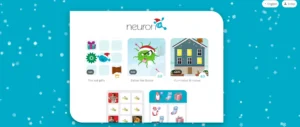
This year we have a gift for you. We’ve published 5 Christmas activities for you to work with your users during this magical season. Discover them now!
Christmas activities for children
- The lost gifts.
- Defeat the Grinch.
Christmas activities for adults
- Illuminated Windows.
- Find the Dinner.
- Varied combinations.
1. The lost gifts
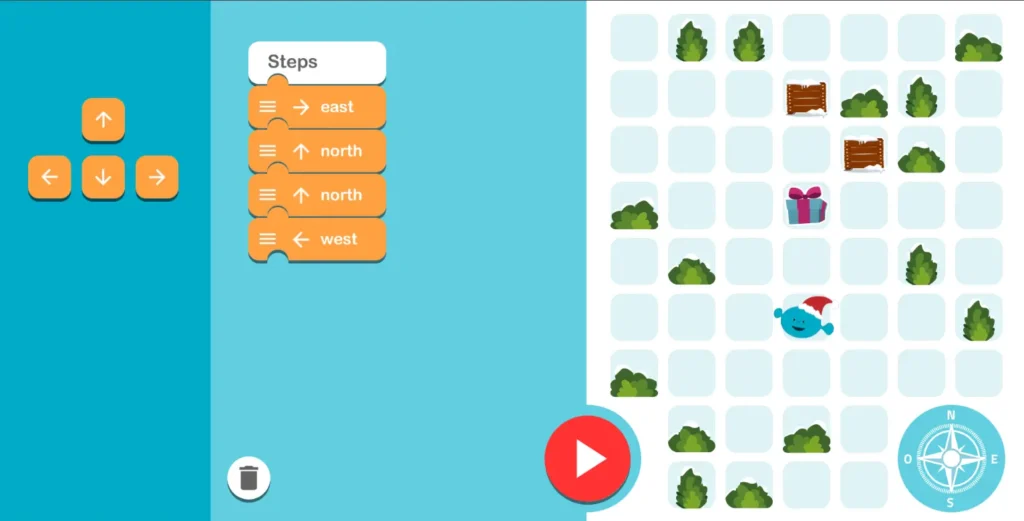
This worksheet aims to work on planning and includes a total of 25 levels, with the first being the easiest and the last the most challenging.
In The lost gifts, users will have to help NeuNoel reach the gifts by indicating the direction using the arrows shown on the screen. As the levels progress, we’ll need to add more instructions. To do so, a lilac-colored anchor will appear so we can repeat steps.
This activity is designed to work with children with ADHD, autism, nonverbal learning difficulties and visuospatial problems.
Ecological validity
The lost gifts trains the ability to anticipate a route, sequence steps, avoid obstacles, and navigate within a space, just like when a child needs to move from one point to another in everyday life.
2. Defeat the Grinch
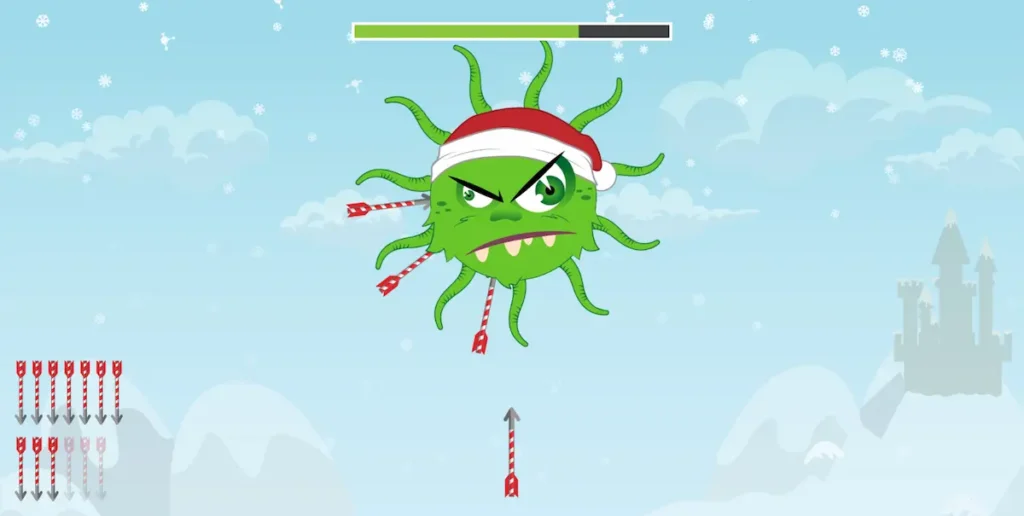
Defeat the Grinch is designed to stimulate spatial relations, inhibition, planning, and processing speed.
In this game, the user will have to work on their aim to defeat this character by avoiding its tentacles and moving up through the levels.
This activity is designed to work with children with ADHD, nonverbal learning disorders, intellectual disability, and childhood brain injury.
Ecological validity
Defeat the Grinch works on visuomotor coordination, precision, spatial discrimination, and inhibition, skills needed for many everyday activities such as sports, fitting pieces together, writing, or manipulating small objects.
3. Illuminated windows
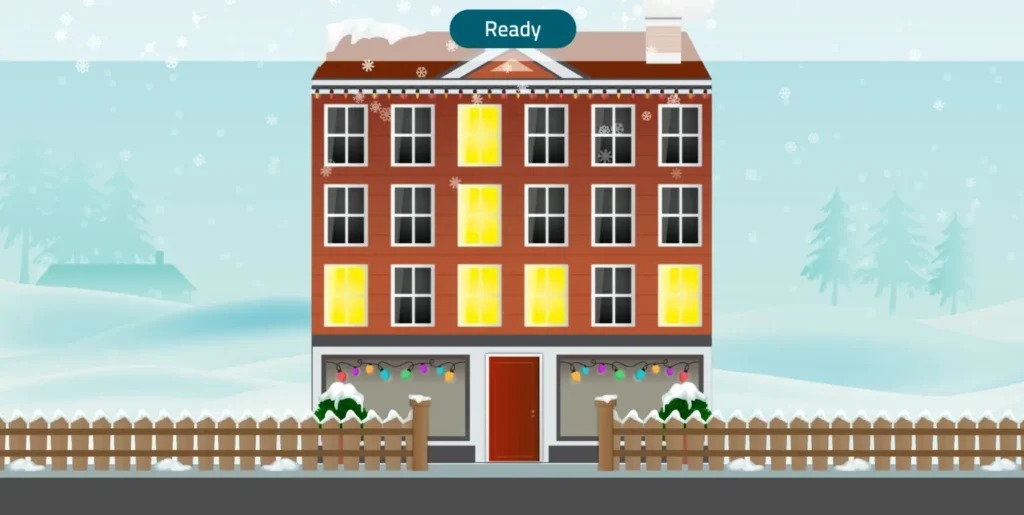
This game trains episodic memory and selective attention.
Illuminated windows has a total of 12 difficulty levels, with the first being the easiest and the twelfth the hardest.
The activity consists of observing and memorizing the windows of the house that are lit. When all the lights go out, you must select the windows that had previously been turned on.
Lit windows is designed to work with adults with acquired brain injury who have episodic memory difficulties, and neurodegenerative diseases such as mild cognitive impairment (MCI) and Alzheimer’s disease.
Ecological validity
Remembering the location of visual elements that appear for a few seconds and then disappear, such as when in daily life a person needs to notice which windows and/or lights in a building were on to orient themselves in an urban environment, or to remember which illuminated messages appeared on a screen.

Subscribe
to our
Newsletter
4. Find the Dinner
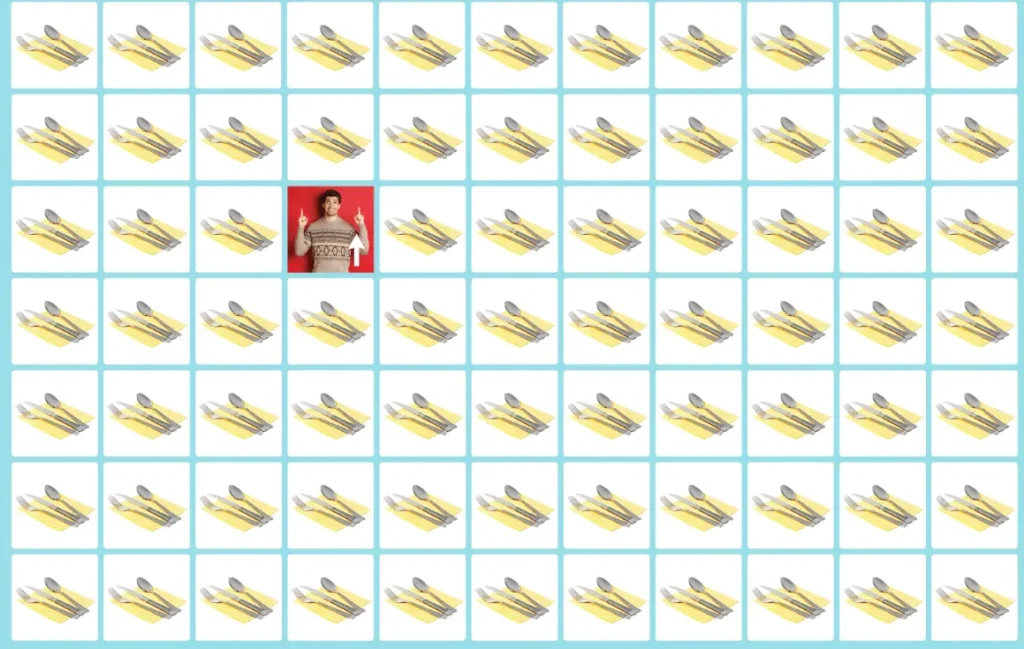
Find the Dinner aims to work on processing speed, selective attention, and working memory.
To complete this activity, we’ll need to click on one of the tiles shown and follow the indicated directions to reach the Christmas dinner.
This game has a total of 12 difficulty levels, with the first being the easiest and the twelfth the most complex.
Find the dinner is designed to work with adults with multiple sclerosis (MS), mild cognitive impairment (MCI), or acquired brain injury (ABI).
Ecological validity
Following signs or directions in a real-world space, such as finding your way in a hospital, a supermarket, or a station, where the person needs to process arrows, signs, or other people’s gestures to reach a specific destination.
5. Varied combinations
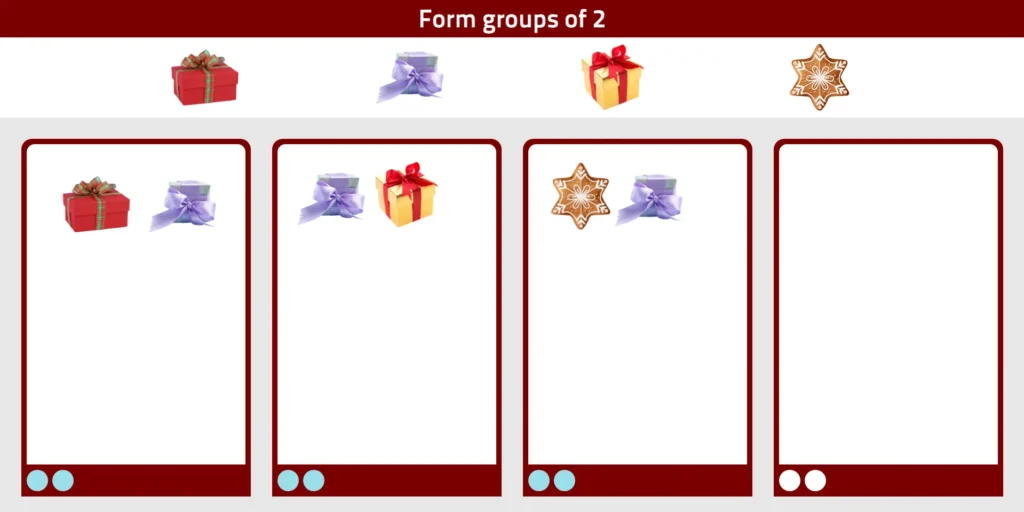
Thanks to this activity, we will stimulate flexibility and planning.
In this game, we’ll need to follow the instructions given at the start of the activity and create different groups with the elements shown on the screen. To successfully complete each level, it’s very important not to create groups with the same elements.
Varied combinations has a total of 12 difficulty levels, with the first being the easiest and the twelfth the most challenging.
This activity is designed to work with adult users with autism, attention deficit hyperactivity disorder (ADHD), mild cognitive impairment (MCI), and people with dysexecutive syndrome.
Ecological validity
Organizing objects or information into groups without repetition, such as when a person needs to put together different outfit combinations (when traveling, for example), or prepare boxes, bags, or orders without repeating contents.
Available languages for these Christmas activities
You can work on these 5 Christmas cognitive stimulation exercises in Spanish, English, French, Portuguese, Catalan, and Italian.

 Teletherapy in Aphasia Rehabilitation



Leave a Reply